
EV sales rise forecast in Australia, but still lag rest
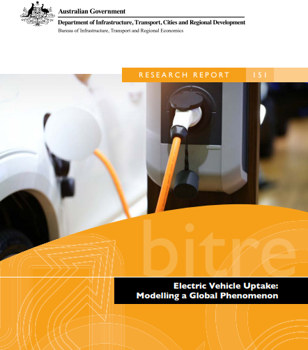 Electric vehicle sales are expected to be 8% of total Australian vehicles sales by 2025 and 27% five years later.
That puts Australia against 18% and 36% globally for 2025 and 2030 respectively, according to a new report from the Bureau of Infrastructure, Transport and Regional Economics.
“The spread of electric vehicles through the passenger vehicle (and truck) fleets in coming decades has the potential to substantially alter transport energy use and transport infrastructure, with implications that have to be considered by policy makers,” the report says.
It describes an approach for estimating likely electric passenger vehicle uptake for each of 22 countries featured.
“The resulting models allow an understanding of the forces underlying electric vehicle uptake trends in each of the countries, thus providing estimates of the predicted speeds with which electric vehicle sales will replace sales of fossil fuel vehicles.
“Estimates and forecasts of battery price in US$/kWh are presented, showing that battery cost per kWh is set to more than halve by 2025 (from US$189 to US$72 per kWh), and to
continue to decline thereafter.
“But battery size (and vehicle range) is set to more than double by 2025 (from 60kWh to 154kWh), before topping out.
“This means that the outlook is for a fairly constant battery price for EVs out to 2025, before the price starts to decline.”
The report notes other elements of EV manufacturing costs are also set to remain constant out to 2025, meaning total EV prices are predicted to remain fairly constant for the same period before a price decline begins.
The report says EV uptake speed is important for policy makers in several ways.
“As electric vehicles spread throughout the fleet, revenue from various taxes, especially those on fossil fuel such as excise taxes and carbon taxes, will decline.
“These taxes are currently used to fund a substantial part of the cost of road construction and maintenance, funding which will have to be replaced.”
Tax exemptions and subsidies may also have to change as they become increasingly expensive, and EV demand on the electricity supply will require attention.
EV uptake speed will also slow any rise in fossil fuel emissions from transport, the report adds.

Join the conversation