
EVs will melt ICE
The death of internal combustion is predicted with electric cars getting 1000km range.
Electric aircraft have already got there with the Bye Aerospace eFlyer achieving 1000km with its solar wing option, IDTechEx chairman Dr Peter Harrop says in forecasting extinction for the internal combustion engine (ICE).
“Cars next,” he says.
“This range will be the final nail in the coffin of internal combustion cars. It is longer than some of them offer. With gasoline stations shutting down, guess who then gets range anxiety!”
The IDTechEx report Electric Vehicles 2020-2030
forecasts premium solar cars, mainstream solar cars and 98 other EV categories.
The 1000km range for an electric car calls for four essentials; lowest drag factor and weight, most efficient drive train and solar bodywork, Harrop says.
“Elon Musk has promised 1000km range for the next Tesla Roadster and the Lightyear One solar car will be in production with 800km range next year.
“Both will have an eye-watering price but Lightyear intends to come down market. “Hanergy showed back in 2016 that expanding panels of highest efficiency can give 1-1.5kW, enough to eliminate plugging in entirely for light car users.
“Tesla could use its falcon wing door technology to make solar panels unfolding on a parked car that never hit anything.”
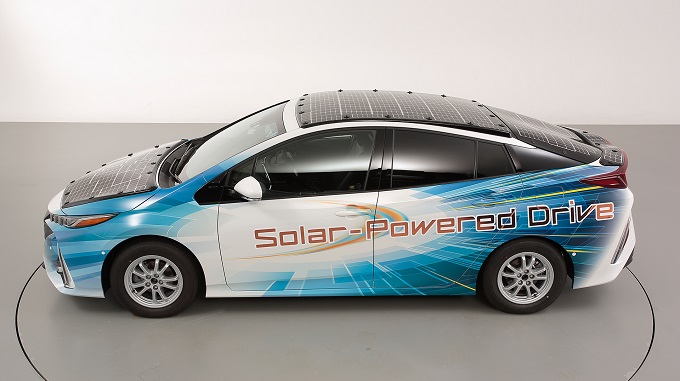
Toyota Prius’ chief engineer dreams of a car powered by the sun and Toyota is now starting trials using exceptionally efficient photovoltaics. But, like Lightyear One, no expanding panels at this stage.
The Prius is merely a test bed, Harrop says. Research and development organisation NEDO and solar panel supplier Sharp are assisting, results being shared. The project started at the end of July.
Solar cell modules with a 34% conversion efficiency producing 860W will be integrated into the roof, hood and tailgate of some Prius PHEVs to improve range and fuel efficiency.
That is 4.8 times the output of the partial solar roof on the current Prius Prime, Harrop says.
“However, the standard consumption of the Prius PHEV is 7.2kWh/100km – the future lies with solar vehicles achieving much better than that.”
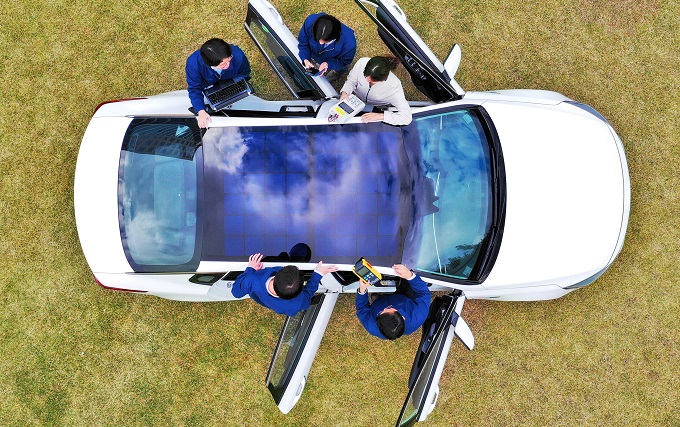
Hyundai has also launched its first car to feature a solar roof, the Sonata Hybrid , expected to increase fuel efficiency and driving range.
It’s reported to add an extra 1300km annually.
IDTechEx Events hosts Electric Vehicles – Everything is changing, November 20-21, Santa Clara, USA.
Visit www.IDTechEx.com/EVUSA for more information.

Join the conversation