
EVs for Tokyo 2020
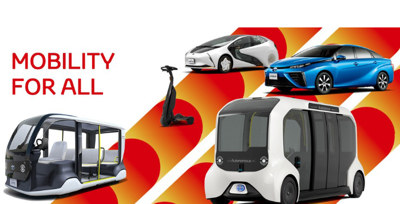 Toyota is providing a huge number of electrified vehicles for the Tokyo Olympic Games and Paralympics in 2020.
It will have 3700 mobility products and vehicles available for the official vehicle fleet, nearly 90% of them electrified.
These include hybrid electric vehicles (HEVs), about 500 fuel cell electric vehicles (FCEVs) such as the hydrogen powered Mirai, plug-in hybrid electric vehicles (PHEVs) like the Prius Prime, and some 850 battery electric vehicles (BEVs), including the Accessible People Mover (APM) and the e-Palette as well as the Toyota Concept-i.
About 2700 commercially available vehicles will be part of the official fleet providing transportation support between venues during the Olympics from July 24 to August 9 and the Paralympics from August 25 to September 6.
Toyota aims to have the lowest emissions level of any official vehicle fleet used at the Olympic and Paralympic Games.
Calculations suggest that CO2 will average less than 80g/km, resulting in a reduction by about half of the typical amount when compared to a similar sized internal combustion engine (ICE) fleet.
Further reductions are anticipated during the Games when combined with Toyota’s other advanced mobility products and electrified vehicles, including versions specifically designed for use at the Games.
Staff transport comes equipped with Toyota’s preventative safety technologies. Nearly all the commercially available vehicles will also have intelligent clearance sonar (ICS) to assist with braking.
Toyota will also support Games operations with other vehicles, including the mass-transit fuel cell bus ‘Sora’, assistive vehicles that help lift passengers into their seats or are equipped with an attached slope to allow passengers with wheelchairs access to enter the vehicle via the back door, and other vehicles such as fuel cell forklifts.
Through its robots, Toyota will provide support of event operations and unique experiences.
Vehicles developed specifically for Tokyo 2020 include about 200 APMs to help those with special mobility needs travel within venues such as the Olympic Stadium and Ariake Tennis Park, and around 12 autonomous e-Palette BEVs which can carry up to 20 passengers (including an operator) or four wheelchairs and seven people standing on a continuous loop within the Olympic and Paralympic Village.
There’s also the Toyota Concept-i (Tokyo 2020 version) which is the operating vehicle at the Olympic torch relay and lead vehicle in the marathon.
Public roads surrounding the Toyota City Showcase “Megaweb” in the Tokyo Odaiba/Toyosu area may be used for test rides and drives of vehicles with advanced driving technology such as the Toyota Concept-I carrying up to four passengers.
About 300 standing-type personal mobility devices will be used by security and medical staff

Join the conversation