
Hydrogen vehicles part of transport future: Toyota
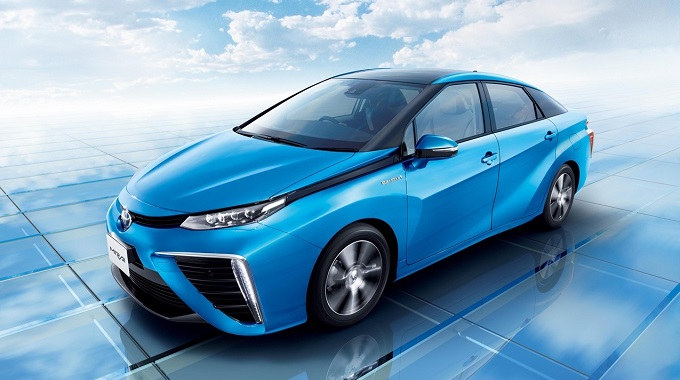
Hydrogen will have a unique role to play alongside hybrids and battery electric vehicles, Toyota says.
Amid world-wide plans to restrict climate change, Toyota plans to slash average CO2 emissions per vehicle by 90% by 2050 in comparison with 2010 levels.
It’s accelerating advances in technology and encouraging the widespread adoption of its low emitting vehicles including hybrid electric vehicles (HEVs), plug-in electric vehicles (PHEVs), battery electric vehicles (BEVs) and hydrogen fuel cell electric vehicles (FCEVs).
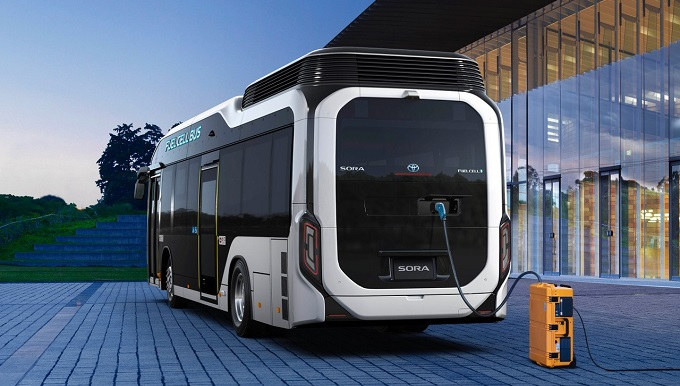
Since vehicle driving ranges and performance requirements differ widely between passenger cars and larger road transport vehicles, Toyota believes all these and biofuels will be required to varying degrees.
Toyota is investing in its own manufacturing plant and joint ventures to speed up the development and production of batteries and hydrogen fuel cells.
It expects to be selling 30,000 FCEVs (now 3000) per year globally before too long.
The Toyota Motor Corporation is a steering member of the Hydrogen Council which wants the equivalent of 160 million low emission vehicles – 80 million zero emission and 80 million plug-in hybrids –on the world’s roads by 2030.

“Reaching this ambitious target will require a wide range of technologies,” Toyota New Zealand chief executive Alistair Davis says.
“At Toyota, we believe that to bet on a single technology to solve the challenge of decarbonising transport is too risky. What if the hoped-for advances do not materialise or production lines fail to meet demand?
“Technological developments tend to not take place at the expense of one another. The development of BEVs and FCEVs is likely to be synergetic – both technologies rely on electric powertrains and benefit from improvements in these components.”
The Hydrogen Council estimates hydrogen will power more than 400 million cars, 15 to 20 million trucks and around 5 million buses by 2050 – an average 20% to 25% of their respective transportation segments.
Hydrogen is expected to play a strong role in heavier and long-range segments.
“The sooner we get the hydrogen economy going, the better,” Davis says.
Sales began in 2018 of the Toyota Sora FCEV bus and Toyota expects to introduce 100 Sora buses within the Tokyo metropolitan area ahead of the Olympic and Paralympic Games in Tokyo 2020.
The FCEV Toyota Mirai car has been available in several markets, including Scandinavia, Canada and California, since 2014, while FCEV forklifts are in commercial use in Japan and the USA.
The next five years will see the introduction of more FCEV models in medium-sized and large cars, buses, trucks, vans and trains, Toyota says.
FCEVs would have lower investment costs than BEVs in long-range segments, with much shorter refuelling times and more efficient payloads, Toyota adds.
“With renewable and clean hydrogen, FCEVs emit very little CO2 and require less resources and energy in the manufacturing process than BEVs.”
Toyota New Zealand is an active member of the NZ Hydrogen Association, the Climate Leaders Coalition and the Sustainable Business Council.

Join the conversation