
Australia can be in booming EV market: EVC
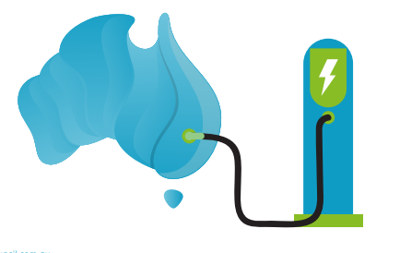 A lack of national co-ordination and support has seen EV uptake stagnate in Australia.
That’s according to an Electric Vehicle Council Australia report on the state of EVs nationally, which suggests Australia has a once in a lifetime opportunity to develop a robust domestic industry around EVs.
While 2.1 million EVs sold globally in 2018, Australia lagged behind with 2216 sales in the same year.
But the outlook is encouraging, with 2019 seeing a rebound in EV sales for the first half of the year 90% higher than for the same period in 2018.
Consumer choice is also increasing with the number of EV models available in Australia expected to jump from 22 as of August 2019 to 31 by the end of 2020, the EVC says.
Meanwhile, the availability of public charging infrastructure has increased by over 140% in the last year and by 400% since 2017.
The national EV charging network now comprises 1930 stations.
Consumer awareness and attitudes to EVs continue to improve, according to a survey of 1939 Australians for this report.
In the 2017 State of Electric Vehicles report, 19% of those surveyed said they had done some research into EVs, while this year that more than doubled to 45%. Indeed, 51% of those surveyed say they would consider purchasing an EV or are researching EVs with an intention to buy.
When asked about price, 69% of respondents indicate they are willing to buy an EV if they had the same upfront price as fossil fuel equivalents. The proportion of people willing to pay more upfront for an EV increased from 4% last year to 7% this year, suggesting a greater appreciation for EVs’ advantages, the council says.
Consumers’ primary concerns continue to be range and price, while the most popular government policies are public charging infrastructure, price subsidies, and home charging discounts.
Most respondents say if they owned an EV they would power it using renewable energy.
This report also highlights the important role of corporate and government fleet procurement
in facilitating a rapid transition to electrification.
Fleets make up 52% of new vehicle sales and serve as an important source to the second-hand market.
Through their co-ordinated purchasing power, fleet transition plans also serve to demonstrate demand to vehicle suppliers and the public charging infrastructure industry.
With significant mineral resources and a highly skilled workforce, Australia could benefit economically at every stage of the EV supply chain, the EVC says.
Increasing the domestic EV market has the potential to reinvigorate automotive manufacturing in Australia and create tens of thousands of jobs in new adjacent industries, the report adds.
“Australia continues to have no national electric vehicle policy, despite such policy being
instrumental to the success of markets with strong electric vehicle adoption rates,” the report says. “While the Federal Government is currently developing a strategy due for completion in mid-2020, it is more important than ever that this strategy is supplemented by strong policies by state and territory governments.”
During data collection on the state of EV policies, the EVC found there are only minor commitments to the electrification of road transport from governments at this level, despite a strong desire to capture the benefits of electrification.
“State and territory governments suggested they are waiting for national policy direction from
the Federal Government. How this relationship continues to play out and shape the market
will be a key determinant for Australia’s immediate success in developing a strong and vibrant
e-mobility sector.”

Join the conversation