
NZ’s first floating solar array planned
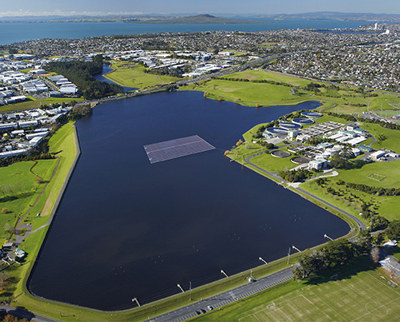 Vector and Watercare intend building New Zealand’s largest solar array on the top of Auckland’s Rosedale wastewater treatment pond.
“It’s the first time floating solar will be seen in New Zealand and the first megawatt-scale solar project to be confirmed,” Vector Group chief executive officer Simon Mackenzie says.
The project planned near the Northern Motorway on the North Shore will generate enough power annually to run the equivalent of 200 average New Zealand homes and help EV uptake.
“Even larger systems are already common overseas and with reports out of Australia of costs as low as 4c-5c per kWh, when that scale arrives here we’ll see solar’s real potential to set a new cap on the wholesale market which over the past few days has been around double that.”
Vector PowerSmart will be used to design and deliver the innovative system.
Watercare chief executive Raveen Jaduram says the project is a fantastic example of how utilities can work together for the benefit of their communities.
“As a large user of energy, it’s important that we look at ways of reducing our environmental footprint and becoming more self-sufficient. Innovative solutions like this on top of wastewater ponds are a smart way to reduce operational costs”.
The array will be used to supplement electricity from the grid as well as cogeneration from biogas, which is already generated on-site from wastewater treatment.
The electricity is used for pumping and aeration for natural bacteria that help break down the waste as part of the treatment process.
Watercare aims to reduce its energy use by 8GWh by 2022 and to achieve energy self-sufficiency at its Mangere and Rosedale wastewater treatment plants by 2025.
The project will involve more than 2700 solar panels and 3000 floating pontoons.
It’s expected to see a reduction of 145 tonnes of CO2e annually – equivalent to the emissions from driving 66 cars.



Join the conversation