
E-mobility safety an issue
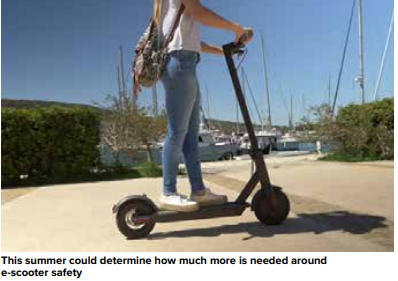
Plenty has been reported about injuries suffered by riders of electric scooters, electric bikes and other forms of personal
e-mobility.
Just e-scooters alone have prompted research such as a paper in the New Zealand Medical Journal titled The Cost of Electric Scooter Related Orthopaedic Surgery.
Authors found the popularity of e-scooters was leading to some riders arriving at accident and emergency departments with injuries like those received in car crashes or falls, usually covered by ACC and resulting in a cost to taxpayers and healthcare systems.
During 19 weeks to February 22, 2019, 21 people with e-scooter injuries needed surgery at Auckland City Hospital at a cost $404,925, which also resulted in delays for others awaiting operations.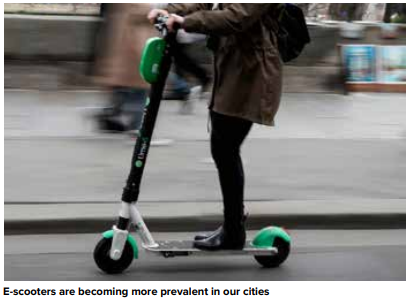
Recorded injuries ranged from head fractures to ankle and leg breaks.
Greater public education and further studies on ways to prevent e-scooter injuries were needed, the paper concluded.
ACC claims for e-scooter injuries exceeded $4.3 million with more than 2000 claims lodged from October 2018 to July 2019, Auckland recording the most claims with 1271 ($1.
76m).
With summer around the corner and more e-scooters expected on the streets, what’s out there to warn or help riders in avoiding accidents and injury?
Various agencies such as the NZ Transport Agency (NZTA) and Auckland Council (AC) provide advice.
Riding in a safe and considerate manner, giving way to pedestrians and mobility devices; riding at a safe speed and wearing helmets are among recommendations.
E-scooter riders must be aged 18 and over, although children (often on the same e-scooter as an adult) have been seen riding them.
The Auckland Council has an E-scooter Shared Services Code of Practice geared mainly towards e-scooter operators which includes safety and operations in its conditions.
Organisations involved with e-scooters and e-bikes have also put out safety advice.
Mercury, for instance, has some tips which include always wearing a helmet (many e-scooter riders don’t wear one), keeping speed down especially around others, obeying the normal road rules, one rider per e-scooter, never using a smart phone while riding (unless remotely connected through a smart helmet and hands-free), ensuring riders and scooters can be seen at night or in dark conditions, wearing appropriate clothing and using common sense – such as ensuring conditions are suitable for riding, avoiding unstable surfaces, and getting off the e-scooter if necessary.
Warning signs have even been posted on popular e-scooter and e-bike pathways where necessary, some suggesting riders not overtake on blind spots and watch out for others on shared paths.
Auckland especially has seen a huge rise in cycling and e-mobility (e-scooters, e-bikes, e-skateboards).
The city has seen nearly 50,000 new cyclists and e-bike riders alone since 2016.
More cycleways and shared paths have been introduced, with city fathers increasing their calls for key city areas to be more pedestrian, cycle and e-mobility orientated.
The Auckland Council says it wants to remain flexible on allowing e-mobility while avoiding having too many shared service bikes and e-scooters.
This summer will probably determine just how e-mobility users fare in our main cities and what more needs to be done.



Join the conversation