
Motorcycling’s Electric Shock – Harley’s LiveWire
This story first appeared in the August issue of EvTalk – CLICK HERE to download the magazine FREE
While it may come as some surprise that the motorcycle industry’s first fully-electric global market product comes from Harley-Davidson, the company admits electrification has been on its mind for some time.
At the global media launch of the all-new Harley-Davidson Livewire in Portland, Oregon, the company told us that development of the LiveWire dates back to 2010 when a small group of engineers were tasked with exploring the idea of what an electric bike from the manufacturer would look like.
The result was Project LiveWire, a small run of 33 prototypes which toured the world getting feedback from thousands of riders on the electrification of motorcycles for Harley-Davidson.At the time, Harley promised that the company’s first electric motorcycle would debut some time around 2020.
The biggest surprise, however, isn’t the fact that Harley-Davidson managed to keep its promise but the fact that to date no other mainstream motorcycle manufacturer has also produced a premium EV motorcycle product.
To be fair, BMW has produced an electric scooter, but for the majority of motorcyclists, a step-through scooter is about as much a motorcycle as a Tesla is a 4×4.
Obviously with LiveWire being electric this comes with a number of pros and cons.The most obvious pro is the fact that electricity is much cheaper than petrol with a full charge costing roughly $5.There is a con in there though and that is the range and recharge time.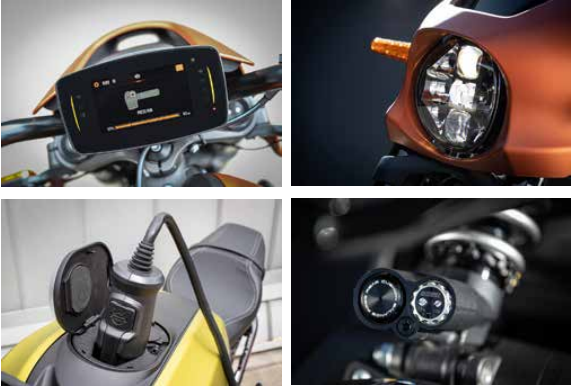
While Harley-Davidson dealers who sign on to sell LiveWire will offer free charging stations outside their dealerships for owners, the bike has a maximum range of 235km in the city, and this drops to 158km if you venture out into the highway.
Charging time for the 15.5kwh battery varies depending on whether the bike us utilising a DC fast charger or standard wall socket.On a fast charger the bike will charge to 100% from zero in an hour, with 80% available after 40 minutes.Charging off a regular AC wall socket at home drastically increases this to 10-12 hours.
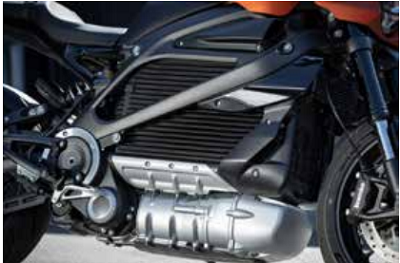
The motor – dubbed the “Revelation” by Harley – runs along the base of the battery pack and produces 78kW and 116nm from 0rpm.Power is sent to the belt final drive via a bevel gear system, which in turn gives the LiveWire its unique sound.
That sound, which is best described as similar to a jet turbine engine, becomes apparent when the bike is moving – and getting the bike to really move was hard to resist with 100kph achieved in a fraction over three seconds.
As your speed increases so does the whine from the bike right up until you hit the bike’s top speed of 177kph.
There is one last potential issue with LiveWire and that is the pricing of the bike when it arrives in New Zealand next year.
With pricing in the USA set at $29,799 just converting that to NZ dollars on the current exchange rate puts LiveWire at nearly $44,000, and that is before any taxes, registration and other on-road costs are added.
Whether LiveWire will reshape the motorcycling industry is something time will tell.
If anything, the premium LiveWire is treading a similar path to other EVs before it and early adopters will have a large part to play in whether the bike is a success.

Join the conversation