
Ten-minute battery charge coming

EVs could be charged within 10 minutes using a self-heating battery and rapid cooling.
An expert in energy storage and co-director of Penn State University’s battery and energy storage technology (BEST) centre, Chao-Yang Wang says he and his team demonstrated they can charge an EV in 10 minutes for 321km to 480km range.
“And we can do this maintaining 2500 charging cycles, or the equivalent of half a million miles of travel.”
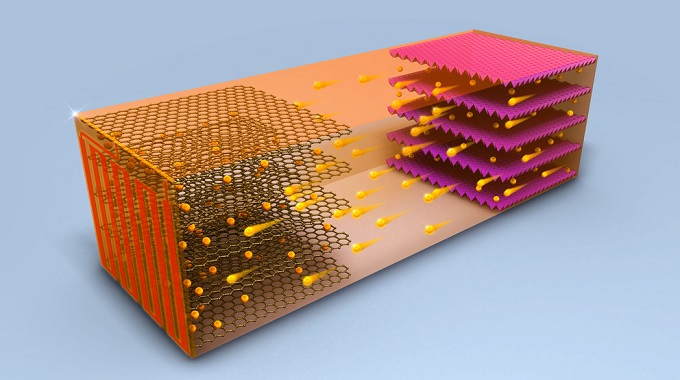
Lithium-ion batteries degrade when rapidly charged at ambient temperatures under 10 degrees Celsius because, rather than the lithium ions smoothly being inserted into the carbon anodes, the lithium deposits in spikes on the anode surface, the university says.
This lithium plating reduces cell capacity, but also can cause electrical spikes and unsafe battery conditions.
Batteries heated above the lithium plating threshold, whether by external or internal heating, will not exhibit lithium plating, the report says.
The researchers had previously developed their battery to charge at 10 degrees Celsius in 15 minutes. Charging at higher temperatures would be more efficient, but long periods of high heat also degrade the batteries.
“Fast charging is the key to enabling wide-spread introduction of electric vehicles,” Wang says.
He and his team realised that if the batteries could heat up to 60 degrees Celsius for only 10 minutes and then rapidly cool to ambient temperatures, lithium spikes would not form and heat degradation of the battery would also not occur.
“Taking this battery to the extreme of 60 degrees Celsius is forbidden in the battery arena,” Wang says. “It is too high and considered a danger to the materials and would shorten battery life drastically.”
The rapid cooling of the battery would be accomplished using the cooling system designed into the car, Wang explains. The large difference from 60 degrees to about 23 degrees C will also help increase the speed of cooling.
“The 10-minute trend is for the future and is essential for adoption of electric vehicles because it solves the range anxiety problem,” Wang says.
The self-heating battery uses a thin nickel foil with one end attached to the negative terminal and the other extending outside the cell to create a third terminal. A temperature sensor attached to a switch causes electrons to flow through the nickel foil to complete the circuit. This rapidly heats up the nickel foil through resistance heating and warms the inside of the battery.


Join the conversation