
Auckland investigates e-bus network impact
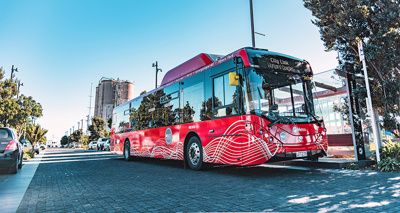 Auckland’s 1360 buses are closer to becoming fully electrified after Auckland Transport (AT) and Vector announced an agreement to explore the impacts of a full implementation.
Vector and AT will immediately start a feasibility study to assess the impact of a fully electric bus fleet on Auckland’s electricity network.
It will also identify opportunities where innovative energy technologies can be used to assist the transition and help avoid large network upgrade costs.
The memorandum of understanding (MoU) is a direct response to AT’s Low Emission Bus Roadmap published in late 2018.
The roadmap outlined its commitment to have all new Auckland buses electric from 2025, with the whole fleet fully electric by 2040.
“Electrifying the bus fleet would stop around 70,000 tonnes of CO2 from entering the atmosphere every year and address the problem of pollution from black carbon, which is at high levels in areas such as the city centre,” Auckland mayor Phil Goff says.
“In 2018 I committed Auckland to ensuring that all replacement buses purchased from 2025 would be non-carbon emitting. Bringing forward that date would be even better and would be possible if the government was to extend to public transport vehicles an incentive scheme similar to its feebate for private electric cars.
“Vehicle emissions represent well over 40% of Auckland’s carbon emissions and electrifying our bus fleet as well as encouraging a shift from cars to public transport is critical to achieving our climate change goals.”
AT operates three electric buses, and is supporting electrification of Waiheke Island’s buses, with six electric buses due to arrive this year and more new services being negotiated to start from 2021.
AT bus services manager Darek Koper says a faster transition to electric buses requires a detailed assessment of the future demand on the electricity network.
Vector is involved with several initiatives supporting electrification of the transport sector, including residential EV smart charging and using EVs to power homes (V2H) trials, charging infrastructure projects in collaboration with the Energy Efficiency and Conservation Authority (EECA), and it also maintains 29 public EV chargers across the city.
“This collaboration between our Vector PowerSmart team and Auckland Transport will enable us to proactively plan a way forward to enable the electrification of Auckland’s bus fleet, and to help them think innovatively about new energy technologies and solutions that get the job done without placing unnecessary cost burdens on customers,” says Vector group chief executive Simon Mackenzie.
The first of two reports will explore a route and service profile, which will model the electricity demand that a fully electrified bus fleet requires.
The second report will provide guidance on the electricity network infrastructure upgrades needed at each bus depot, as well as likely timings and costs.
Both reports are expected to be delivered by June 2020.
Buses comprise 87% of the carbon emissions produced from public transport, so converting them from diesel to electric should help meet New Zealand’s 2050 zero-carbon emissions goal.

Join the conversation