
EVs key to lower emissions – report

EVs are one of New Zealand’s biggest opportunities to reduce carbon dioxide emissions.
So says a newly released report commissioned by electric line companies and councils which collaborate via the Wellington Region EV Working Group.
EVs are critical to decarbonising road transport, according to the Greater Wellington Regional Council which endorses the Supporting Electric Vehicles in the Wellington Region report – also supported by the Masterton District Council.
Greater Wellington Climate Committee chair Thomas Nash says the report shows how it is possible to meet net zero emissions targets by working closely together to influence government policy on the key issues of access to EVs, electricity supply and charging infrastructure.
“There is still time for us to halve net emissions globally by 2030 and to reach zero by 2050 so that we can limit global warming to within 1.5 degrees Celsius,” he says.
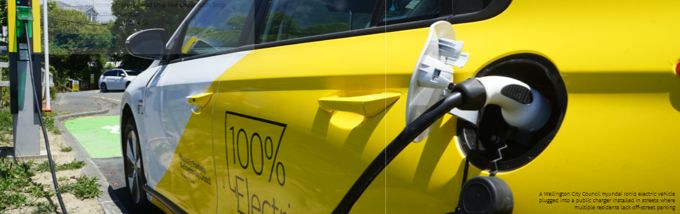
“New Zealand can reach this goal and lead the way by ensuring all new vehicles are electric from 2030 at the latest.
“We all need to incorporate EVs in organisational planning, strategy and operations, prioritise EVs in fleet procurement decisions, advocate for public EV chargers, and facilitate the uptake of battery-electric buses for public transport.”
Nash says recommendations taken from the report will be built into regional council plans, such as those for emissions reduction and transport.
The report suggests organisations and individuals adopt an ‘EV first’ policy which Greater Wellington has already taken on-board with its goal of having 50% EVs in its fleet by 2024 and 100% by 2030.
“Greater Wellington will co-ordinate with other organisations in the Regional EV Working Group and push central Government and others for stronger policies to help drive the uptake of EVs, increase supplies of renewable electricity and charging infrastructure to power EVs and find solutions for the reuse and recycling of EV batteries,” Nash says.
Wellington region has the third greatest number of EVs per head of population in the country (4.6 EVs per 1000 people – behind Auckland and Otago respectively).
“The trend is clearly moving in the right direction. Now, to keep us on track to meet national climate goals, we need to increase this so that at least 6% of all vehicles in the region are EVs by mid-2024.”
He says that under an ‘EV first’ policy EVs will become cheaper and more available to the public for second-hand purchases.

Join the conversation