
Batteries essential for maritime sector – report
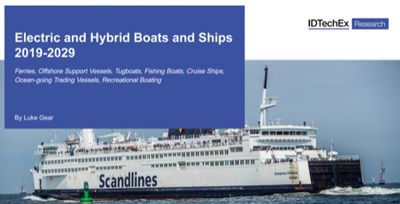 Vessel owners have this year had to deal with an ‘emissions control world’ for the first time in a change to the sulphur content allowed in marine fuels.
Just 15 of the biggest ships emit more nitrous-oxides (NOx) and sulphur-oxides (Sox) than all the world’s cars together, IDTechEx technology analyst Luke Gear says in Electric and Hybrid Boats and Ships 2019-2029.
The report sets out the battery demand expected from maritime transport over the next decade, from leisure boats to ocean-crossing ships.
About 50,000 ocean-going ships exist in the global fleet, with 2-3% of global CO2 emissions coming from shipping (IMO) compared to 16% for road transport (OICA), Gear says.
Unlike most other mobility sectors, which predominantly tend to switch partly or completely to a traction battery in order to meet emissions targets, a mixture of solutions have a role to play for boats and ships due to the sheer scale of the power, energy and distance requirements typical from the sector, he adds.

“Solutions vary from batteries and fuel cells to premium fuels, scrubbers and slow steaming.
“Of the solutions, none is a silver bullet, and each has its advantages and disadvantages.“
IDTechEx expects a shortage of traditional solutions to significantly drive uptake of batteries in the largest ships to meet the new stringent emissions regulations.
Batteries are already important for leisure boating, ferries and coastal vessels where they have enjoyed steady uptake.
Visit www.IDTechEx.com/Research/EV or contact Research@IDTechEx.com for more information.

Join the conversation