
Rideshare among congestion beaters
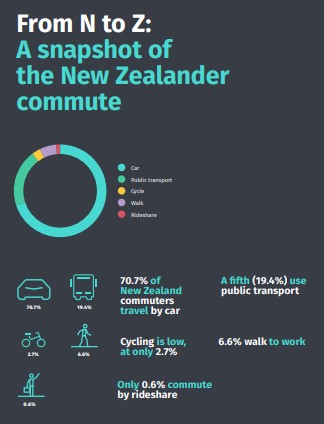
Traffic congestion is prompting more commuters to take public transport (44%) like electric trains and use rideshare services (28%) – many of which are now incorporating EVs.
About 70% of those surveyed reported having changed their commute in some way in response to climate change, but only 4% have sold their cars.
Almost a third (29.6%) reported that concerns about the planet are not influencing their commuting decisions, with the remainder primarily taking public transport (37.8%) or walking and cycling (37.5%) more.
It seems that whatever people choose, they are likely to be on the roads as opposed to choosing walking or cycling, so congestion still needs to be addressed, says a report from location and mapping services platform HERE Technologies.
The report has little mention of e-mobility, autonomous vehicles (AVs), electric ferries or even the potential for pilot-less electric air taxis.
It covers how urban congestion affects New Zealand commuter transport choices, what changes people are willing to make and what might be holding them back.
The findings show that New Zealand commuter attitudes and behaviours around transport are divided in the face of increased congestion with just over a third of the country (37%) resigning themselves to the fact that congestion is now ‘just a part of life’, suggesting they are unaware of how specific modes of transport might be impacting their journey.
 Almost half (43.8%) are also willing to choose their mode of transport based on real-time traffic updates, and potentially avoid adding to already-busy roads, where far fewer are willing to cycle or walk more often (21.7%) or even try working more flexible hours (15%).
Where to from HERE: Mapping multi-modal movement in New Zealand surveyed 1000 respondents (aged 18+) hailing from Auckland, Wellington and Christchurch.
Those in Wellington were most likely to sell their car in favour of rideshare (59.9%), with 42% using public transport more, and 51% saying they would change mode due to live traffic updates.
Within Auckland, residents were most likely to just accept traffic as a part of life (46%), with 48% using public transport more, and the same number willing to give it a go.
While Auckland is said to have the worst traffic in New Zealand, its residents also are the least open to change, with almost half (46%) still believing that driving is the fastest and most convenient option, and the same number is willing to accept their traffic in favour of keeping their routine and car.
People in Christchurch were the most varied in how they commute but least likely to sell their car (62% wouldn’t even consider it) and are using public transport less than other cities (29%).
“Cities like Auckland, Hamilton and Christchurch ranked in the top 10 for congestion problems across Oceania last year, and Auckland alone is losing around $3.5million per day to traffic congestion,” HERE Oceania head Daniel Antonello says.
“More to the point traffic jams are the largest cause of air pollution and one of the largest contributors to excessive carbon footprints. They impact people’s happiness, where they choose to live, how productive we are as a society, and the success of our economy.”
At HERE, we know that location technology and historical traffic can help New Zealand’s major cities make more informed decisions on urban planning and infrastructure projects, he adds.
“Moreover, giving commuters access to this real-time data empowers them to make more informed transport choices, ensuring congestion isn’t just something we have to live with.”

Join the conversation