
Inaugural Polestar Day in California heralds future innovations
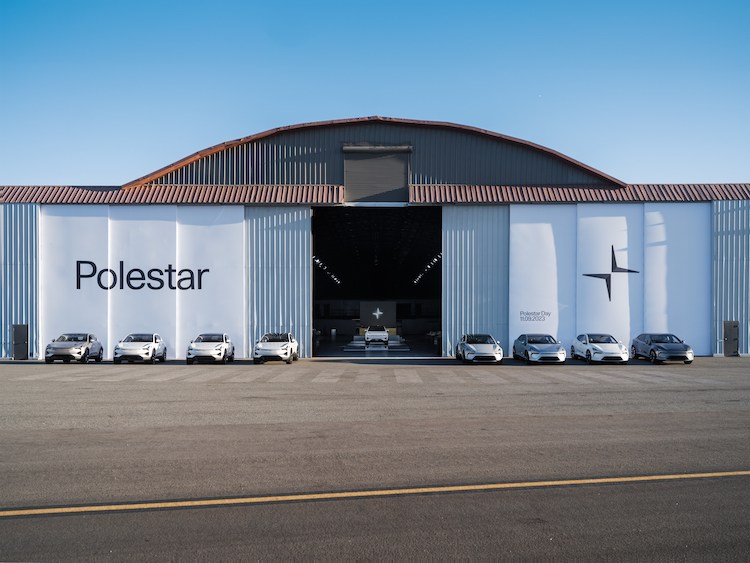
The inaugural Polestar Day held in Los Angeles, California, saw the brand gather its key executives and innovations in front of an audience of customers, investors and press.
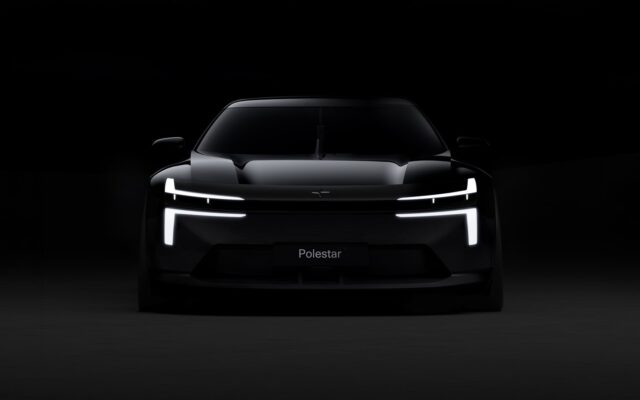
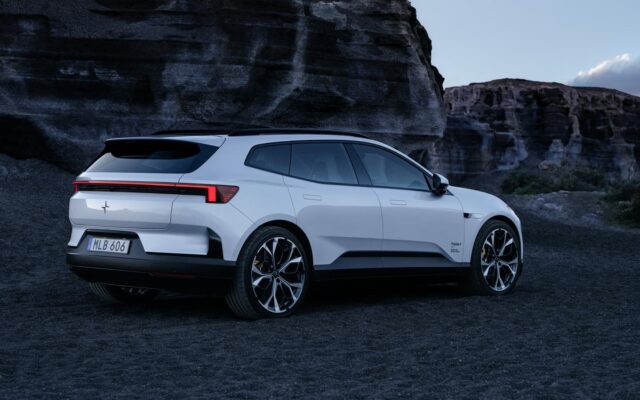
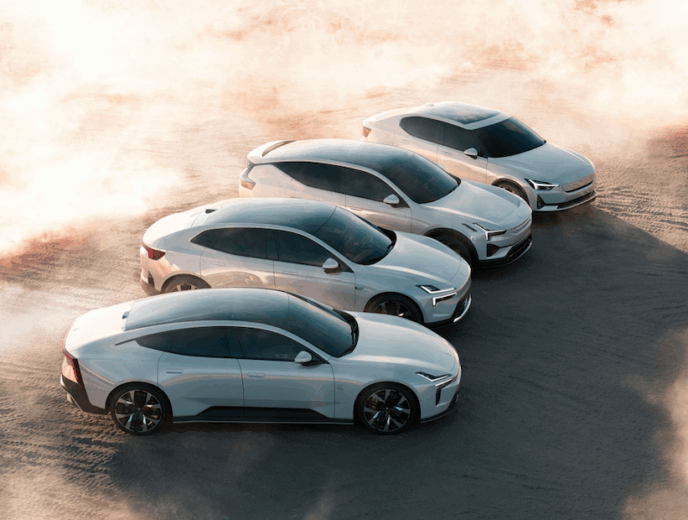
The Polestar team was joined at the event by executives from supply partners including Bcomp, Göteborg Energi, Luminar, Mobileye and StoreDot. A full range of the brands future models was exhibited including Polestar 3, Polestar 4, Polestar 5, Polestar Precept, the Polestar Electric Roadster Concept and Polestar Synergy.
Guests were able to test drive the latest MY24 Polestar 2, as well as ride in Polestar 3 and Polestar 4 development prototypes with Polestar engineers and experts.
Among the announcements made by the Swedish performance electric car manufacturer was that it is initiating a pilot project and launching a Virtual Power Plant for vehicle-to-grid technology development with Polestar 3.
In addition, it says Mobileye and Luminar are joining forces to bring LiDAR to Polestar 4 to enable Mobileye Chauffeur autonomous driving functionality in the future.
Polestar also confirmed that is collaborating with StoreDot on extreme fast charging technology and plans to demonstrate this at full scale in a Polestar 5 prototype in 2024. .
“Polestar Day provides substantial insight into our products and the innovations we are working on together with global leaders to bring the best electric performance cars to market. We are progressing from having one car on the road to having three, with the ongoing launches of our two SUVs, Polestar 3 and Polestar 4,” Polestar chief executive Thomas Ingenlath says.
Polestar 3 vehicle to grid (V2G) project
Polestar is joining electricity grid sector stakeholders with a large-scale vehicle-to-grid (V2G) project in Gothenburg, Sweden, funded by the Swedish Innovation Agency Vinnova and piloting a large fleet of Polestar 3 cars.
Together with Swedish National Grid authority Svenska Kraftnät, local grid owner Göteborg Energi Nät, regional energy distributor Vattenfall Eldistribution, home charging provider Easee, and research partner Chalmers University of Technology, Polestar aims to find potential business models for V2G and trial tangible use cases that can be scalable and applicable across regions.
At the same time, Polestar is forming a collaboration with the California Energy Commission and the independent, non-profit energy R&D institute EPRI, on a pre-study – also funded by Vinnova – to create a roadmap for the implementation of vehicle-to-grid services in California.
Bidirectional charging technology allows Polestar 3 cars to not only charge but also discharge energy from their batteries back to the individual home or the electricity grid. To help manage V2G integration, Polestar is developing a Virtual Power Plant (VPP) that links all participating Polestar 3 cars connected to the grid.
The cloud-based VPP calculates the collective capacity of connected batteries and initiates charging or discharging based on grid demand and battery longevity optimisation. This will allow car owners to both contribute to the energy transition and monetise their EV while it’s parked, without any intervention.
The owner simply plugs in their vehicle and the VPP and smart charging tech will do the rest – optimising battery use for their transport needs and support the grid.
Polestar 4 autonomous driving
Polestar is working with Luminar, and Mobileye, to enhance safety and the future autonomous driving capabilities of Polestar 4 with the integration of Luminar’s next-generation LiDAR technology with Mobileye’s Chauffeur platform.
The Polestar 4 is planned to be the first production car to feature Mobileye Chauffeur, now with Luminar LiDAR, which builds upon the full-surround camera-based SuperVision platform available in Polestar 4 from launch. Together, the three companies aim to offer eyes-off, point-to-point autonomous driving on highways, as well as eyes-on automated driving for other environments.
With Mobileye Chauffeur, Polestar 4 is set to feature three Mobileye EyeQ6 processors, a front-facing LiDAR from Luminar, and Mobileye’s front-facing imaging radar to provide the extra layer of sensing and artificial intelligence needed to enable eyes-off, hands-off driving.
LiDAR (Light Detection and Ranging) uses lasers to create a highly detailed 3D map of the surrounding environment. Luminar’s LiDAR is uniquely engineered from chip-level up and with a higher wavelength, enabling the greatest level of performance and safety capabilities for production cars. When coupled with Mobileye’s Chauffeur platform, the result will be a turnkey, safer and high-performing automated system.
Polestar 5 extreme fast charging
Polestar is working with StoreDot to bring extreme fast charging (XFC) technology to production. Dubbed ‘100-in-5’, it sees 100 miles (160 km) of range charged in just five minutes, can be integrated into battery pack formats that are already available, and does not need to rely on a battery pack design revolution.
At the Polestar Day, StoreDot’s XFC pouch cell charging demonstration was shown alongside Polestar’s prototype battery module that integrates XFC technology. As part of the ongoing advanced engineering project, the two companies plan to demonstrate StoreDot’s XFC technology at full scale in a Polestar 5 prototype in 2024.
Join the conversation