
Honda plans more EVs

Honda has reaffirmed its belief that e-mobility (EVs and e-motorcycles) is best, aiming to have EVs and fuel cell EVS (FCEVs) represent 100% of its global vehicle sales by 2040.
The Japan-based company must look ahead to the period of EV popularisation (second half of the 2020s) and build a strong EV brand, says Honda in a recent business briefing on electrification and investment.
It plans to reduce the cost of batteries procured in the US by more than 20% (it has enough batteries for about two million EVs annually), will launch seven EV models globally in the Honda O Series by 2030, and will introduce a micromobility product with four Mobile Power Packs (MPP) in Japan before the end of FY2026 and invest 10 trillion yen (about NZ$104.7 billion) in resources through to FY2031.
Honda is confident the EV shift will continue to proceed steadily, says its director, president and global chief executive Toshihiro Mibe.
“As of 2030, Honda plans to make EVs and FCEVs represent 40% of its global auto sales, and to produce more than two million units of EVs.”
Honda previewed its EV range at CES 2024 and has joined forces on EVs with Nissan.
It’s aiming to achieve a return on sales (ROS) of 5% for its EV business as of 2030 to further increase its profit margin to make its BEV business self-sustaining.
Honda plans a market launch of a model similar to its “Saloon” concept in 2026.
With the adoption of a new platform for mid- to large-size EVs and a further advanced power unit, a package featuring unprecedented styling with a low vehicle height and a short overhang will be realised, says the company, adding that a newly developed compact e-Axle and an ultra-thin battery pack allows a thinner motor room and floor providing low vehicle height and a spacious and comfortable interior space.
“In addition to lighter body frames, the new EV series models will adopt an all-new power unit, which was made lighter and thinner by applying Honda’s original technologies amassed through the development of F1 machines and HEV models.
“This will enable Honda to reduce the overall vehicle weight by approximately 100kgs compared to initial Honda EVs.”
The new EV series models will achieve both a sporty driving experience and top electricity efficiency performance, striving for more than 480km range for each of the Honda 0 Series models.
They will offer a digital UX optimised for each individual customer, in conjunction with connected technologies advancements.
Vehicle functions will be continuously updated with over-the-air (OTA) updates.
“The EV models we will introduce in the second half of the 2020s will continuously advance in a way that they will possess intelligence to be more attentive to the preferences and needs of each individual customer,” says Honda.
Automated driving (AD) and advanced driver assistance systems (ADAS) offer a seamless mobility experience, not only inside the vehicle but the entire process from the moment the customer enters the vehicle until they exit the vehicle, says Honda.
It aims to build value chains in stages with a central focus on batteries.
Honda sees the mid-2020s as a transitional period for EVs.
Demand is strong for hybrid-electric models, Honda saying it will enhance the lineup globally.
It intends introducing 10 EV models in China by 2027 and make EVs represent 100% of its automobile sales there by 2035, unveiling the “Ye Series”.
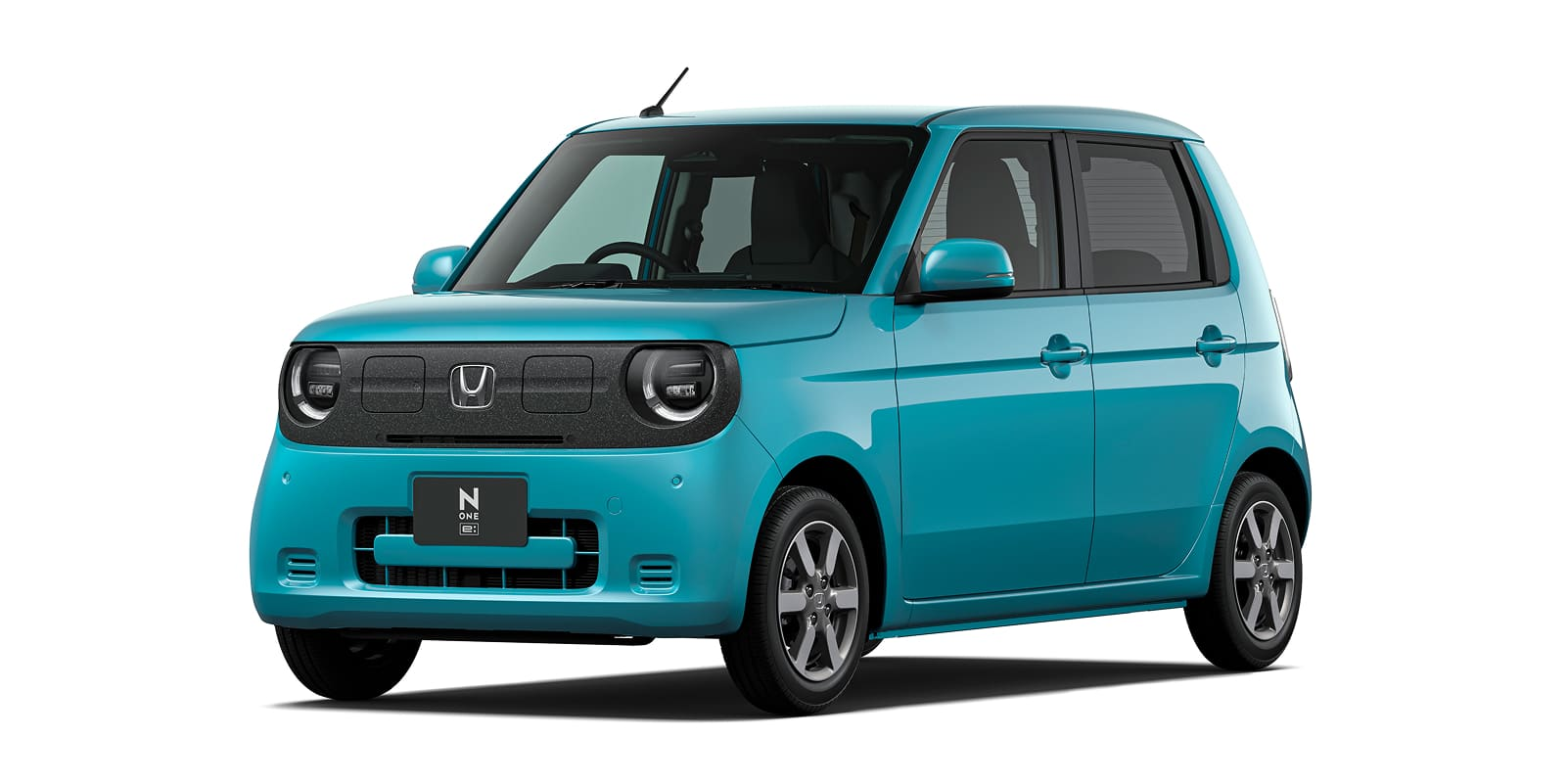
Starting with the N-VAN e – a commercial-use mini-EV on sale in Japan later this year, Honda says it will make sequential introductions of small-size EVs in regions where there is a need for them.
This also will include introduction of personal-use mini-EV models in 2025 as well as small EVs in 2026.
E-motorcycle models powered by two MPPs will be introduced this year.
Honda says it will use funds generated by its ICE business to invest in EVs and other new businesses.

Join the conversation