
Unilever NZ introduces PHEV fleet and home charging
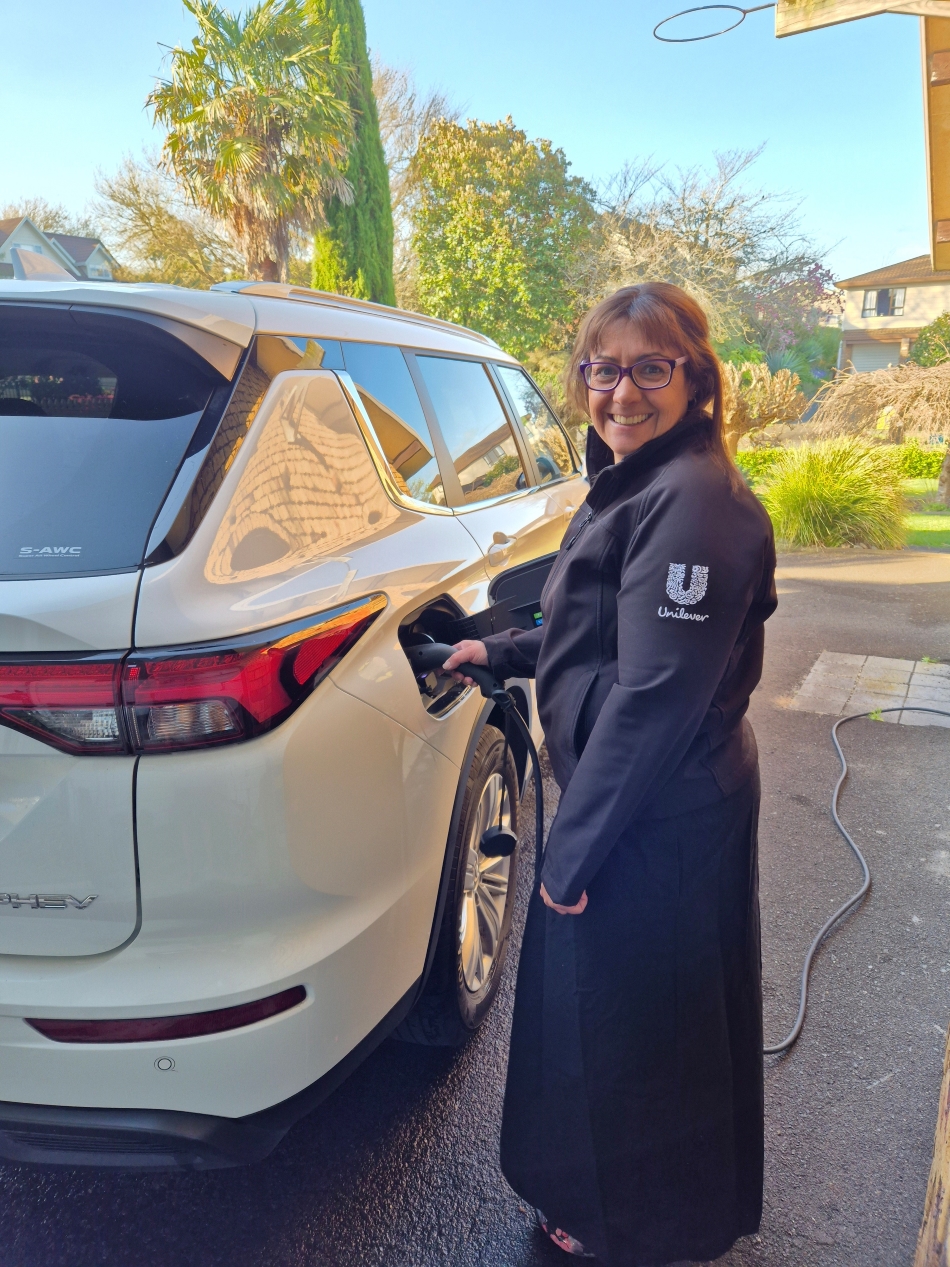
Unilever New Zealand is not only electrifying its fleet but installing home charging.
In December 2023, Unilever NZ introduced a plug-in hybrid (PHEV) fleet comprising 23 Mitsubishi Outlander PHEVs.
Three other fleet vehicles are Kia Niro EVs.
This initiative includes covering the cost of home charger installation and monthly charging, helping employees lower fuel expenses and carbon emissions, says Unilever.
Since May this year, Unilever NZ has achieved a 37% reduction in fleet carbon emissions, ensuring it is well on target to achieve a 90% reduction over the next three years.
Adopting PHEVs is a practical first step, says Unilever NZ managing director Cameron Heath.
“While fully electric vehicles are the future, current infrastructure is still catching up,” he says.
“We’re confident that as the network of charging stations expands, we’ll continue transitioning toward a 100% electric fleet by 2030.
“This approach allows us to reduce emissions now while preparing for improvements in EV infrastructure.”
One Unilever employee benefiting from this initiative is Waikato/Bay of Plenty region business manager Christine Smith.
Driving up to 1000km per week in her Mitsubishi Outlander PHEV, Smith has cut her fuel costs by 50%, from $600 to $300 per month, while Unilever NZ covers her home charging expenses.
“The PHEV lifestyle has been incredibly convenient for me, especially with the ability to charge at home,” she says.
“It’s been a seamless transition, allowing me to focus on work without worrying about charging stations, and I’ve seen real savings.
“As charging infrastructure continues to improve, I’m excited to eventually make the switch to a fully electric vehicle.”
In addition to equipping staff with more sustainable vehicles in New Zealand, globally Unilever is piloting one of the world’s first heavy-duty electric trucks, furthering its commitment to achieving net-zero emissions across its value chain by 2039, as part of Unilever’s Climate Transition Action Plan.
The 44-tonne Volvo e-truck will run entirely on renewable power.
Unilever says it is the first heavy-duty electric vehicle with sufficient range to meet its business need of transporting goods from its distribution centres to retail customers – and the first such vehicle to hit the road in the Netherlands.
Unilever is also a founding member of The Climate Group’s EV100 and EV 100+ initiatives, which brings together companies committed to switching to EVs by 2030.
Unilever ANZ has reduced its operational carbon footprint by powering factories with 100% renewable grid electricity since 2020.
Last year, its Tatura factory became Unilever’s first Australian site to start installing solar thermal technology, reducing its dependence on natural gas.
This means the factory which makes pantry staples including Continental ‘Cup-a-Soup’ and Hellmann’s mayonnaise is one step closer to reaching Unilever’s global target to reduce Scope 1 and 2 emissions by 100% by 2030.
Minimising the environmental footprint of transport is also one of the measures of being a B Corporation, which Unilever ANZ achieved in 2022.
“We’re incredibly proud to be B Corp certified, which reaffirms our commitment to driving sustainable change across every aspect of our business,” says Heath.
“Electrifying our fleet is just one of many ways we’re living out those values, showing that businesses can lead by example.
“By investing in initiatives like home charging, we’re empowering our teams to make more sustainable choices every day,” he says.
“As we continue on this journey, we hope to inspire others in New Zealand to follow suit, accelerating the shift towards a low-carbon future.”
Join the conversation