
BYD registers more EVs in Europe than Tesla

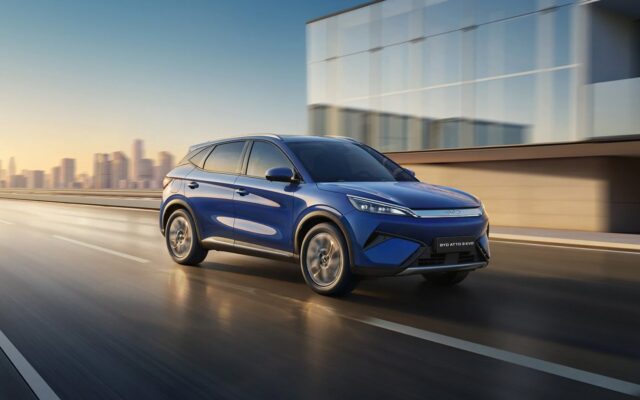
BYD registered 7231 battery electric vehicles (BEVs) in Europe in April 2025, while Tesla registered 7165.
So says automotive business intelligence firm JATO Dynamics which works across more than 50 countries and did the data for 28 European nations.
“However, the standout performer of the month was arguably the Volkswagen Tiguan, in fourth position, with registrations up by 32% to 16,300 units,” the company says.
“Other strong performers include the Toyota Yaris Cross, Dacia Duster, Opel/Vauxhall Corsa, Peugeot 3008, Jeep Avenger and Mini Cooper.”
JATO Dynamics says the automotive market was stable in April and throughout 2025 so far, adding BEV and plug-in hybrid (PHEV) registrations were up by 28% and 31% respectively.
“Although the difference between the two brands’ monthly sales totals may be small, the implications are enormous,” says JATO Dynamics global automotive analyst Felipe Munoz.
“This is a watershed moment for Europe’s car market, particularly when you consider that Tesla has led the European BEV market for years, while BYD only officially began operations beyond Norway and the Netherlands in late 2022,” he says.
Tesla reported another monthly drop in April, with total volumes down 49% year on year. In contrast, BYD saw an increase of 359% over the same period – thanks to its broad and competitive line up of fully electric vehicles and plug-in hybrids, says JATO Dynamics.
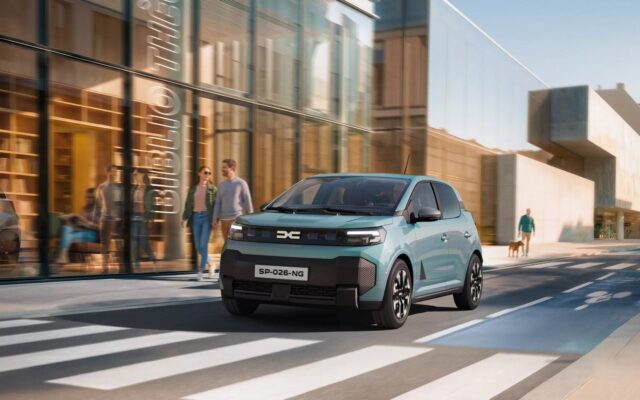
“BYD’s rapid expansion has already pushed it ahead of established European car brands – outselling Fiat, Dacia, and Seat in the UK; Fiat and Seat in France; Seat in Italy; and Fiat in Spain.
“This growth comes even before production begins at its new plant in Hungary.”
The Skoda Elroq led the BEV model rankings for the first time, with 8000 units – vindicating the brand’s decision to introduce an SUV that sits between the B and C segments, says the ccmpany.
Three Volkswagen models followed in the rankings, while the Volkswagen ID.7 increased its volumes by 640% to occupy third position.
Renault registered more than 5600 units of the Renault 5, the sixth most registered EV in Europe in April, while Kia’s recently launched EV3 also made the top 10.
By contrast, volumes of the Tesla Model Y and the Volvo EX30 dropped by 53% and 57%, respectively.
In April, a total of 1,078,521 new cars were registered, 1399 more units than the
same month in 2024.
Year-to-date registrations between January and April 2025 totalled 4,467,681 units – 6560 more than during the same period in 2024.
“While the EV segment was a bright spot for Europe’s new passenger car market last month, these gains were offset by significant declines among ICE (internal combustion engine) vehicles,” says Munoz.
“EV sales need to grow much faster to have a genuine impact on the wider European car market,” he says.
“To gain traction in Europe, China’s carmakers have responded to the threat posed by tariffs by focusing on other powertrains, such as PHEVs, to maintain the momentum behind their global expansion plans,” Munoz says.
In April 2025, BEVs and PHEVs combined accounted for 26% of new car registrations in Europe, a new record, with Chinese car brands behind much of this growth, says JATO Dynamics.
“BEVs accounted for 17% of this total, up from 13.4% in April 2024, while PHEVs represented 9% of monthly registrations, up from 6.9% in the corresponding month last year.
“Despite the imposition of tariffs by the EU, registrations of electric cars made by Chinese automakers in April rose by 59% year on year, reaching almost 15,300 units. Within this segment, carmakers from Europe, Japan, Korea and the US recorded an increase of 26%.
“The PHEV segment saw a notable development, as volumes from Chinese players increased by 546% year on year, from 1493 units in April 2024 to 9649 units in April 2025, meaning Chinese car brands now account for almost 10% of the total number of PHEVs registered in Europe.”
Join the conversation