
Bronco is coming to New Zealand, and it plugs in
Ford has confirmed the China-built Bronco Basecamp range-extender SUV for New Zealand from the second half of 2027, with a 49kWh battery, 800 to 900km combined range and 6.6kW of vehicle-to-load.
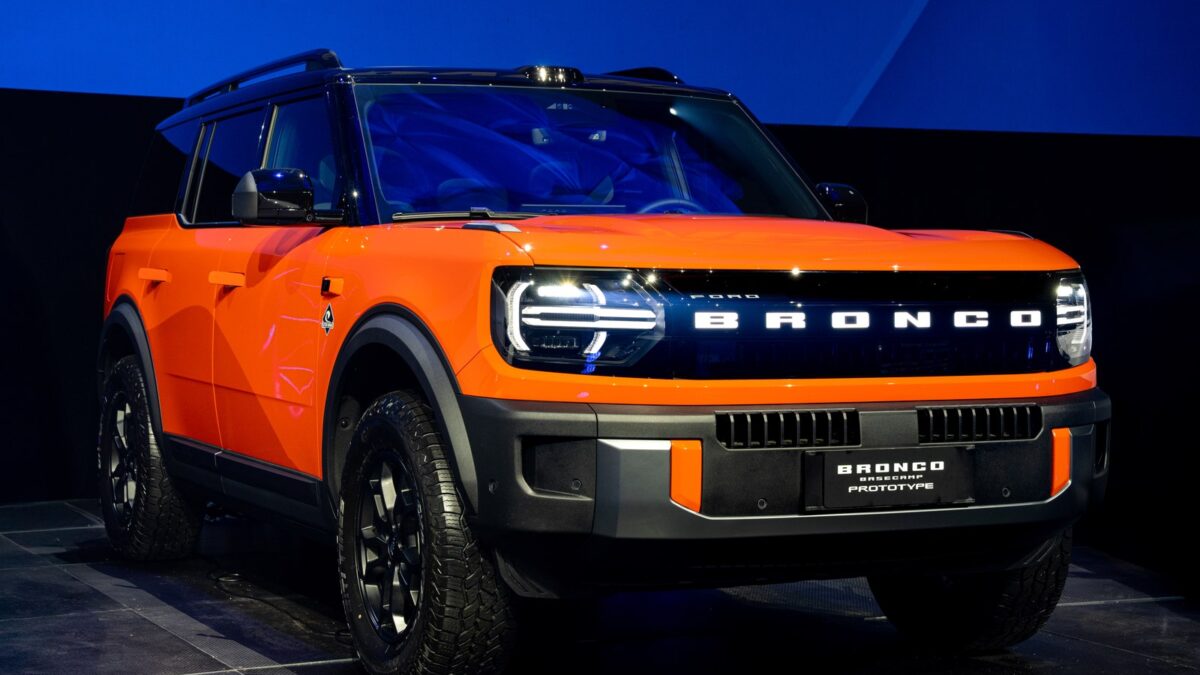
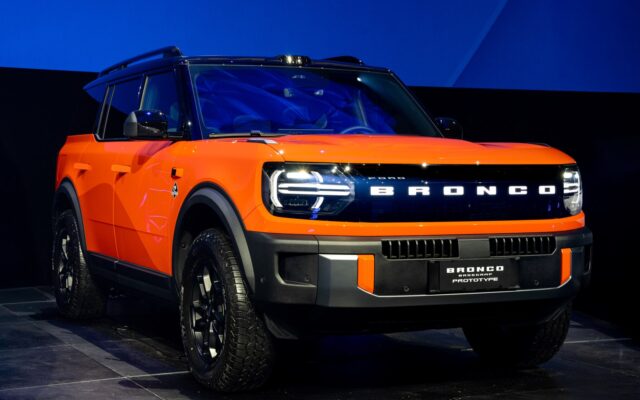
Ford has confirmed the Bronco Basecamp, a China-built range-extender SUV, for New Zealand, with local arrivals to begin in the second half of 2027.
The Basecamp was revealed at Ford’s Uncovered media and dealer event in Melbourne. It is the first electrified Bronco in any market and will be Ford’s first range-extender model in New Zealand. It is developed with Ford’s Chinese joint venture partner JMC and built in Nanchang, and alongside the Transit City electric van is the first China-sourced Ford to be sold here.
Ford calls the powertrain a super hybrid. Twin electric motors drive all four wheels from a 49kWh usable battery, and a 1.5-litre turbo petrol engine acts solely as a generator to recharge it. The engine never drives the wheels. Ford’s preliminary estimate for combined range is 800 to 900km on the WLTP cycle, with the electric-only figure still being finalised. The engineer running the Australian development programme told EVs and Beyond it will be over 100km WLTP.
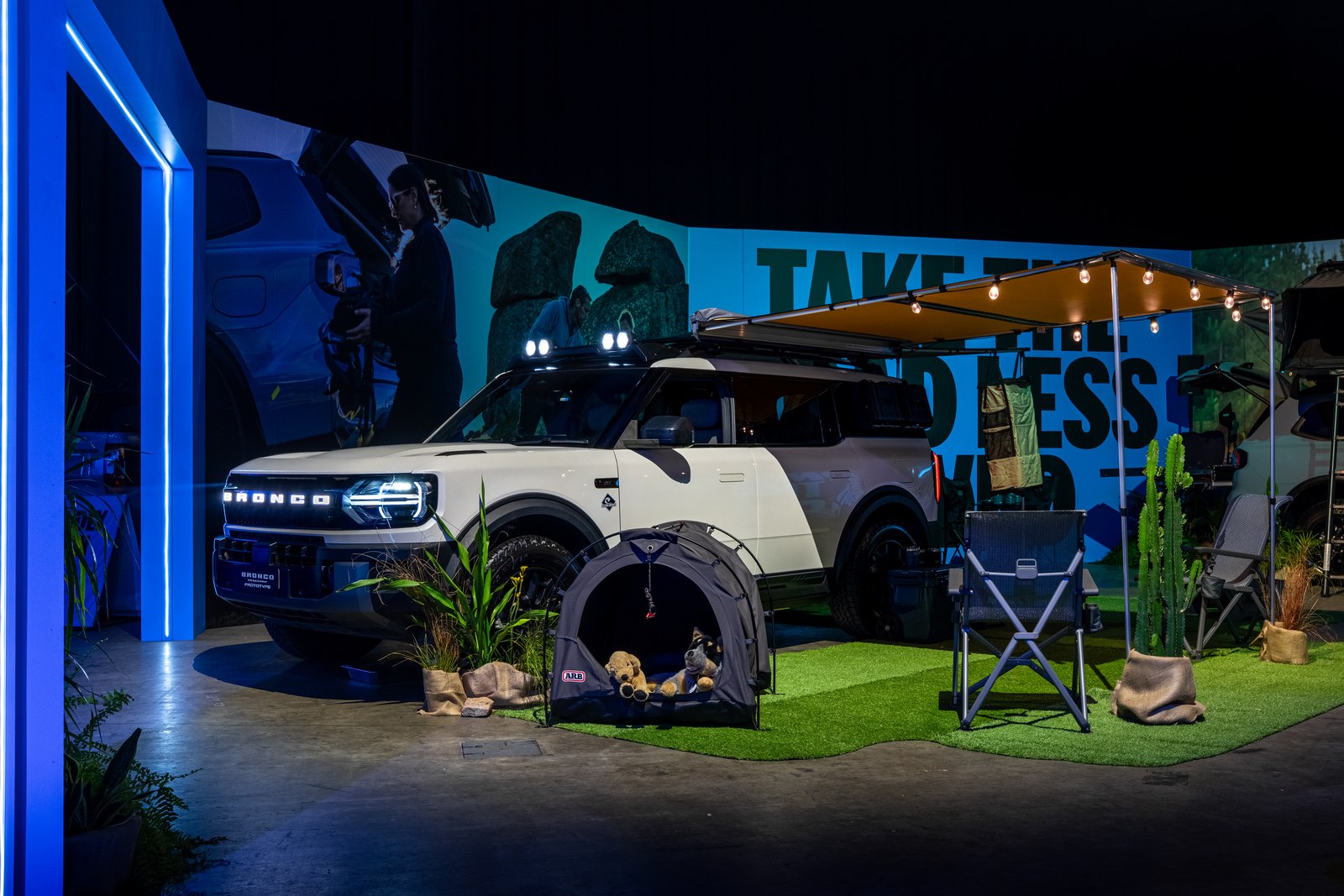
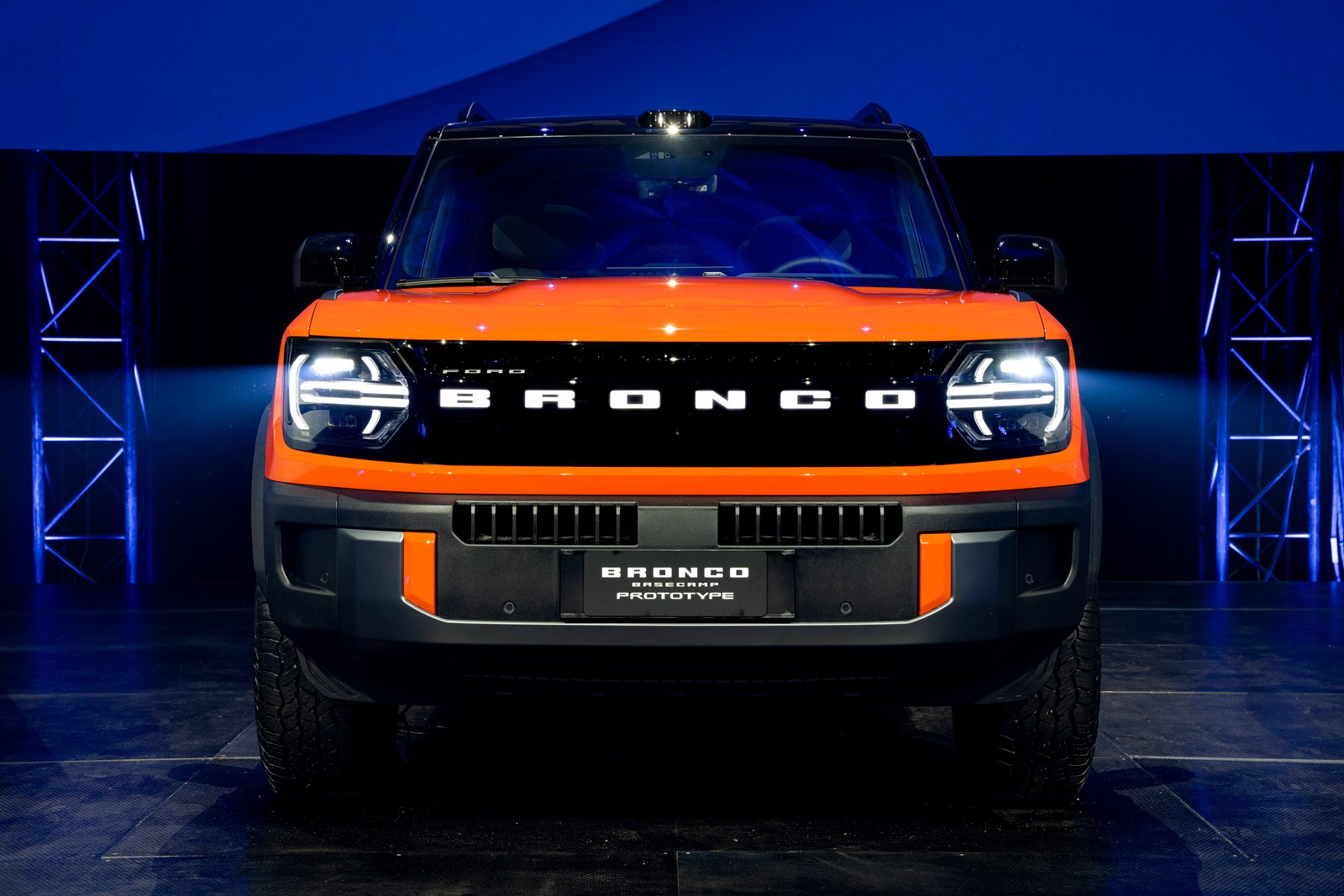
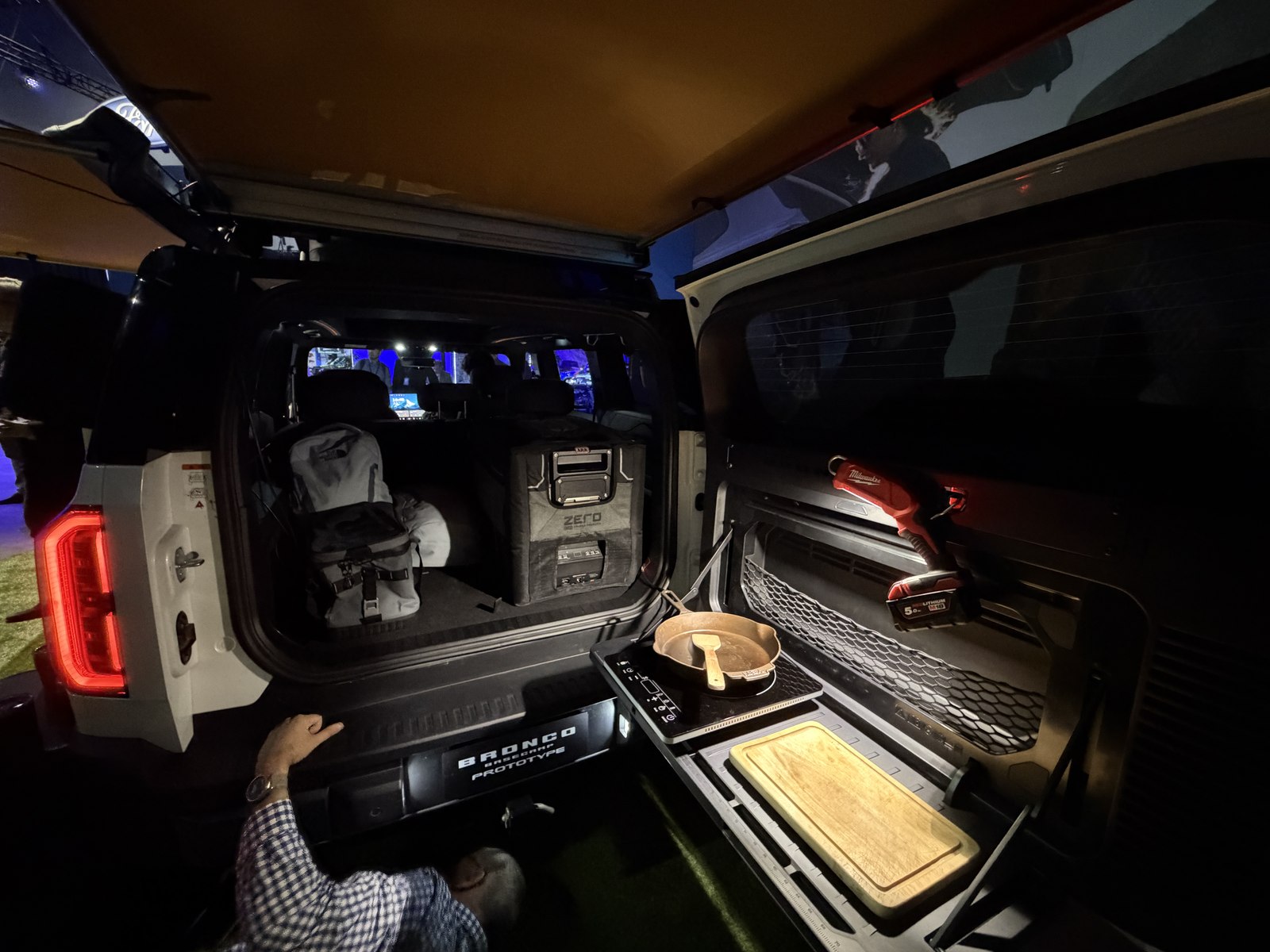
The vehicle has 6.6kW of vehicle-to-load output, which Ford calls Pro Power Onboard, split across a 2.3kW interior outlet and an exterior outlet that delivers up to 6.6kW when the interior port is not in use. The exterior connection requires an accessory adaptor. Ford says it is enough to run induction cooktops, coffee machines, camera gear and camp lighting from the battery.
Ford Australia is tuning the Basecamp’s suspension, drive modes and the software governing when the generator cuts in. The development engineer brought his own test vehicle to the event after a week in the mud at Ford’s You Yangs proving ground, and says the aim is for the Australian calibration to be adopted globally.
“We are tuning this in Australia and we want to try to get that around the rest of the world,” he says. “The global programme is using Australia here to help define the suspension.”
He says a large part of the work is in the energy management, deciding when the engine runs and when the battery carries the load, both on the highway and off road where the battery can deplete under sustained torque demand. The car itself was not designed or engineered in Australia. Ford’s local team is also calibrating the driver assistance systems for a five-star ANCAP rating.
Towing is still being validated. The engineer says the Basecamp will tow, but describes a camper trailer or a pair of jet skis rather than a 3.5-tonne load, because of the effect on electric range. A braked rating will follow.
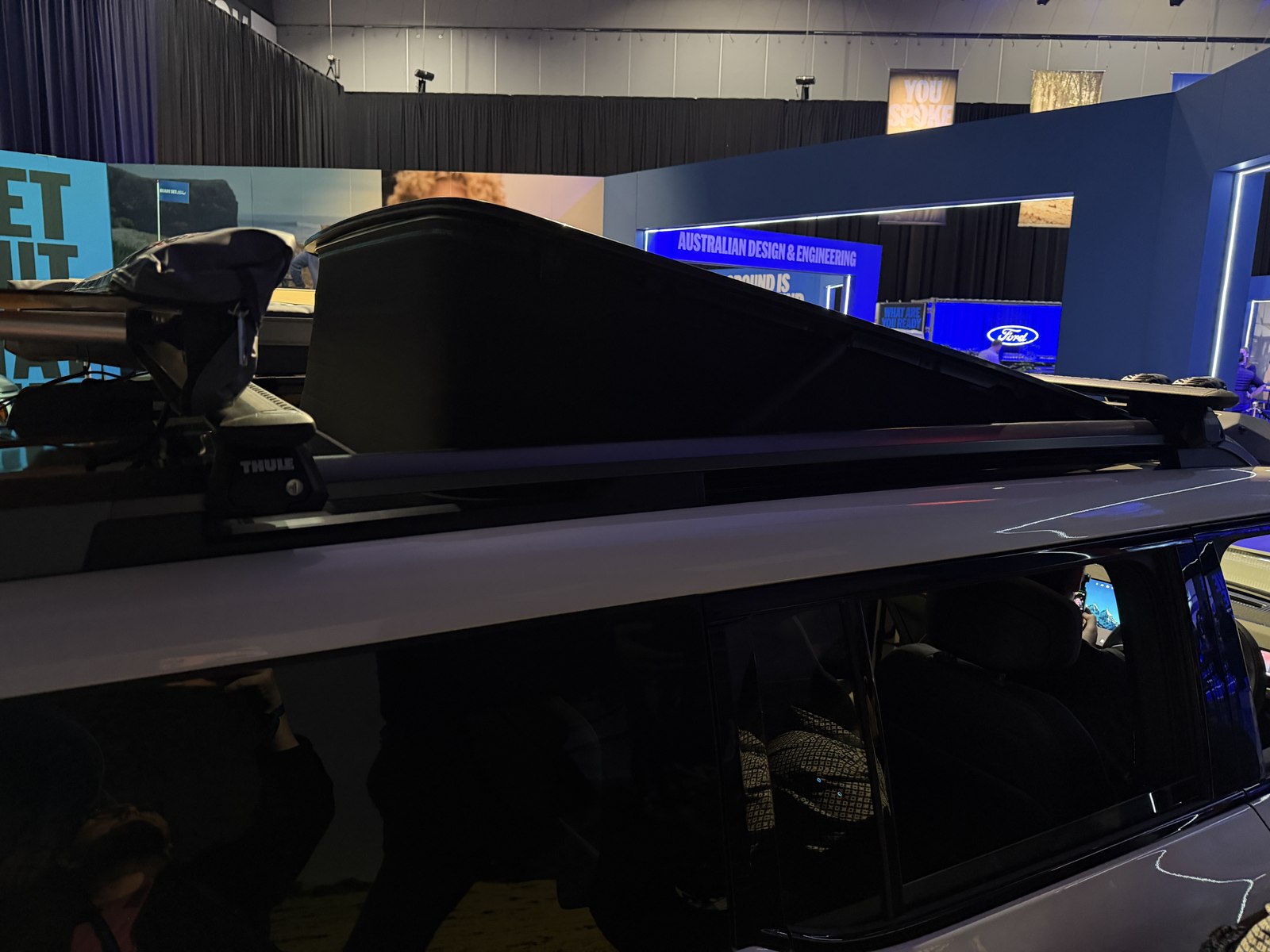
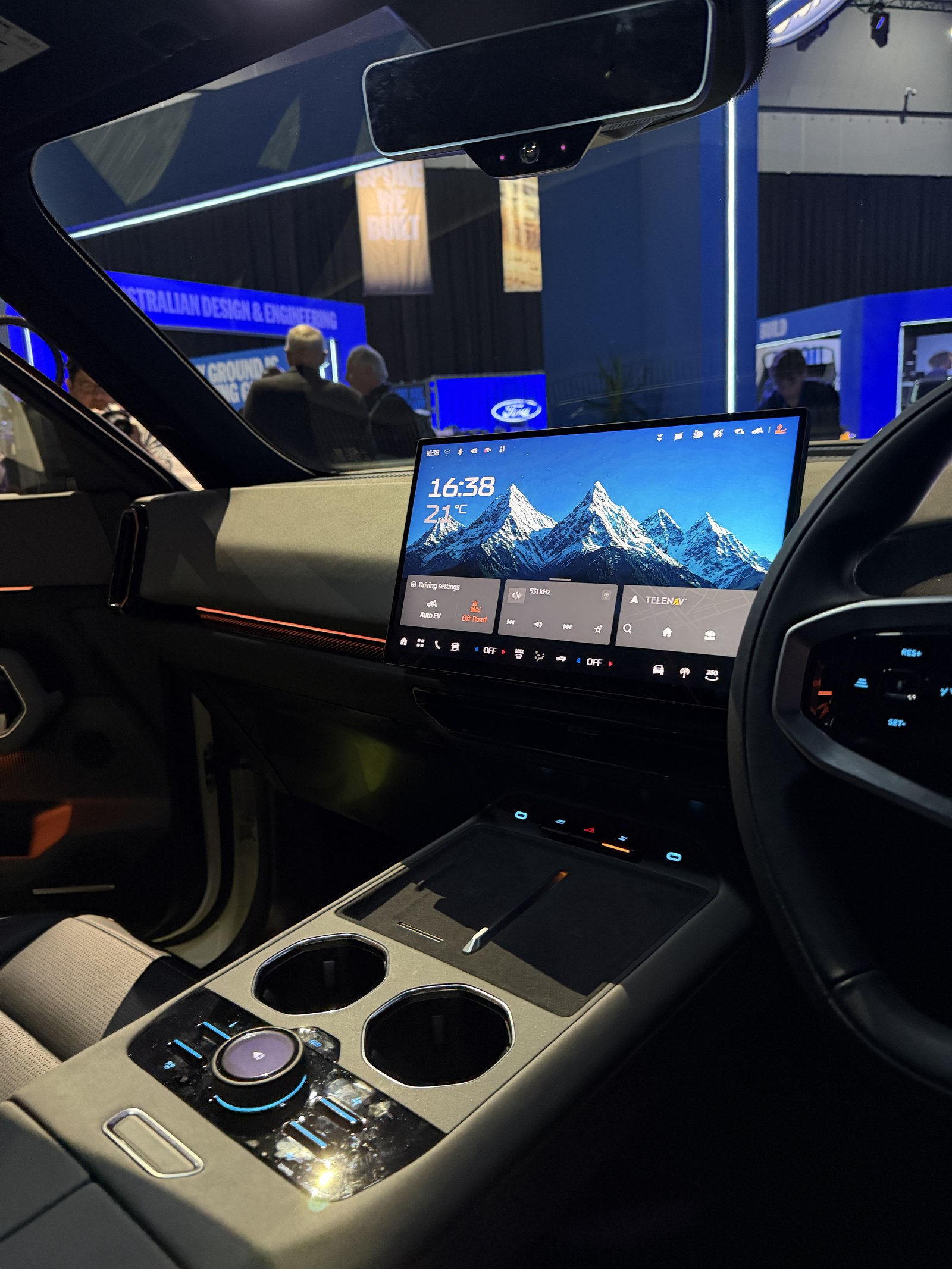
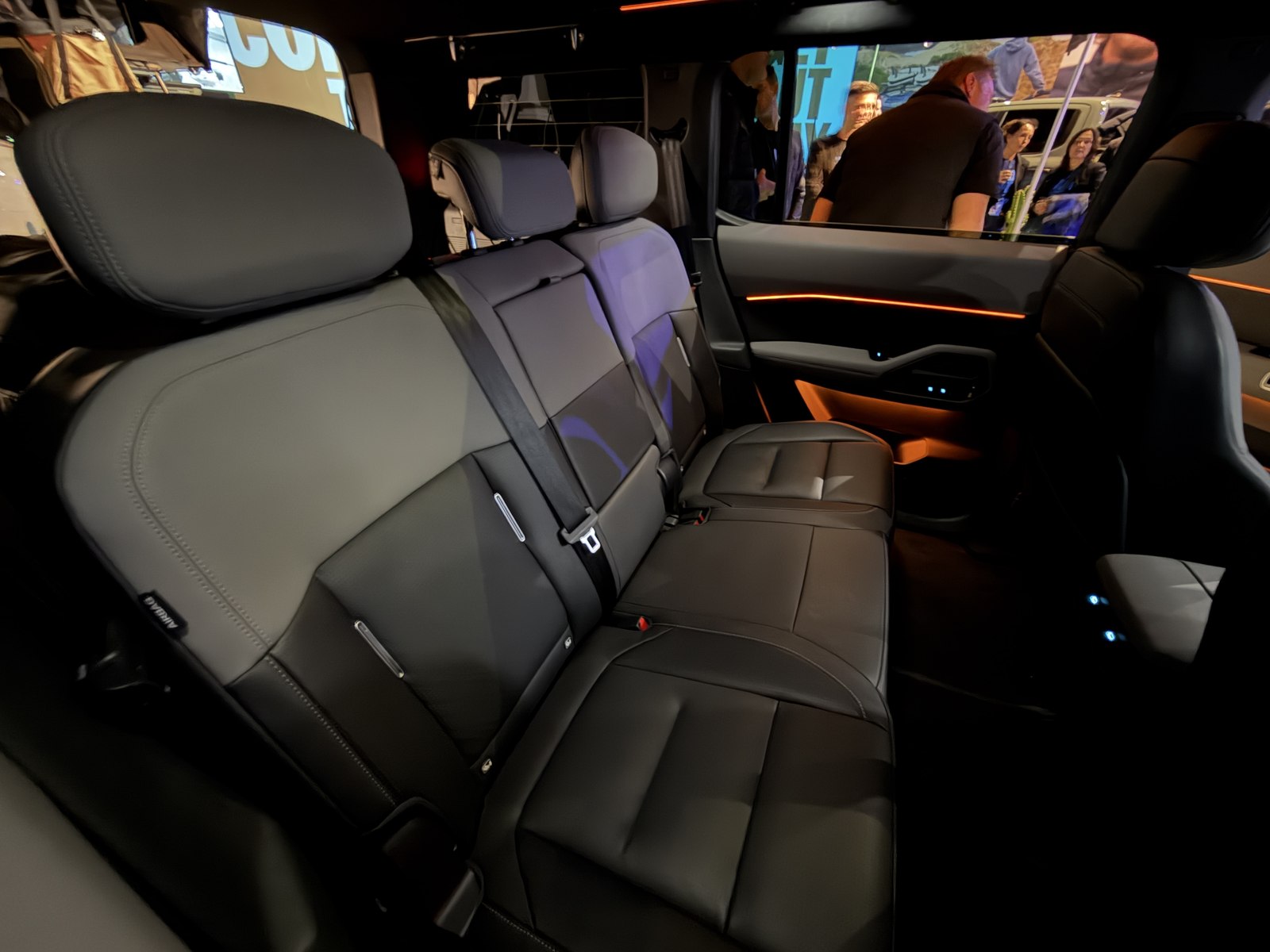
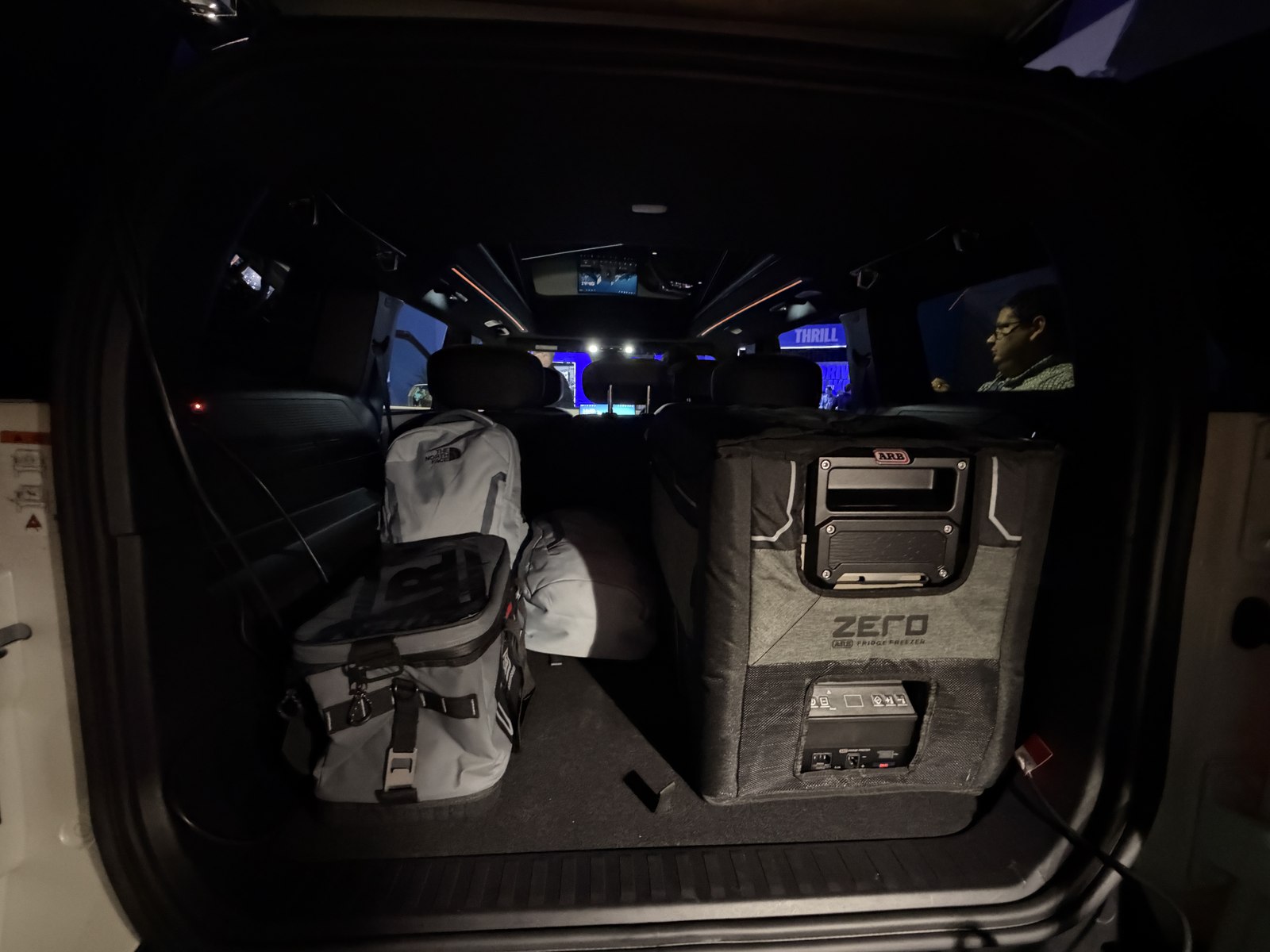
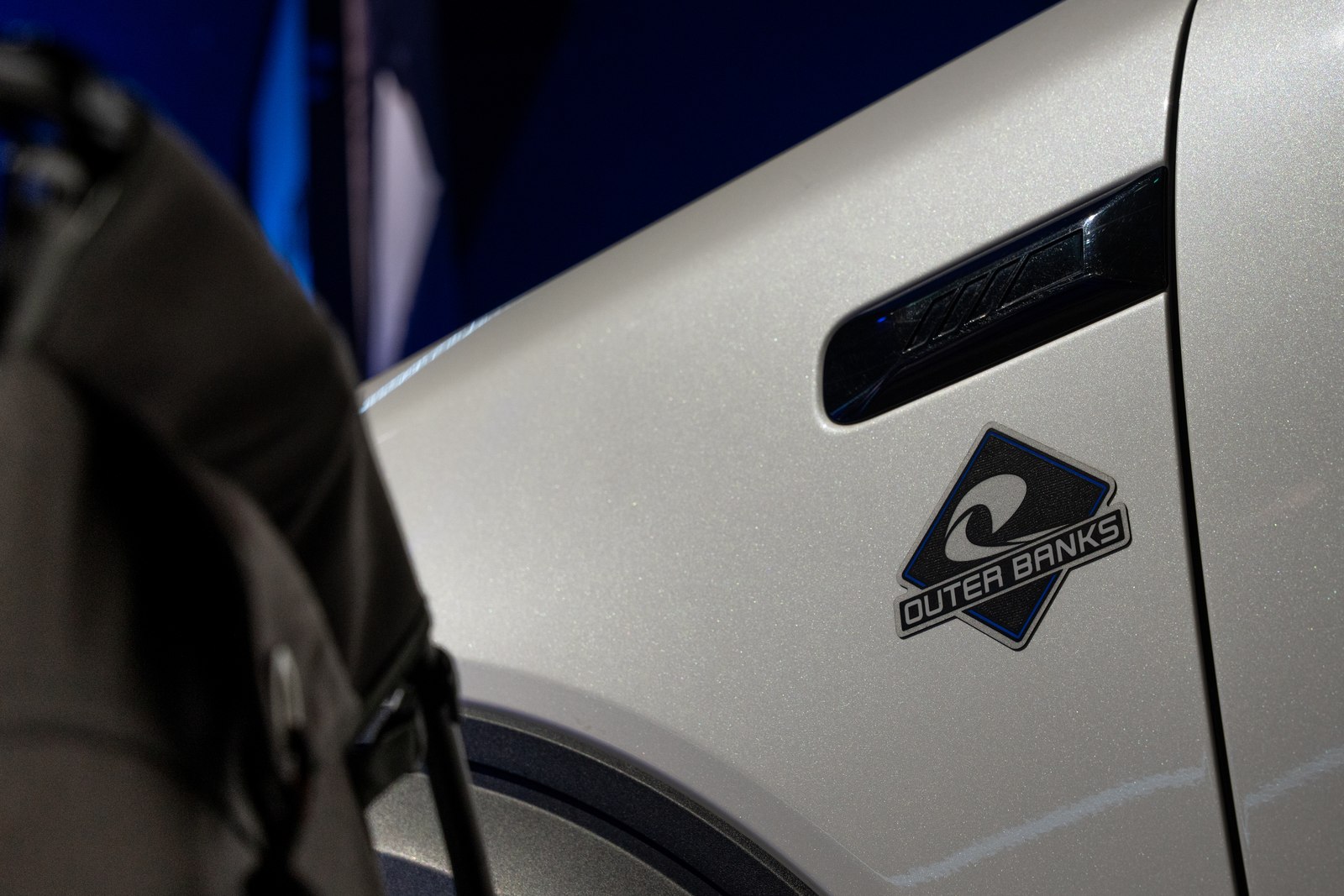
The Outer Banks grade gets an electric pop-up lift roof that raises the cabin for sleeping and a 7.5-litre warm-or-cool storage console between the front seats. The rear seats fold flat and a custom-fit inflatable mattress is an accessory. The rear swing gate carries a fold-down table with power from the Pro Power system.
Ford Australia and New Zealand has so far released only the battery capacity, the Pro Power output and the preliminary range estimate. Where local figures are missing, EVs and Beyond has filled the gaps from the Chinese specification, which may differ from what arrives here.
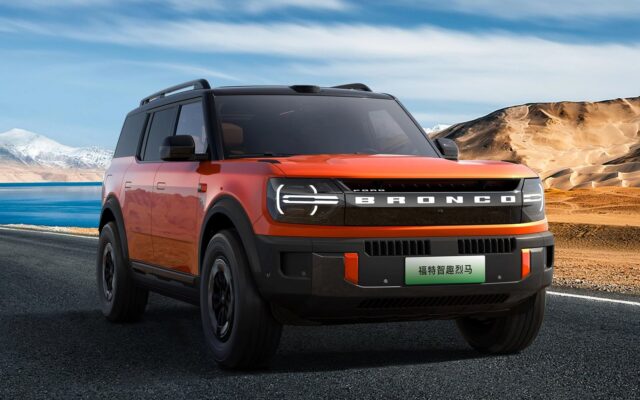
In China the vehicle is sold as the Bronco New Energy in both range-extender and full battery electric forms. The Chinese range-extender runs a 43.7kWh battery, so the local 49kWh pack is already a revision. Its 1.5-litre generator engine produces 110kW, the motors 130kW at the front and 180kW at the rear for a combined 310kW, and the battery is a lithium iron phosphate unit supplied by BYD’s FinDreams division on an 800-volt architecture with DC charging at up to 90kW. Chinese figures put the vehicle at 5,025mm long, 1,960mm wide and 1,825mm tall on a 2,950mm wheelbase, with a 2,510kg kerb weight. The Chinese range-extender also has electronically actuated mechanical diff locks front and rear, which the battery electric version does not get. The Australian engineer would not confirm the local drivetrain specification.
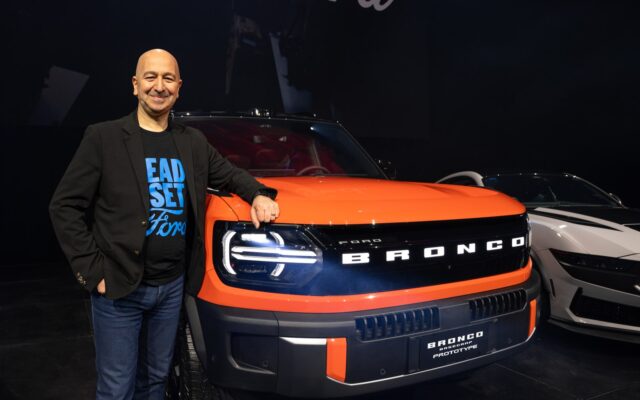
Ford New Zealand managing director Annaliese Atina told EVs and Beyond the Basecamp and Transit City were chosen on customer research rather than to earn Clean Vehicle Standard credits.
“We don’t need to bring them in to hit a target. We bring products in that consumers want,” Atina says.
Local pricing, variants and an exact arrival date will be announced closer to launch. Ford is taking registrations of interest at ford.co.nz/keep-me-informed. Atina also told us Ford NZ is open to the battery electric Bronco and the Fathom ute for this market.
Join the conversation