
GWM Cannon Hi4-T PHEV first drive: 310kW plug-in ute with low range and 6kW V2L
GWM’s Cannon Hi4-T plug-in hybrid ute brings 310kW, a 33.1kWh battery, 6kW V2L, low range and a rear locker from $58,990.
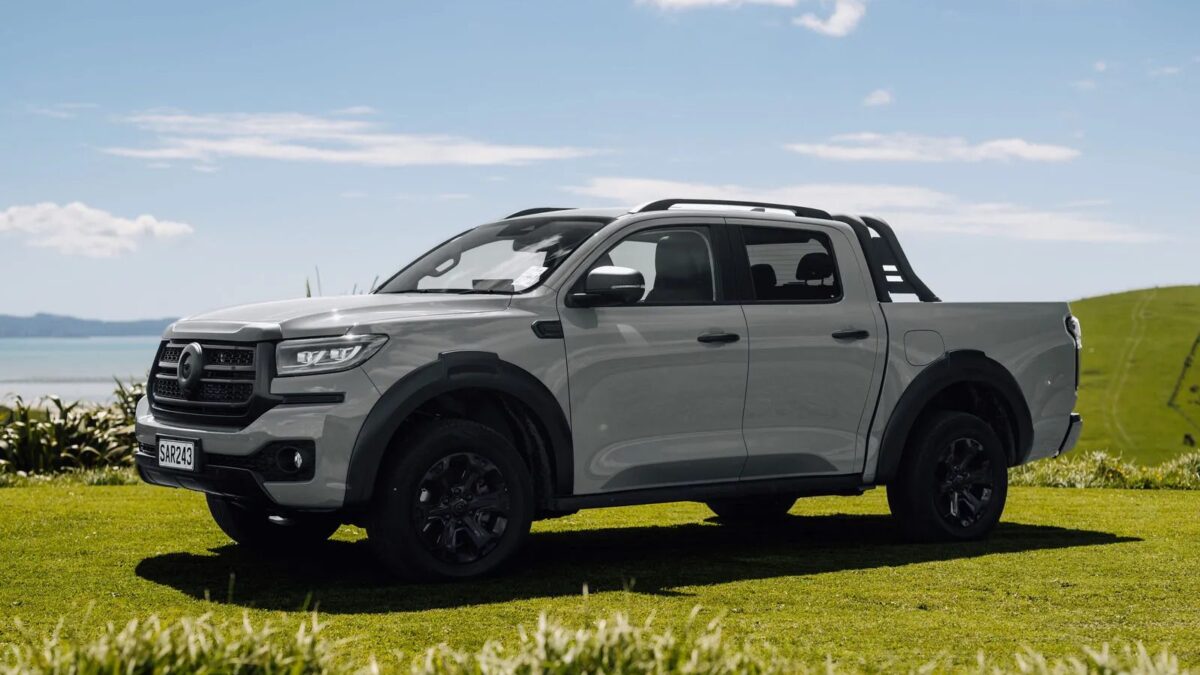
GWM’s Cannon Hi4-T is a plug-in hybrid ute with a 33.1kWh battery, 110kW DC charging, 6kW of vehicle-to-load power in the tub and 3500kg of braked towing, from $58,990 plus on-road costs.
Before anything else, spare a thought for the 16 syllables that gave their lives so this ute could have a name. GWM Cannon Hi4-T PHEV is a mouthful, so it’s the Cannon from here on.
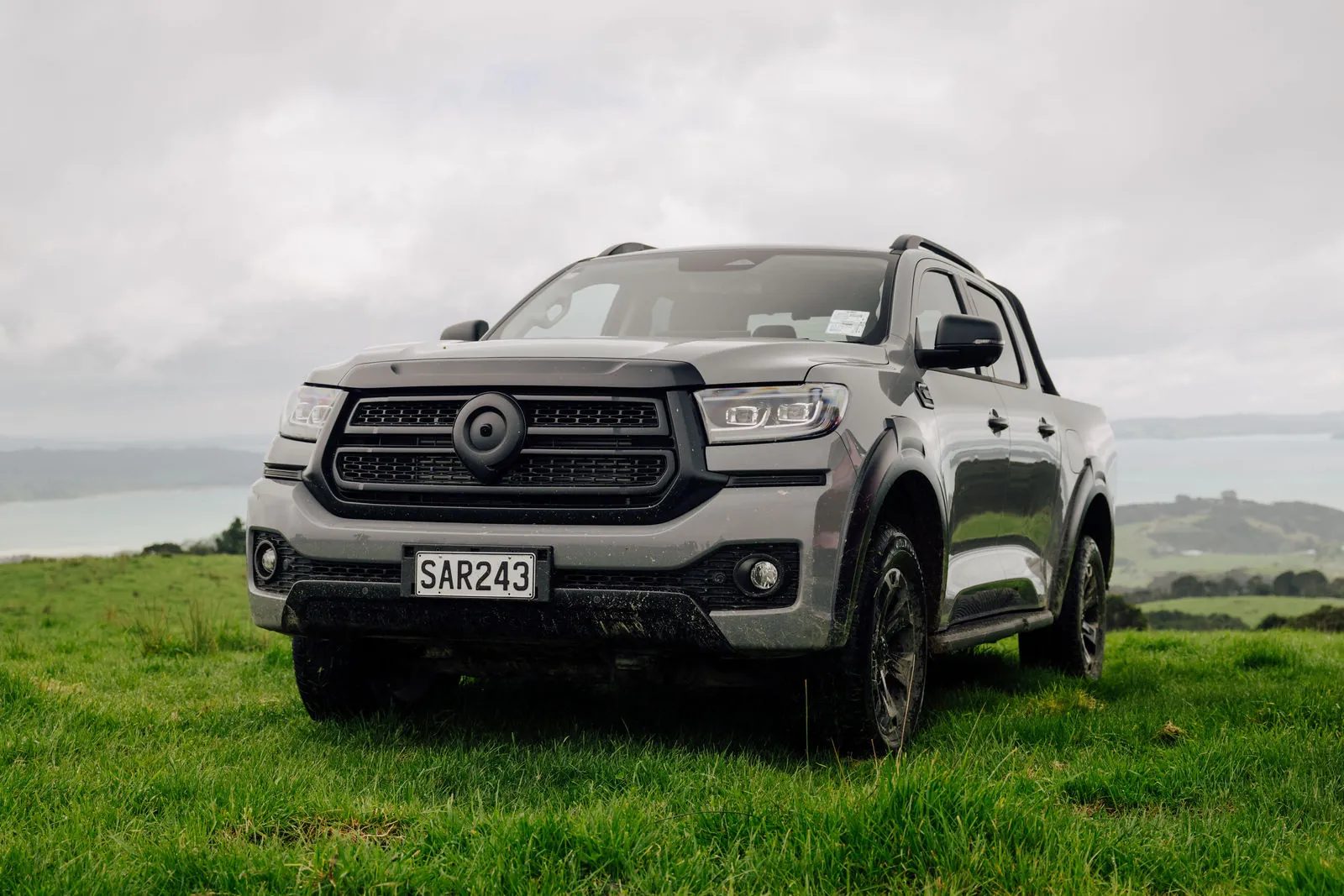
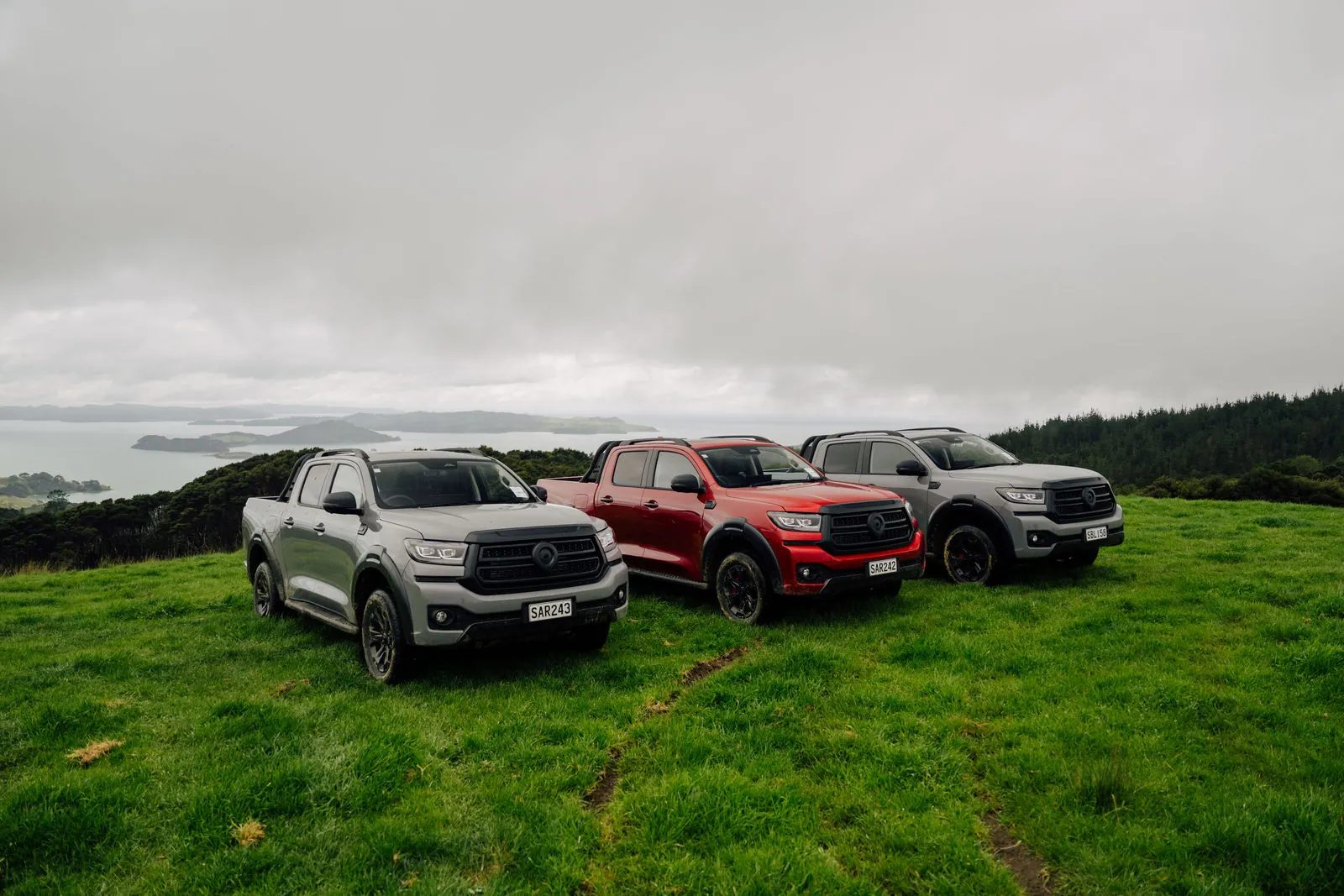
It’s GWM’s second plug-in hybrid ute in New Zealand, a size below the Cannon Alpha PHEV and using the same Hi4-T hardware. That means a 2.0-litre turbo petrol engine and an electric motor driving through a nine-speed automatic, with a driveshaft, a low-range transfer case and a locking rear diff behind them. We spent a day in it at the national launch, on the open road and on a wet farm track, and the throttle was our main gripe on both.
Under the tub
The petrol engine makes 180kW and 380Nm, and the motor, which sits inside the gearbox where the torque converter would normally go, adds 130kW and 495Nm. Together that’s 310kW and 750Nm, roughly double what the diesels most buyers will cross-shop it against make, and GWM claims 0-100km/h in 6.4 seconds.
The 33.1kWh LFP battery is built by GWM subsidiary SVOLT. GWM quotes 115km of electric range, but that’s on the older NEDC cycle, which tends to flatter electric range. Tim Leong, GWM NZ’s product planning manager, reckons owners will see about 100km. After the launch drive our guess is 85 to 90km. Combined range is a claimed 1037km. DC charging peaks at 110kW, taking the pack from 30 to 80% in 18 minutes.
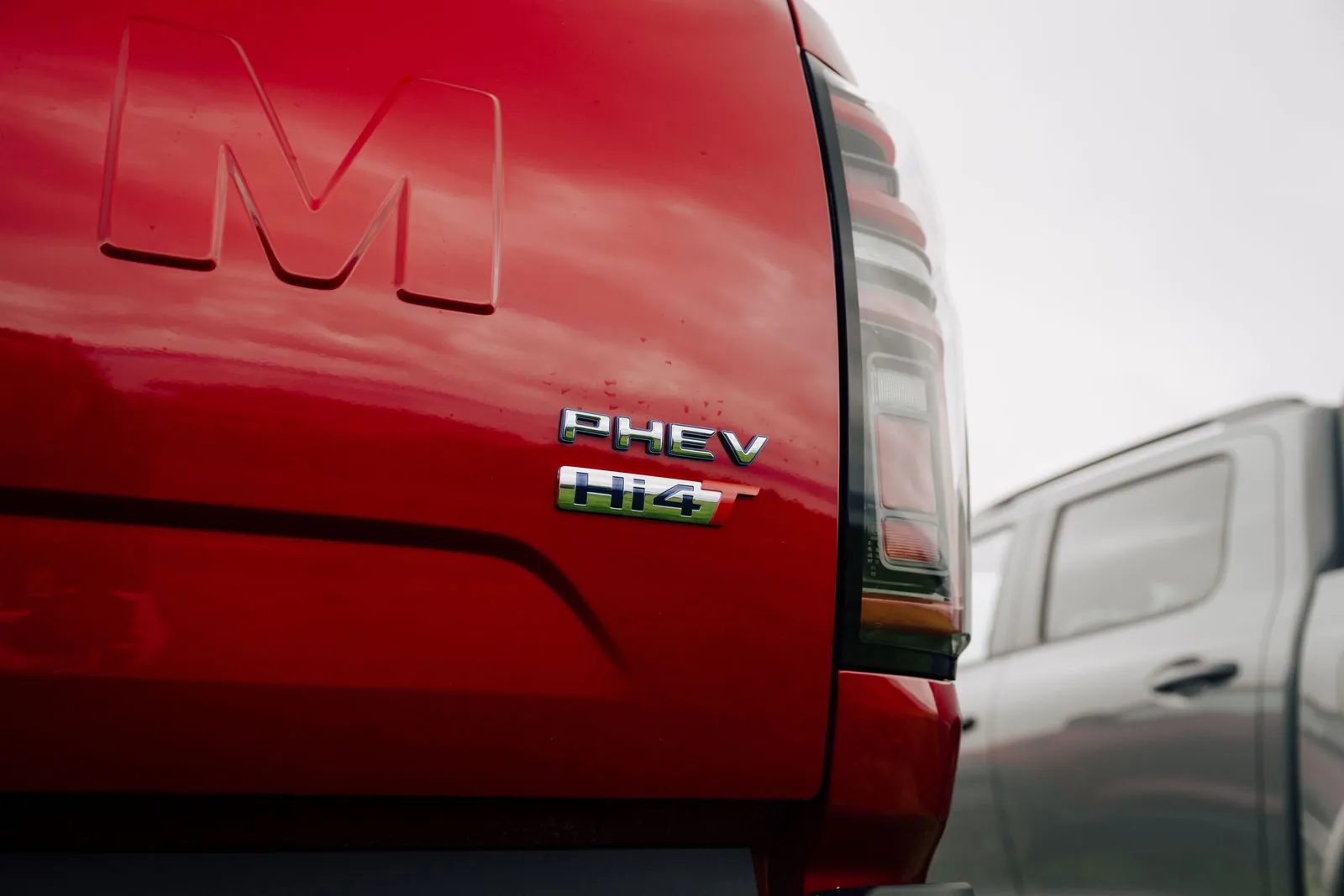
The four-wheel drive is part-time. On the road only the rear wheels are driven, and GWM confirmed 4H isn’t meant for dry tarmac. Off road you get 4H, 4L and a rear locker, none of which the BYD Shark 6 offers.
“The vehicle’s performance has minimum degradation between full charge and minimum charge on the battery, and that’s where the dependability comes from,” Leong says. “I would go as far as saying the Hi4-T is more capable off road than our 2.4-litre diesel.”
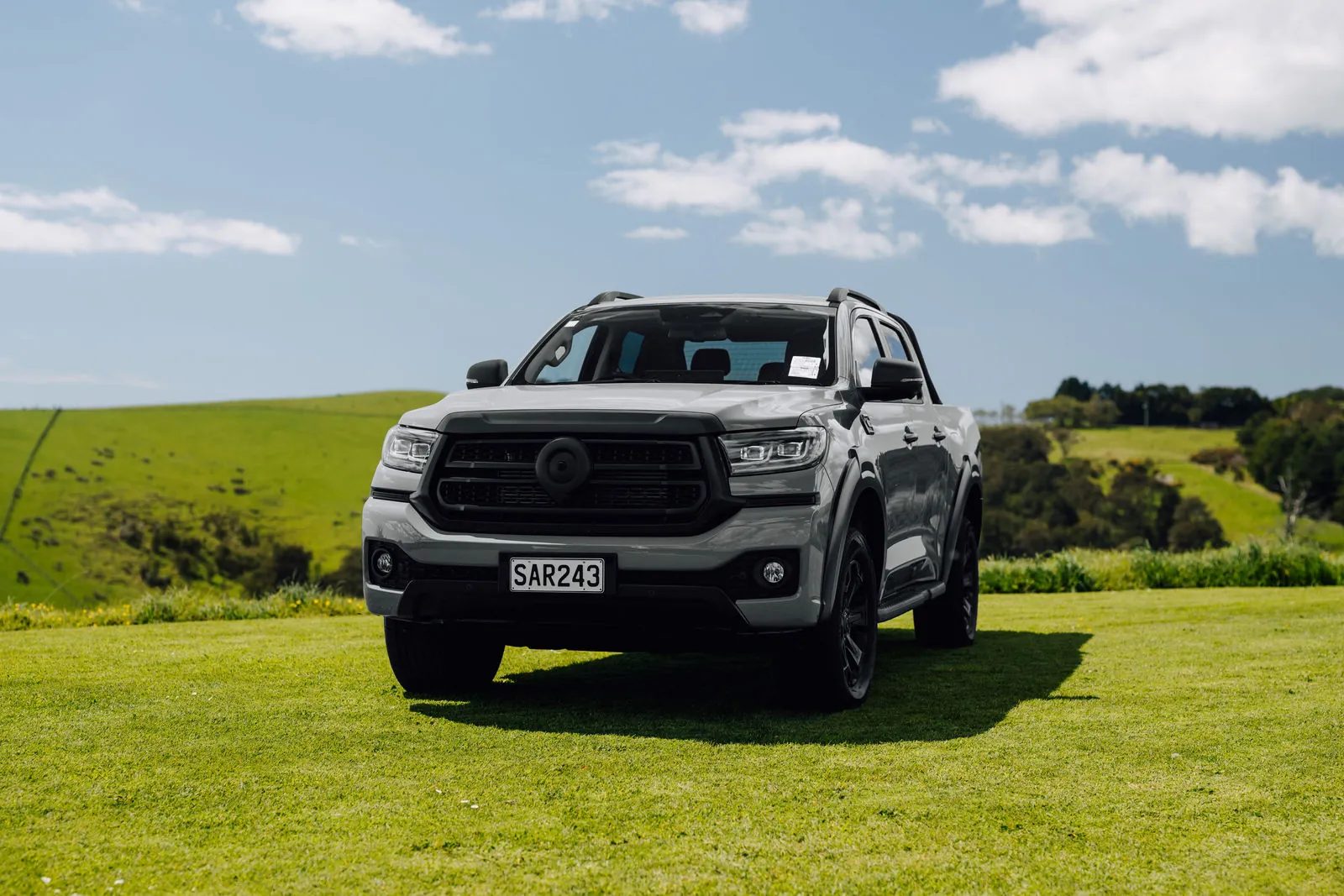
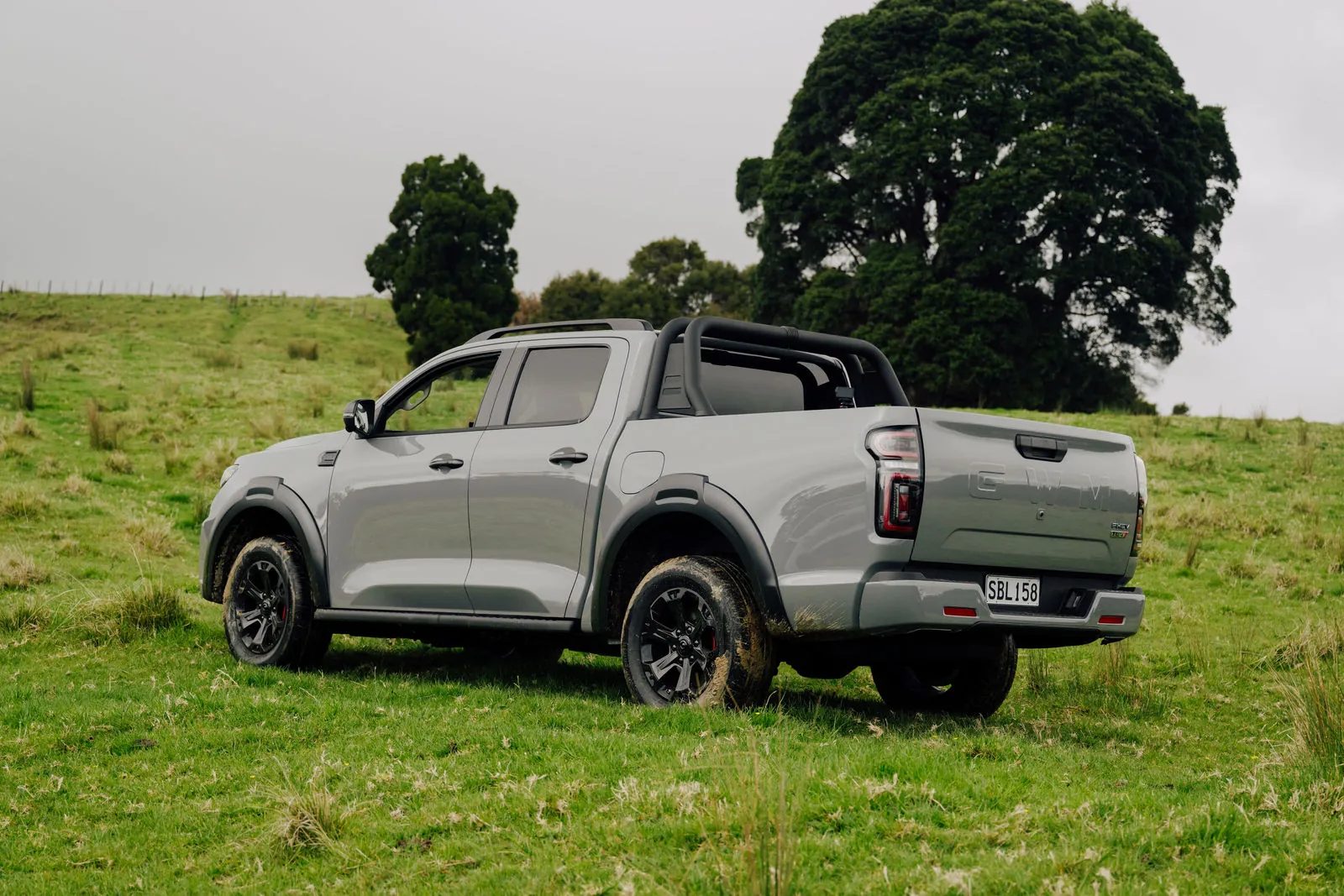
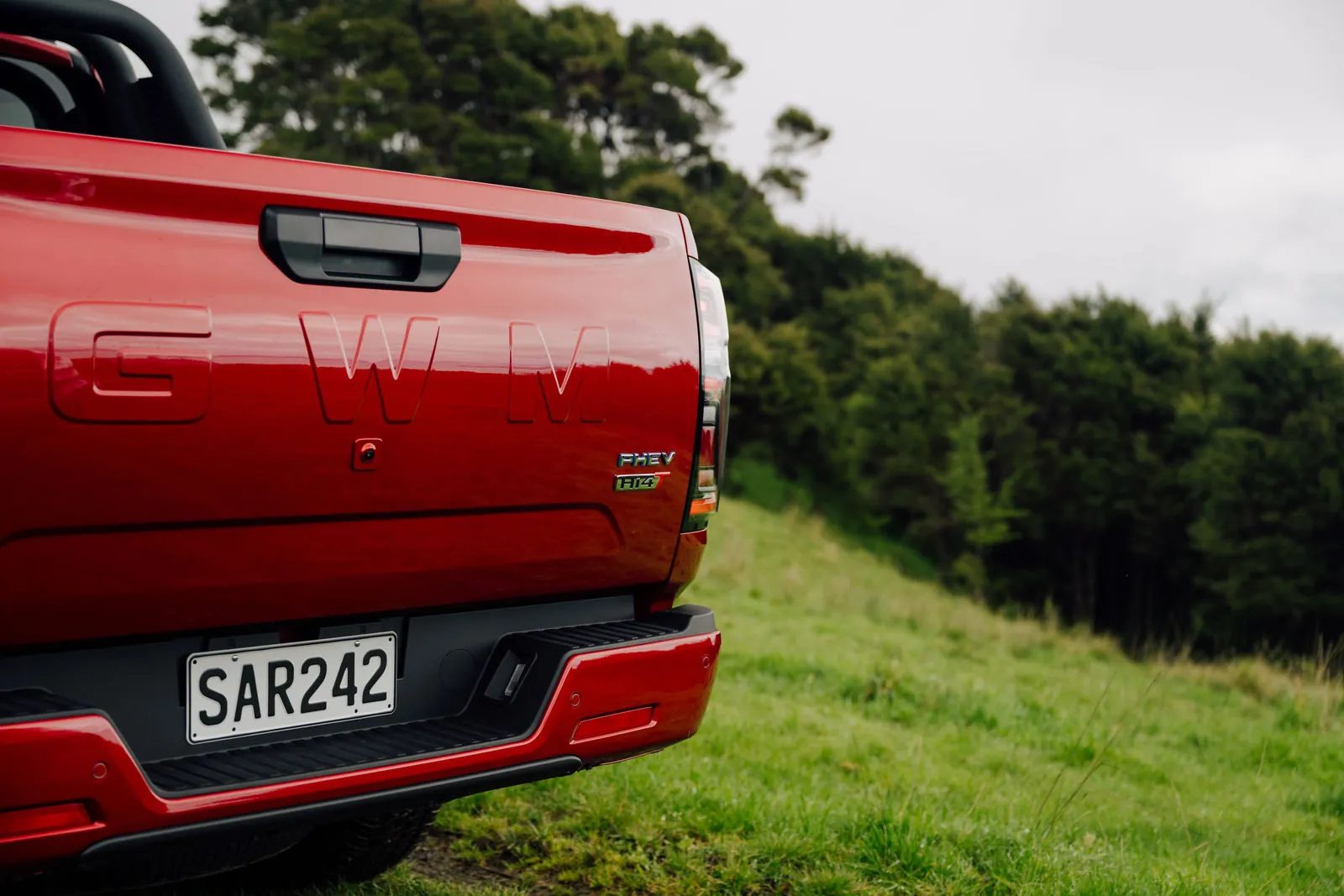
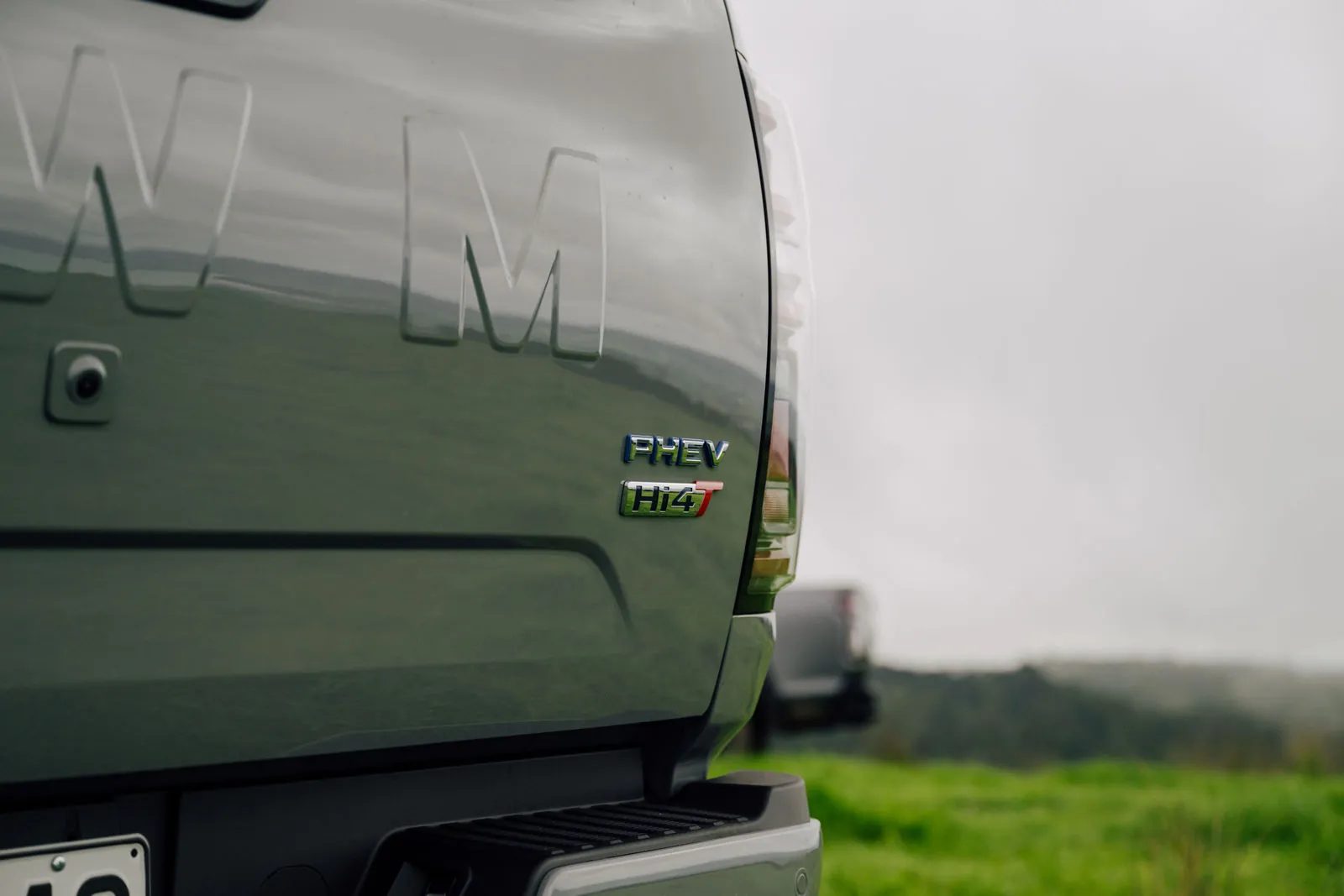
Local feedback shaped a fair bit of this ute. The Hi4-T was developed with coil springs at the back, and Australian and New Zealand input pushed GWM to engineer leaf springs instead. The spare wheel has gone back under the tub, and the reversing camera has moved to the middle of the tailgate so you can see the towball when hitching up.
Two grades
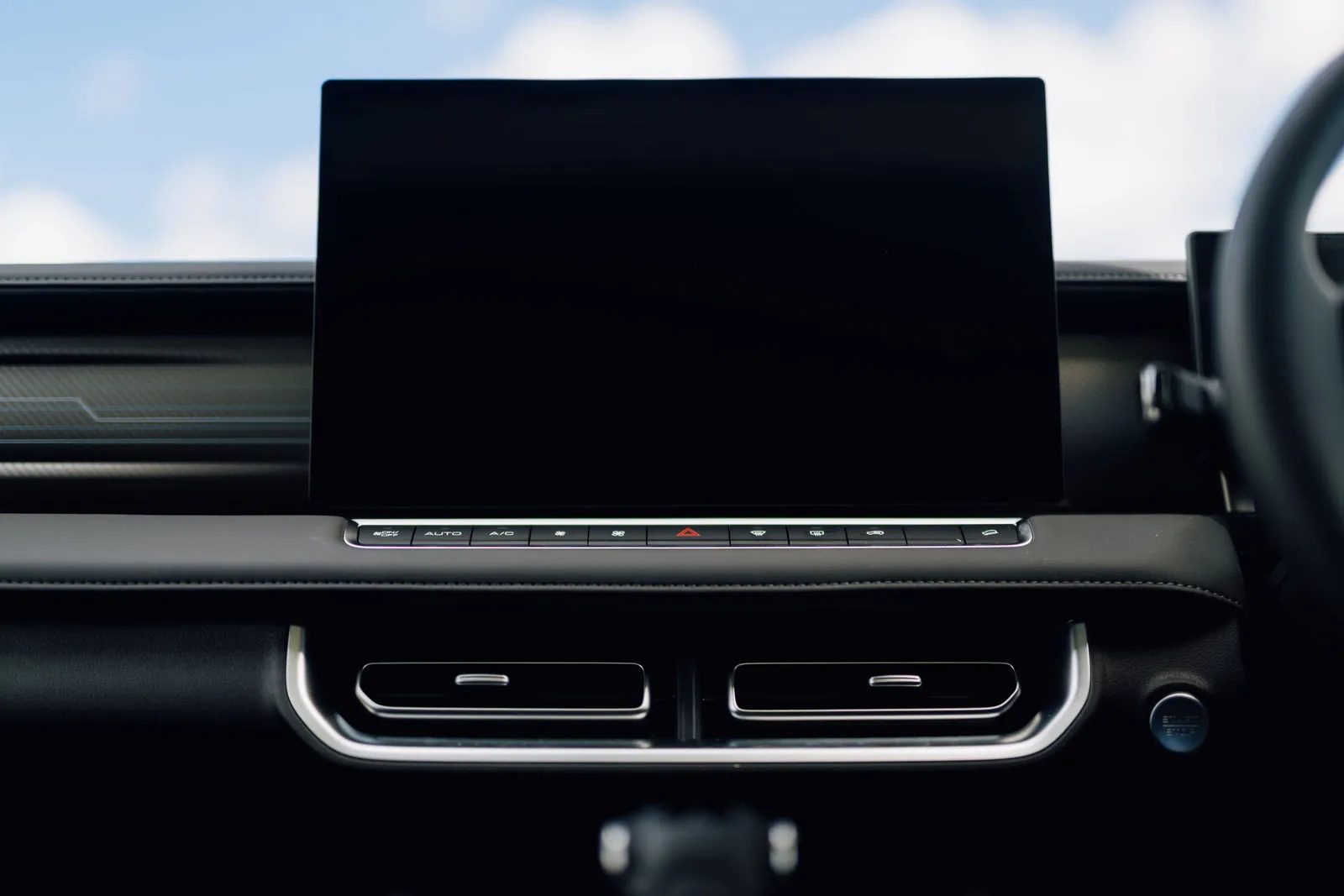
The Lux is $58,990 and the Ultra $62,990, both dual cab and both plus on-road costs. The Lux gets 18-inch alloys, LED headlights, a 10.25-inch driver display, a 15.6-inch touchscreen with wireless Apple CarPlay and Android Auto, and manually adjusted leather seats. The Ultra we drove adds power front seats with heating and ventilation, a heated steering wheel, a sunroof, tinted rear glass and a tailgate step.
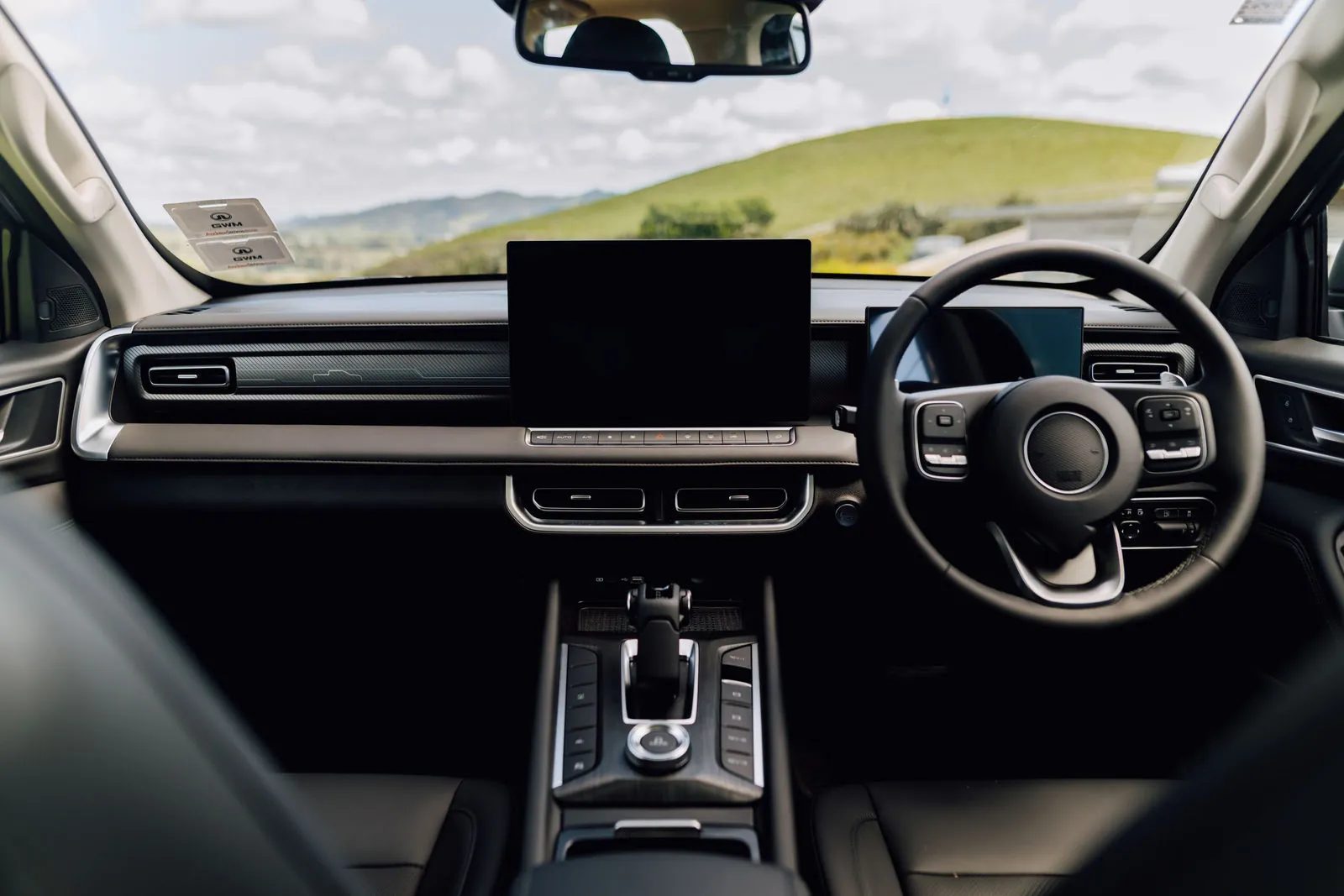
Both get a 360-degree camera, voice control, a towing drive mode developed in Australia, an app for remote locking and cabin pre-conditioning, and over-the-air updates. Fossil Grey joins the paint list, and the Ultra can have an apricot interior in white or black.
On the road
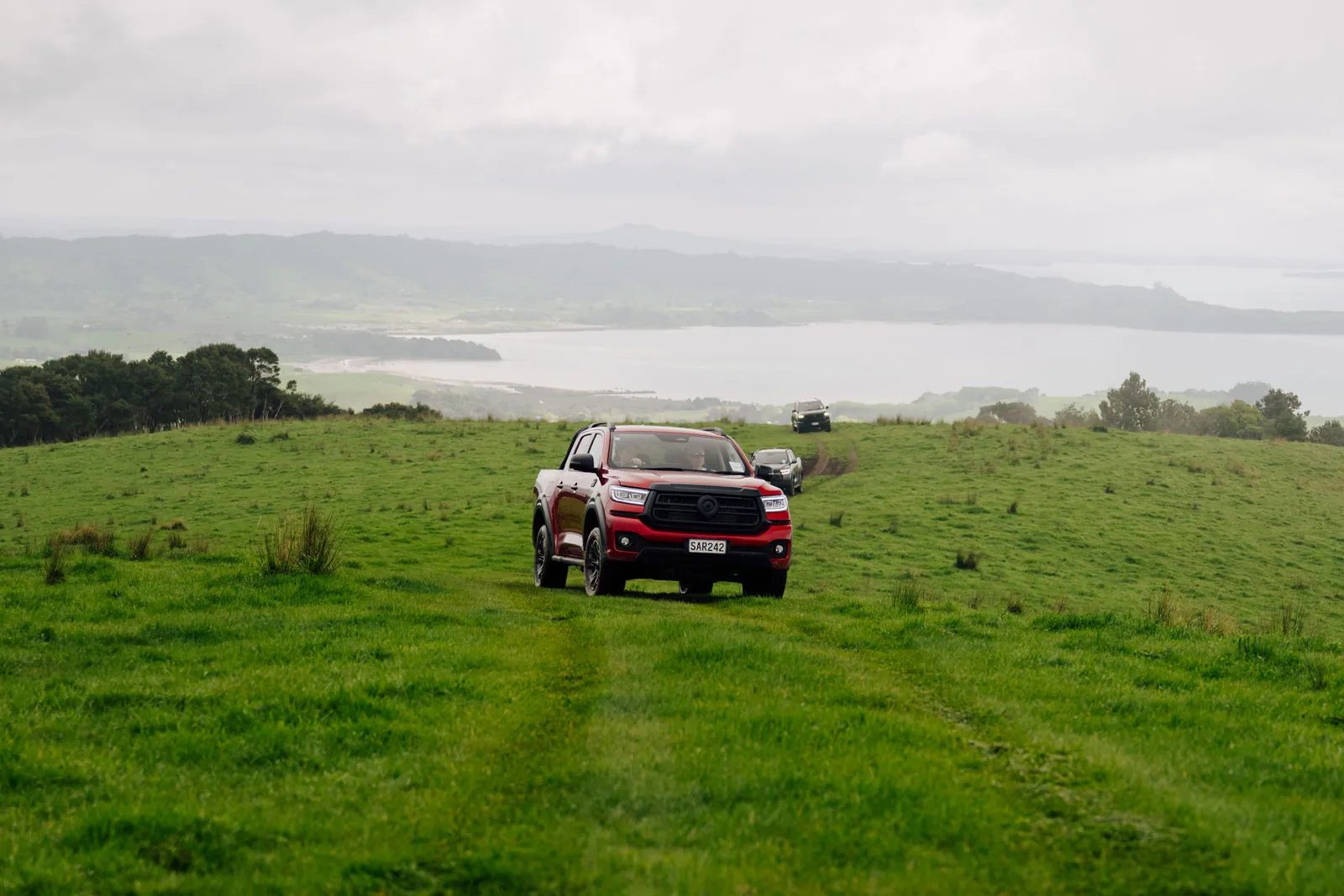
It’s a big ute, and you find that out the first time you try to turn it around. I’d made a mess of a three-point turn within five minutes, and the turning circle is wide even for a ute this size. With the tub empty the leaf springs give the ride a bit of bounce, but it’s a lot quieter than I expected, which GWM puts down to more than 100 sound-deadening measures added for this version.
At 178cm I had plenty of headroom, and the back seat fits adults comfortably, with air vents, two USB ports and a nearly flat floor. The voice control is quick, too. I said “Hi GWM, turn on ventilated seats” and the fans were running before I’d finished the sentence.
Which brings me to the throttle. Floor it from a rolling start in the normal drive mode and there’s a pause of about three seconds while the engine fires, the gearbox picks a gear and the turbo spools. Then everything shows up at once and shoves you back in your seat. Crikey. Sport mode’s far more responsive. Someone coming from a diesel ute might not notice, but if you’re used to an EV, three seconds with your foot flat on the floor feels like a long time.
Off road
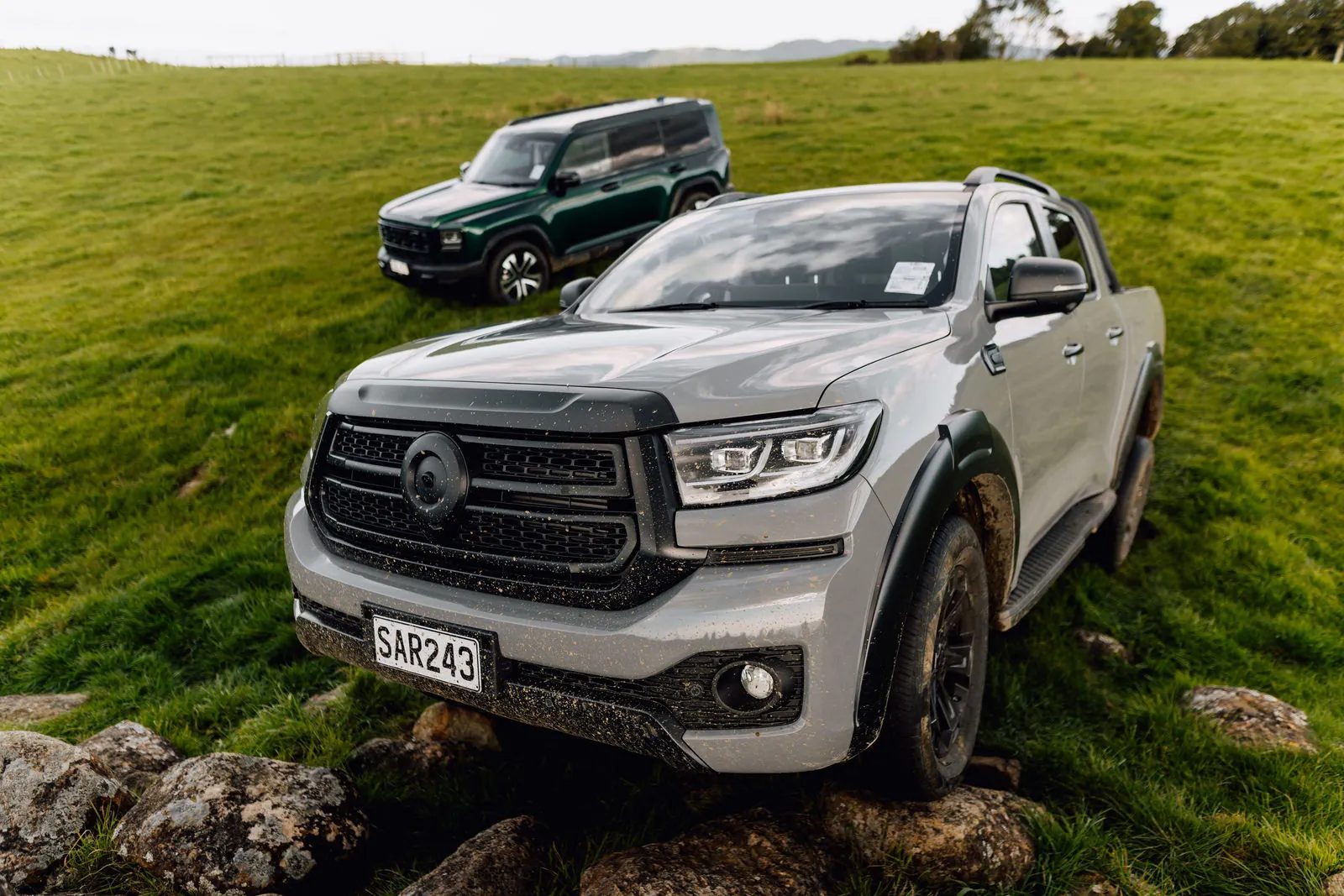
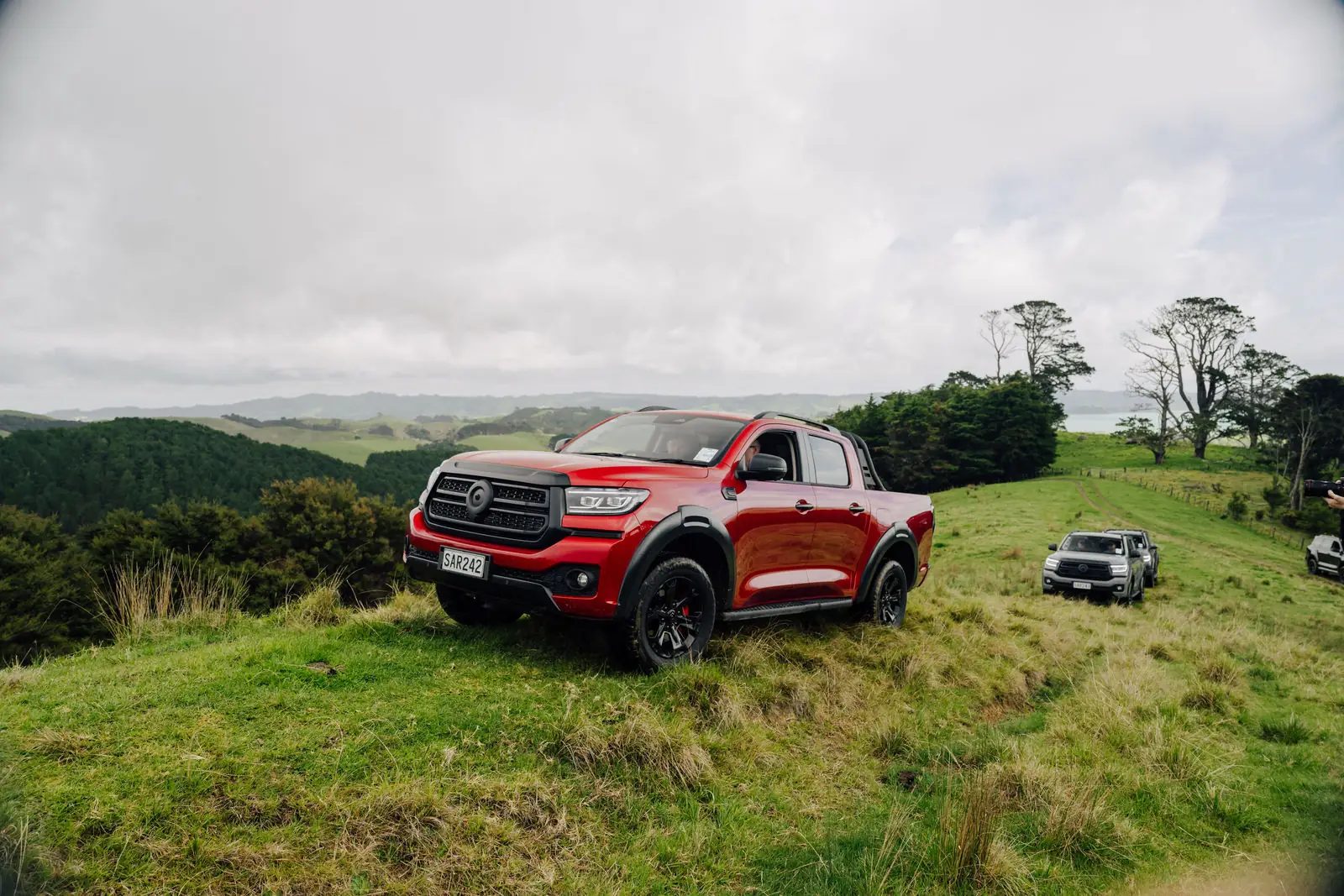
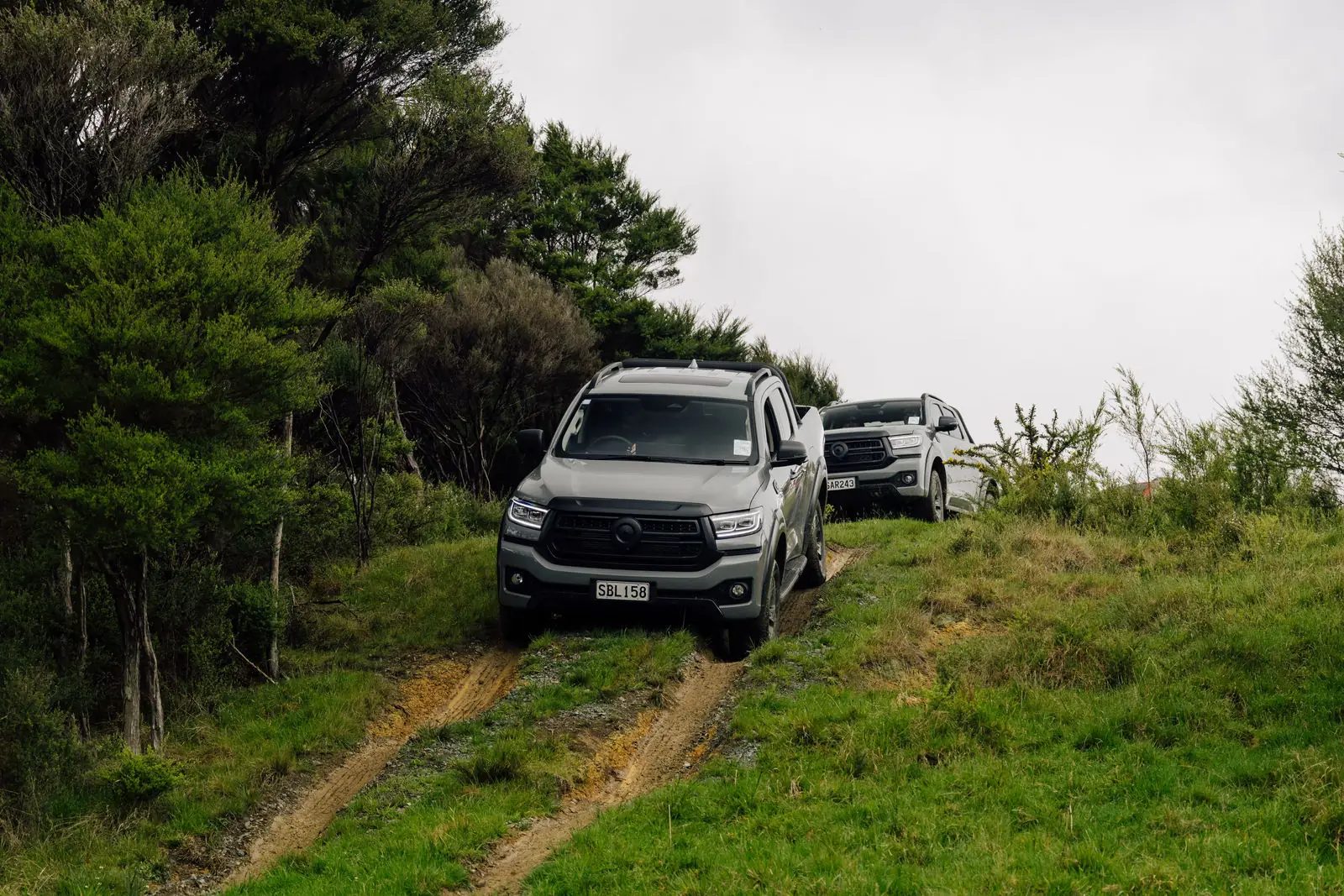
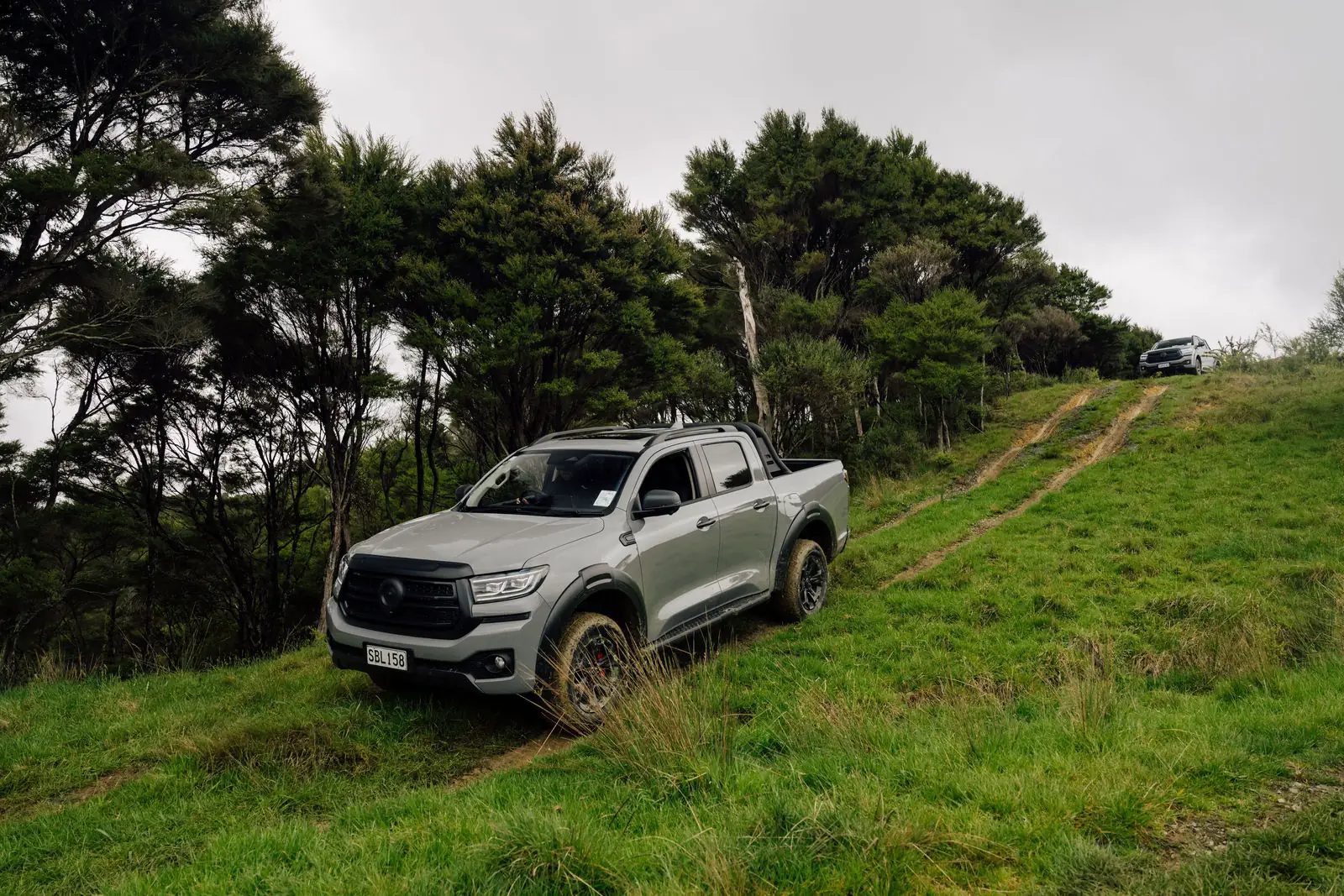
GWM set up a proper course on a farm, with a steep, greasy descent, a big puddle and a clay bank, all on wet ground and all on the road-pattern tyres the Cannon comes with.
With hill descent control on and my feet off the pedals, the Cannon crept down the descent on its own, and you could feel each wheel grab and let go as it found grip. The usual advice is to take water at about 12km/h. I went through the puddle at 19 and the Cannon didn’t mind.
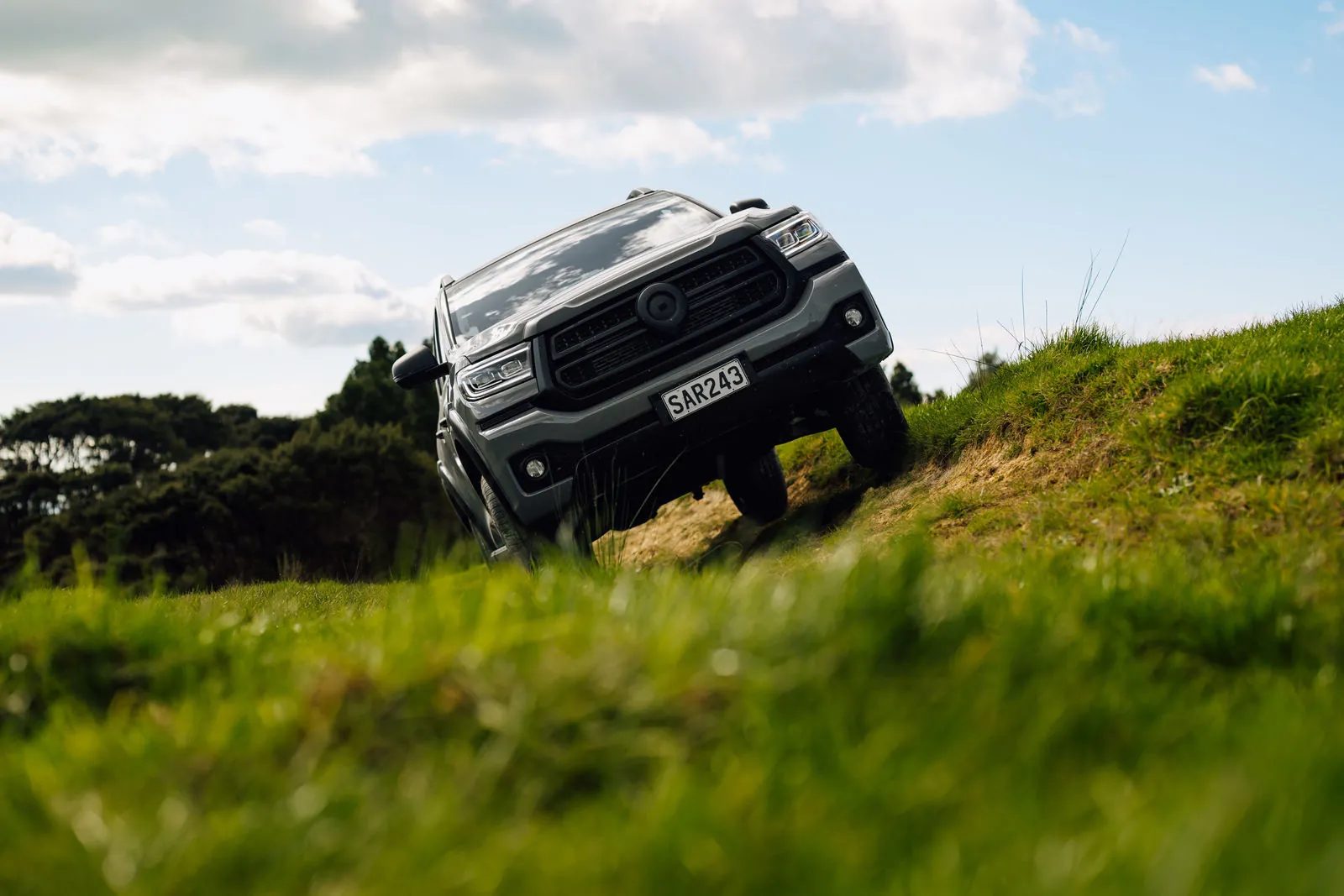
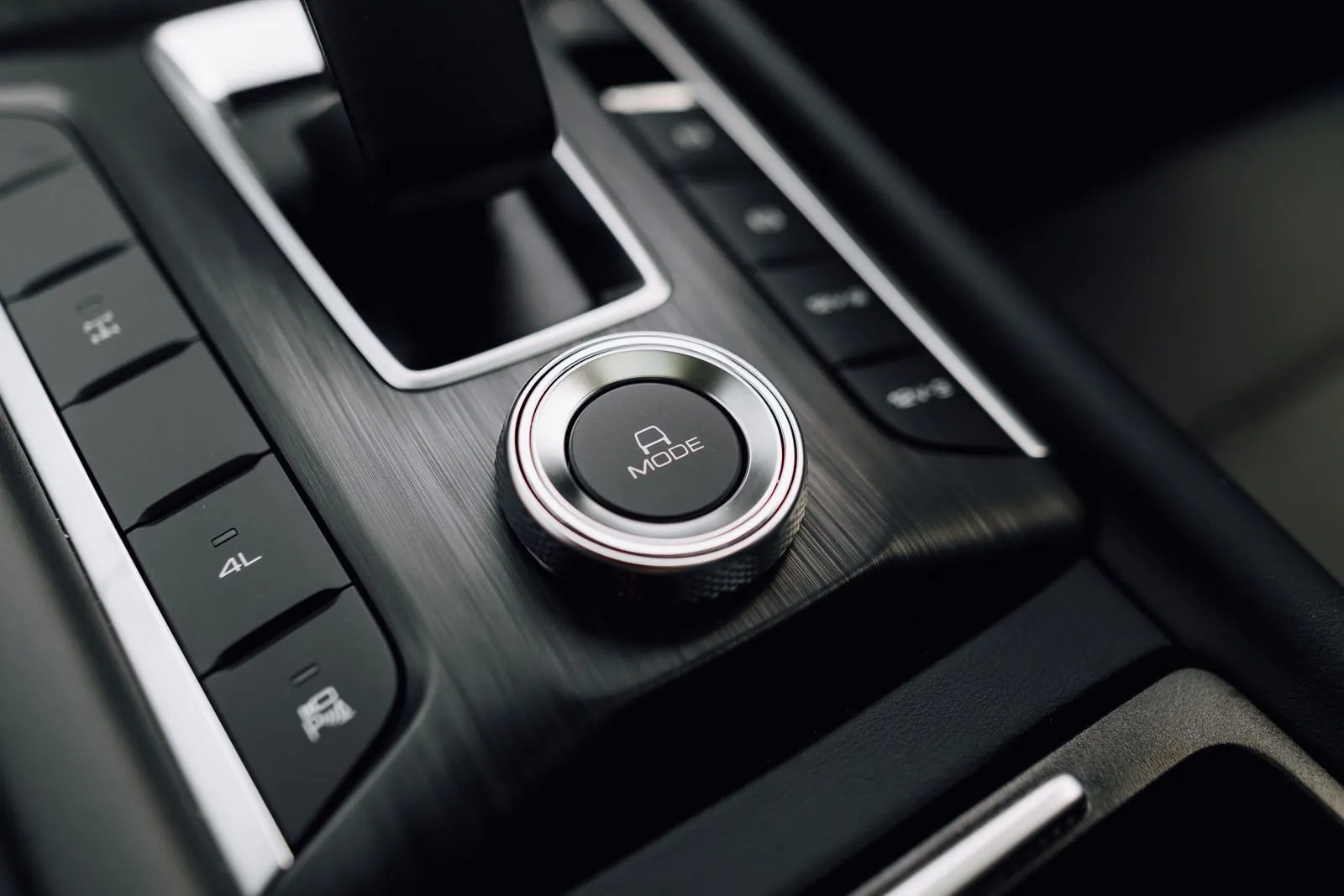
The bank needed 4L and the rear locker, which you engage with a button on the console. I did miss a bit of ceremony. My old Lada Niva had three gear levers for this sort of thing. Here you press a button, the screen tells you the diff’s locked, and that’s it. The Cannon walked up the clay without any fuss, and the instructors didn’t tell me I was completely useless, which I’ll take as a win.
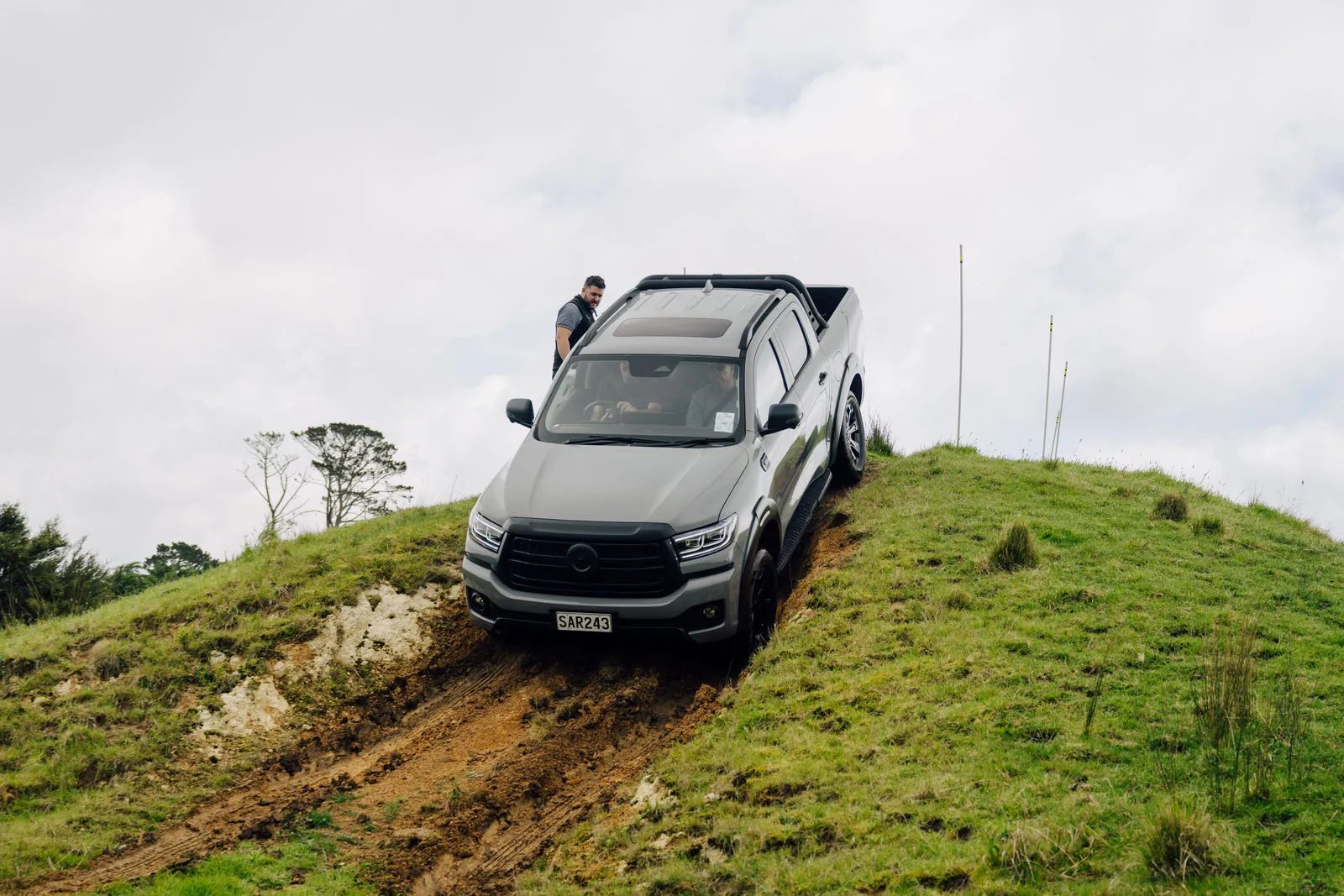
The off-road course also shows the throttle’s other problem. At walking pace a lot of the power comes in the first centimetre of pedal travel, so a gentle squeeze can turn into a lurch, and on wet grass that means wheelspin. The first time I pulled away it jumped further than I wanted. You learn where to hold your foot, but a softer map down low would help owners who don’t go off road every weekend.
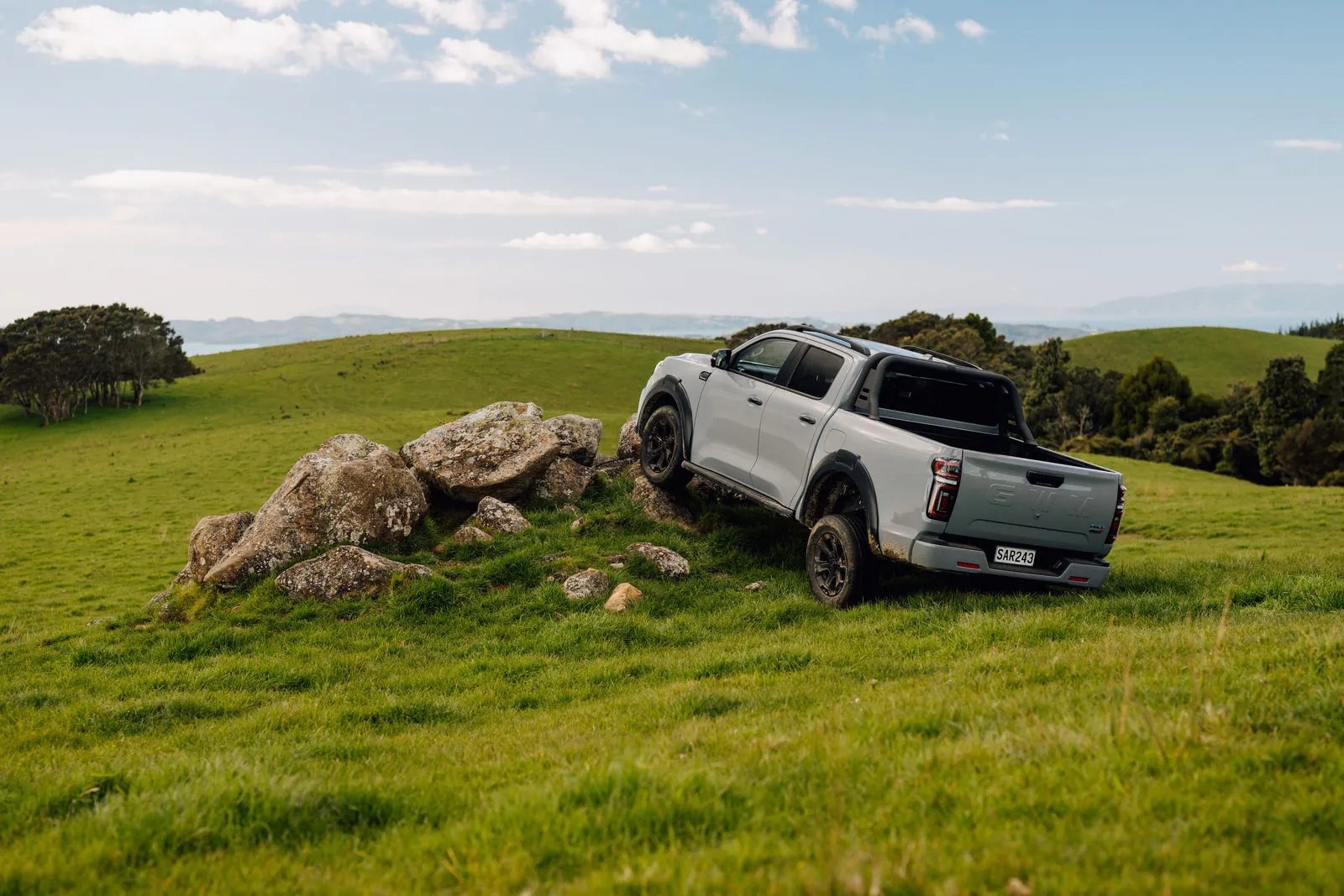
Approach, breakover and departure angles are 26, 19 and 23 degrees, minimum ground clearance is 200mm and wading depth is 700mm. A new expert mode switches off stability control while leaving ABS on, and the screen has an off-road page showing pitch, roll and altitude. Stick some all-terrains on it and it’d go a lot further.
Towing, payload and power
Braked towing is 3500kg with a 350kg towball download. Payload is 835kg, which will put off tradies who won’t look at anything under a tonne, and with a GCM of 6400kg you can’t run a full trailer and a full tray at the same time. Adaptive cruise doesn’t work when towing, but you can switch to conventional cruise.
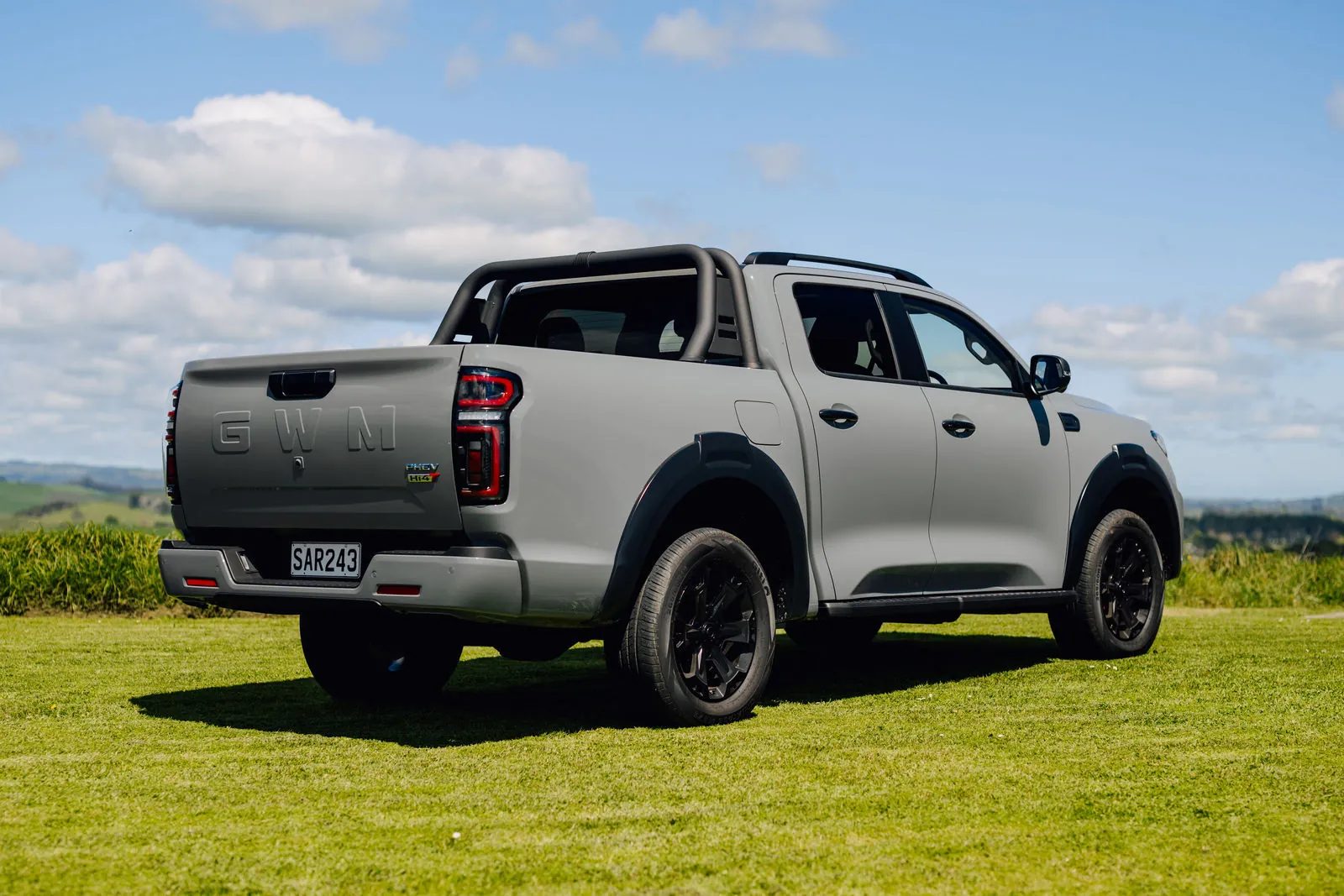
For me the best feature is in the tub. A sealed box on the side wall holds three 230V outlets and a 12V socket, running off the main battery at up to 6kW. I spent a decade in the trades, and three proper power points on the side of the ute would have made my life a lot easier back then. You can set the battery to hold 80% charge so there’s always power on tap, and the engine will top it up if it runs low. GWM says a full pack would run a four-person household for more than a day.
How it stacks up
At $58,990 the Cannon is $12,000 cheaper than the BYD Shark 6 Premium, which tows 2500kg. The Shark 6 Performance matches the Cannon’s 3500kg but costs $76,990. The JAC Hunter X PHEV is closest on price at $59,990 and has more power by GWM’s own figures, but no low-range or locking diff. The Ford Ranger PHEV XLT is $74,990.
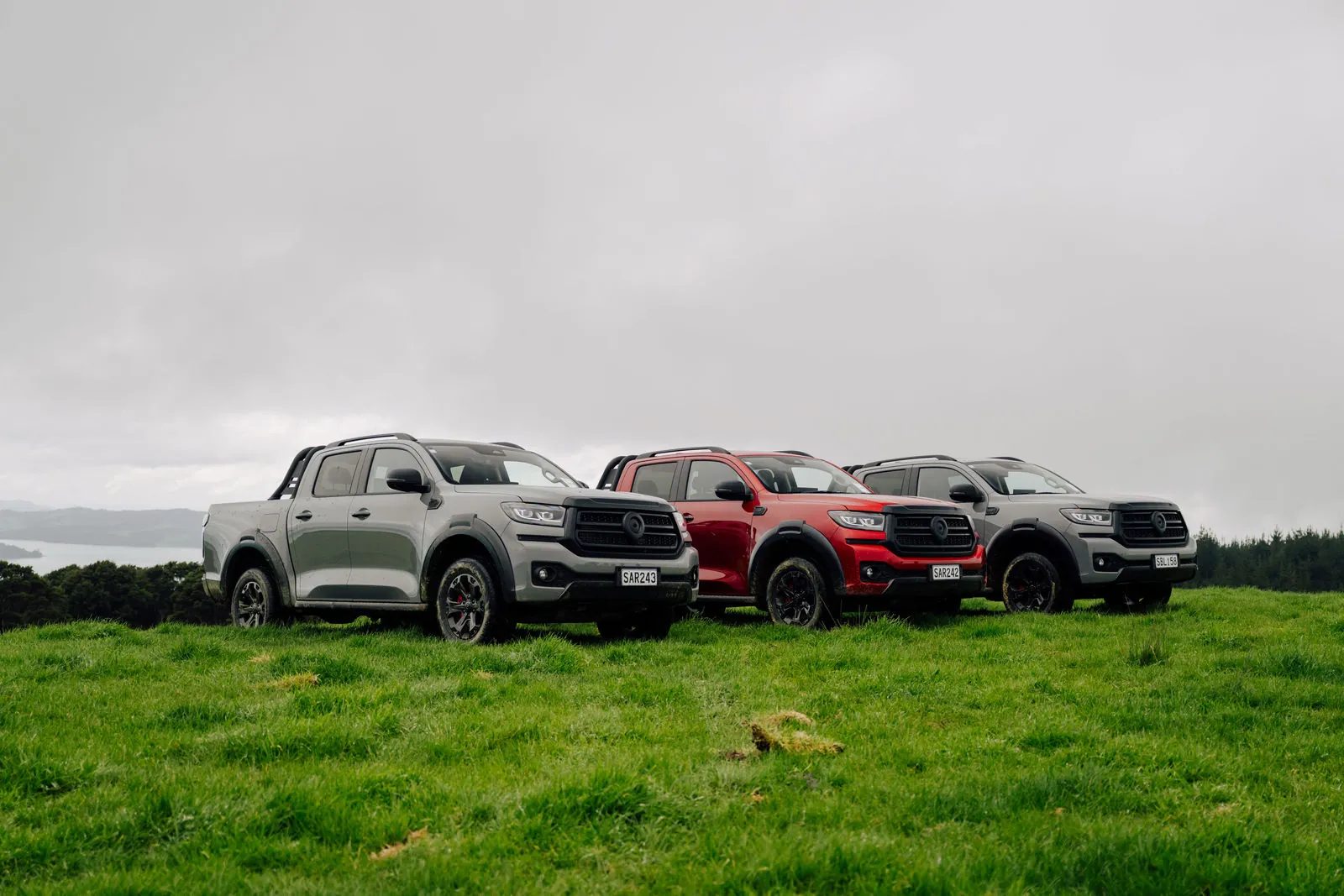
GWM’s also working on diesel versions. Leong confirmed it is developing a diesel hybrid and a diesel plug-in hybrid, though managing a diesel particulate filter on an engine that keeps switching on and off is a problem it still has to solve.
A five-star ANCAP rating is expected to carry over from the diesel Cannon but hasn’t been confirmed. The warranty is seven years, or eight on the battery.
Verdict
After a day in the Cannon, the throttle is the main thing I’d send back to the engineers, and the driver attention monitor could stand to chime a little less. Both can be fixed over the air. Otherwise it’s quick, it tows 3.5 tonnes and it’s got a proper low-range transfer case and diff lock. I’d use those power outlets every week.
There’s a lot here for a little under $60,000. We’ll learn more about the real electric range, the fuel use and how it handles a caravan once we have it for a full test.
Specifications: GWM Cannon Hi4-T PHEV
- Price: Lux $58,990; Ultra $62,990 (plus ORC)
- Engine: 2.0-litre turbo petrol, 180kW/380Nm
- Electric motor: 130kW/495Nm
- Combined output: 310kW/750Nm
- 0-100km/h: 6.4 seconds (claimed)
- Transmission: 9-speed automatic; part-time 4WD with 4H/4L and electronic rear diff lock
- Battery: 33.1kWh LFP (SVOLT)
- EV range (NEDC): 115km
- Combined range (NEDC): 1037km
- Fuel use (NEDC): 2.4L/100km
- Fuel tank: 75L
- Charging: DC up to 110kW, 30-80% in 18 min; V2L 6kW, 3 x 230V outlets
- Towing (braked/unbraked): 3500kg/750kg
- Towball download: 350kg
- Payload: 835kg
- Kerb weight: 2585kg
- GVM/GCM: 3420kg/6400kg
- L/W/H: 5416/1947/1886mm
- Wheelbase: 3230mm
- Approach/breakover/departure: 26/19/23 degrees
- Ground clearance: 200mm (minimum)
- Wading depth: 700mm
- Drive modes: 7, including snow, mud, sand, expert and towing
- Driver assistance: Level 2; 1 front camera, 4 surround cameras, 2 rear corner radars, 8 ultrasonic sensors
- Safety: 7 airbags; five-star ANCAP expected, not yet confirmed
- Warranty: 7 years, 8 years battery
- Colours: Pearl White, Pittsburgh Silver, Lunar Red, Sapphire Blue, Crystal Black, Fossil Grey
Join the conversation