
Tesla Model 3 Rear-Wheel Drive review: more range for less money
Tesla’s new base Model 3 is $9000 cheaper and goes further on a charge, with the savings found inside the cabin.
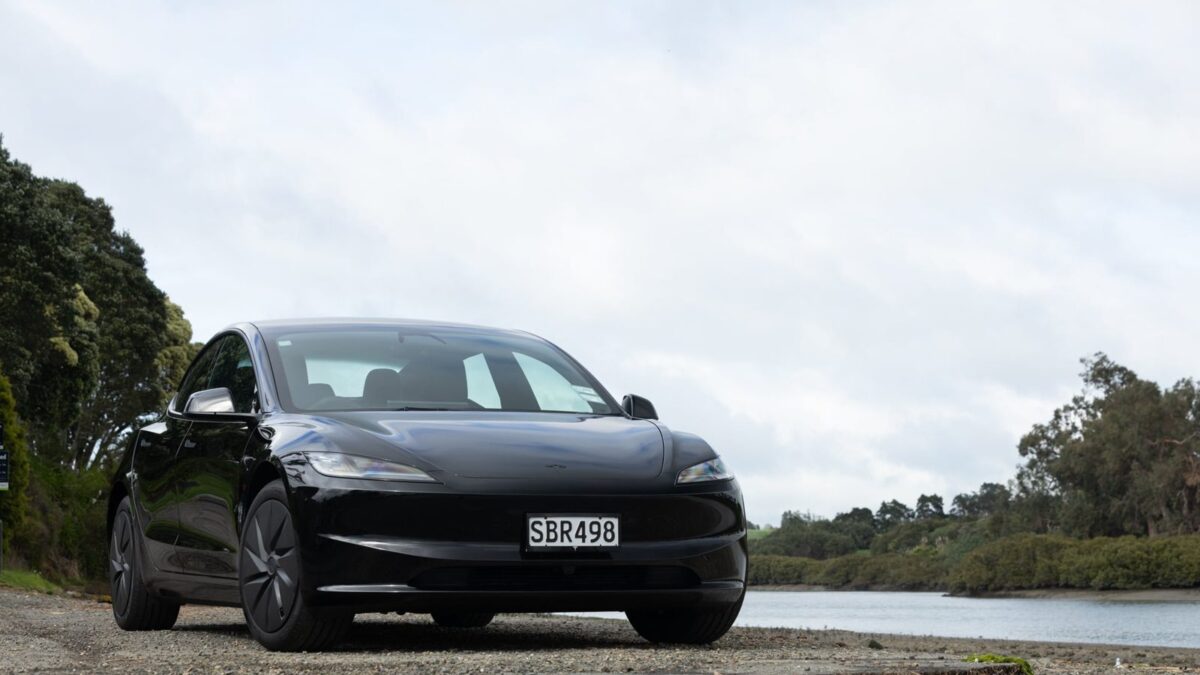
Tesla’s cheapest Model 3 goes further on a charge than the car it replaces as the entry point. The new Model 3 Rear-Wheel Drive is rated at 572km on the WLTP cycle and costs $54,900 plus on-road costs, $9000 less than the old base car, which carries on as the Premium Rear-Wheel Drive at $63,900.
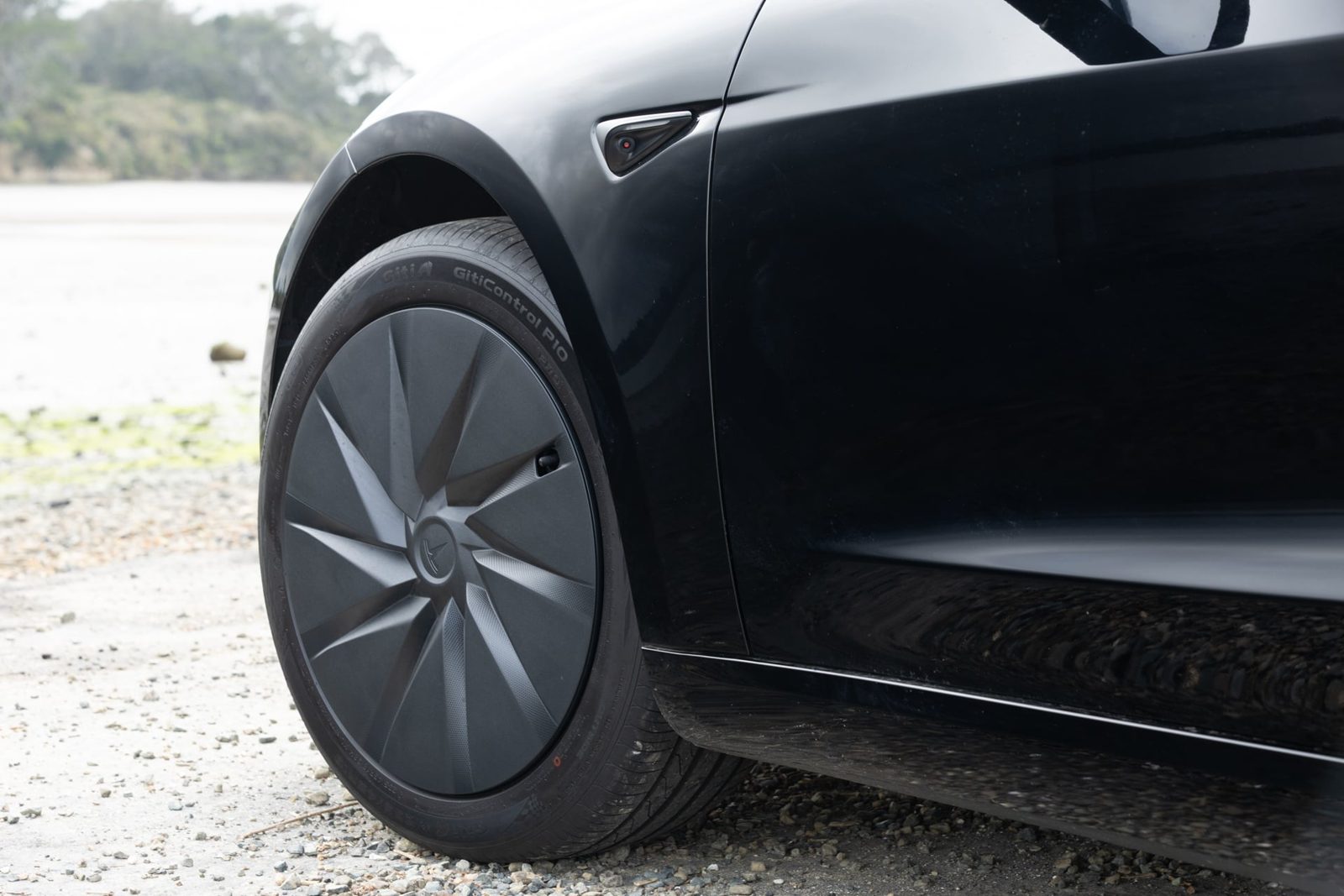
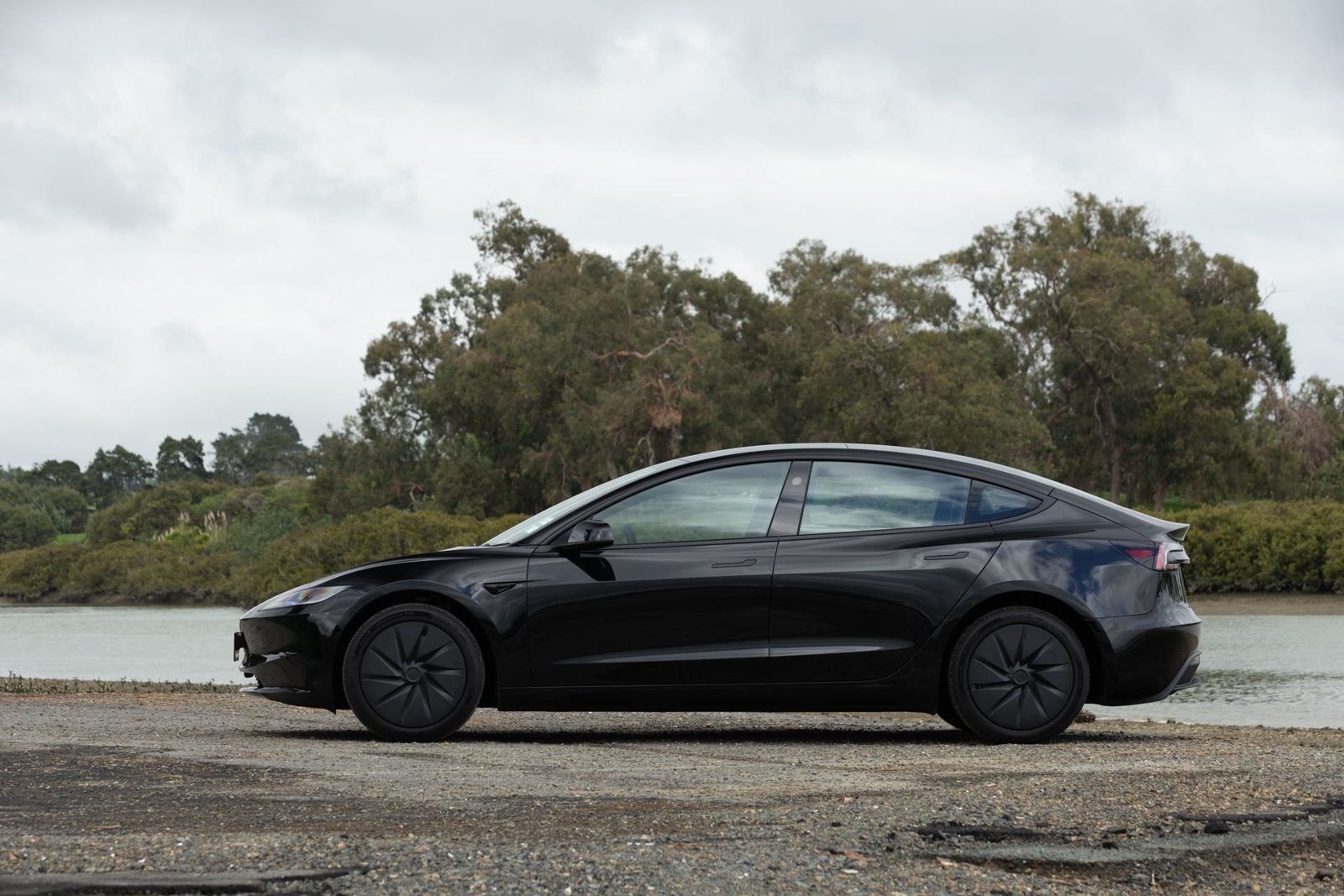
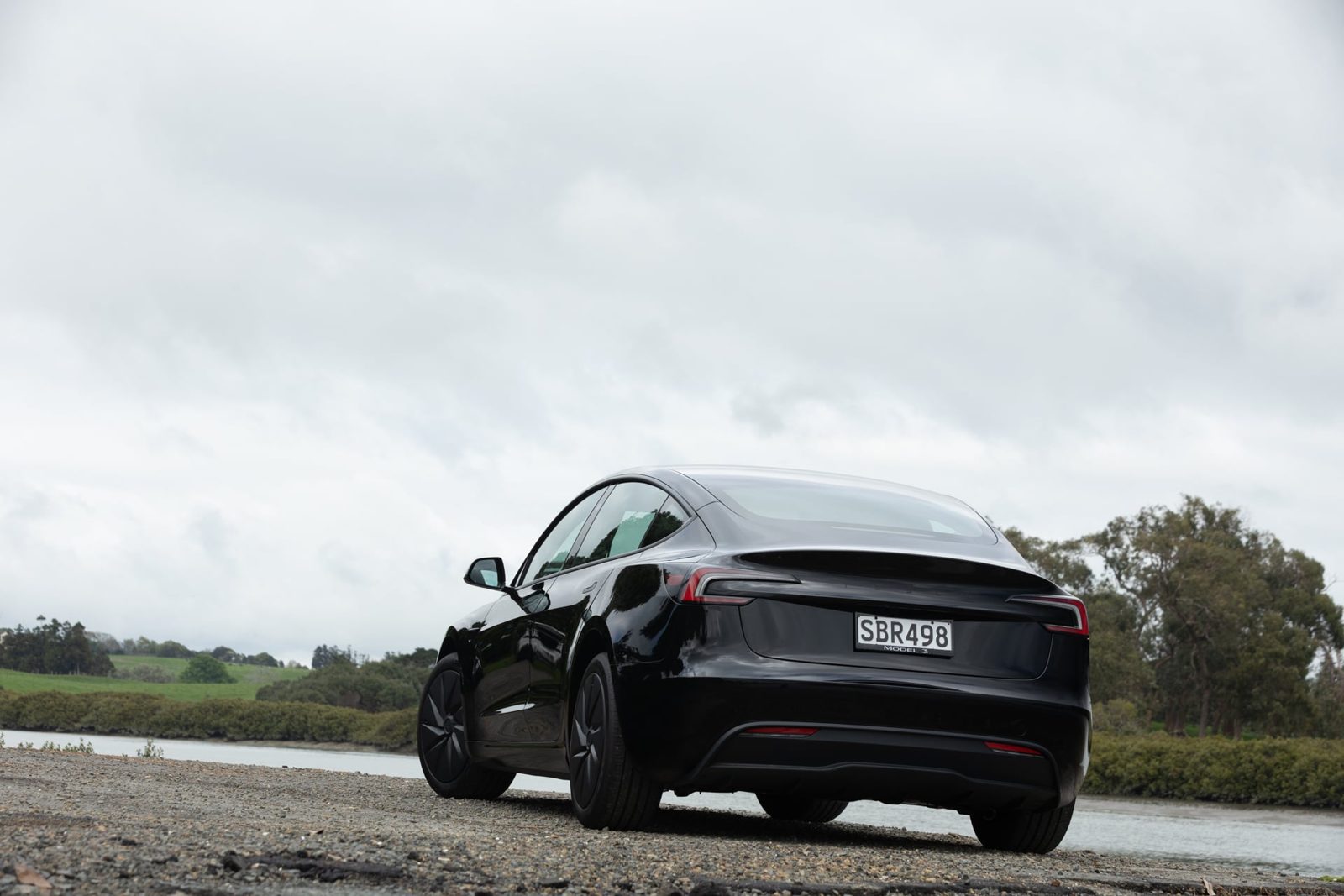
From the outside you’d struggle to tell them apart. The only giveaway is a set of plastic aero covers on the 18-inch wheels, because everything that’s been cut to hit the price is inside. We covered the full line-up and pricing when it arrived.
Range, battery and charging
The 572km WLTP figure is more than the outgoing entry Model 3 managed. My rule of thumb is to take 15% off a WLTP figure for normal driving, and that leaves you with around 486km.
Tesla says the battery has been carried over from existing models but won’t say how big it is. It uses LFP chemistry and is about 62kWh, which means you can charge it to full every day without giving it a second thought. The battery and drive unit are covered for eight years or 160,000km, and the car itself gets a five-year, unlimited-kilometre warranty.
Even in this entry car, DC charging peaks at 175kW, so in the right conditions you should get close to 285km back in about 15 minutes.
Tesla doesn’t publish a kerb weight either, so I took it down to the local transfer station weighbridge. Once I’d taken off my own weight and a bag of shopping, it came in at 1776kg.
What it costs
That $54,900 needs a bit of context. Tesla’s on-road charges on our car came to almost $2400, which is about twice what most brands and dealers charge, so it was $57,257 to drive away.
Tesla’s online price calculator also factors in what you’ll save on petrol, which I find a bit cheeky. I’m not a qualified moneyologist, but if something costs $100 and you pay $5 for it, you haven’t saved $95, you’ve spent $5. The fuel savings are real enough, but they aren’t a discount on the car.
Pearl White is the only no-cost colour, with Diamond Black at $1700 and Stealth Grey at $2300.
Outside and practicality
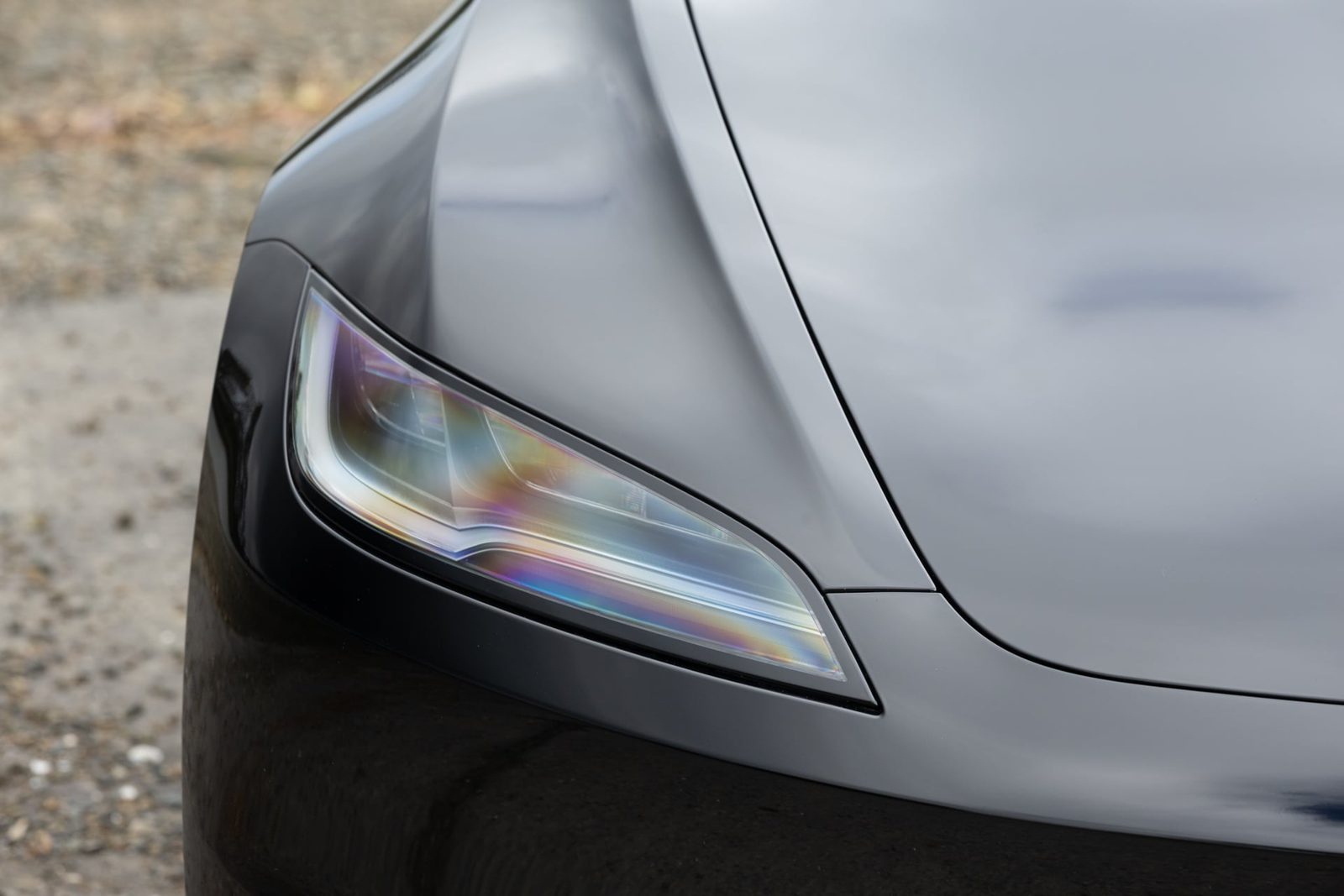
Apart from those wheel covers, the body hasn’t changed. You still get the matrix LED headlights, panoramic glass roof, front bumper camera, power-folding mirrors and a hands-free powered boot, along with the same door handles that need a secret handshake to open.
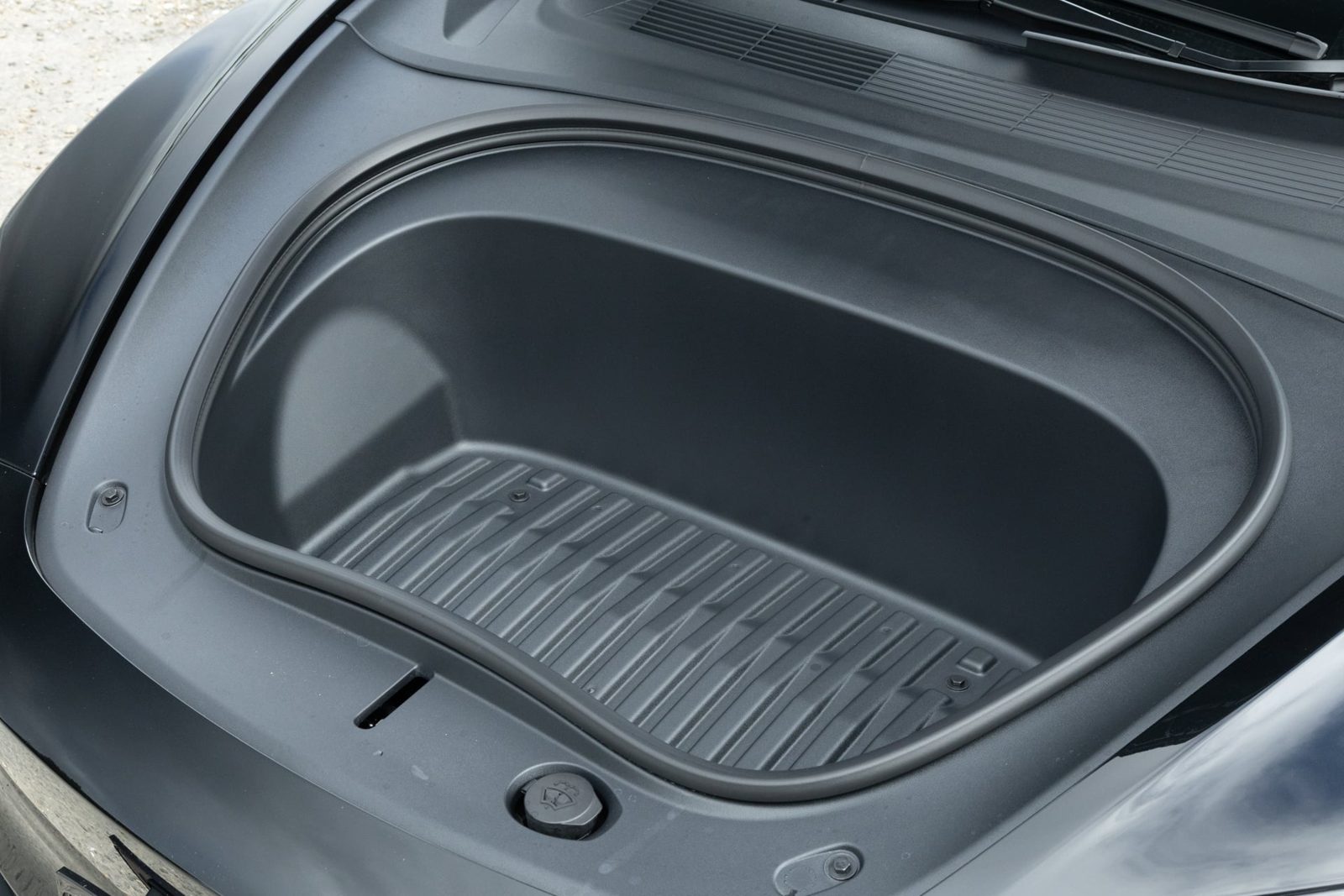
The boot holds 594 litres, there’s another 88 litres up front, and you get 1659 litres with the rear seats folded. As with any sedan, the opening through to the cabin is tighter than a hatch’s, so a big suitcase may not make it through. Fold the seats, though, and there’s room to lie flat in the back, which makes a mattress-and-camping weekend a real option. Towing is rated at 1000kg braked and 750kg unbraked.
New for the 2027 model year is Power Share, Tesla’s name for vehicle-to-load. With the Tesla Outlet Adapter, which is sold separately, it’ll run power tools, e-bikes, a kettle or a coffee machine at the campsite. It can’t be added to older cars.
Cabin
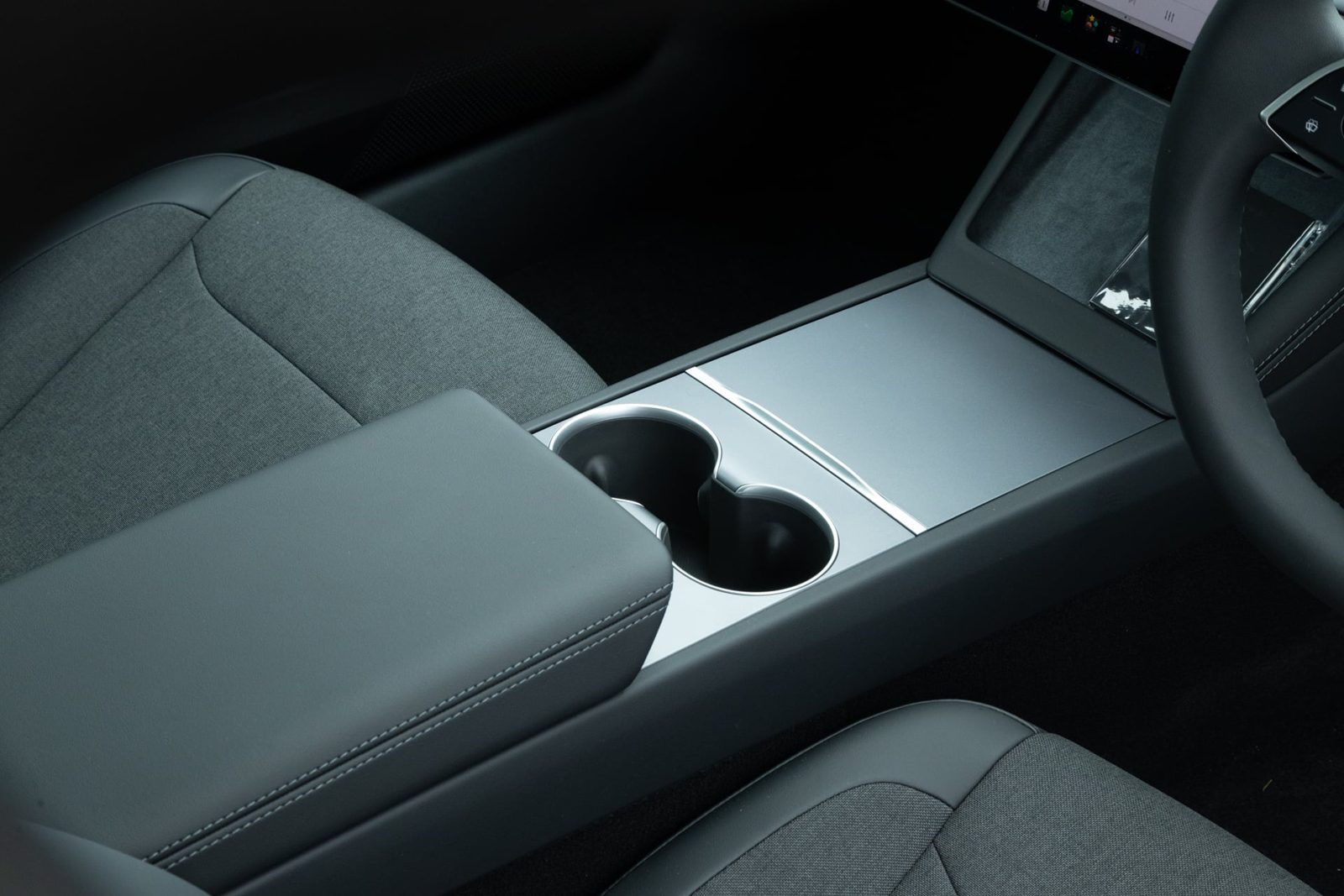
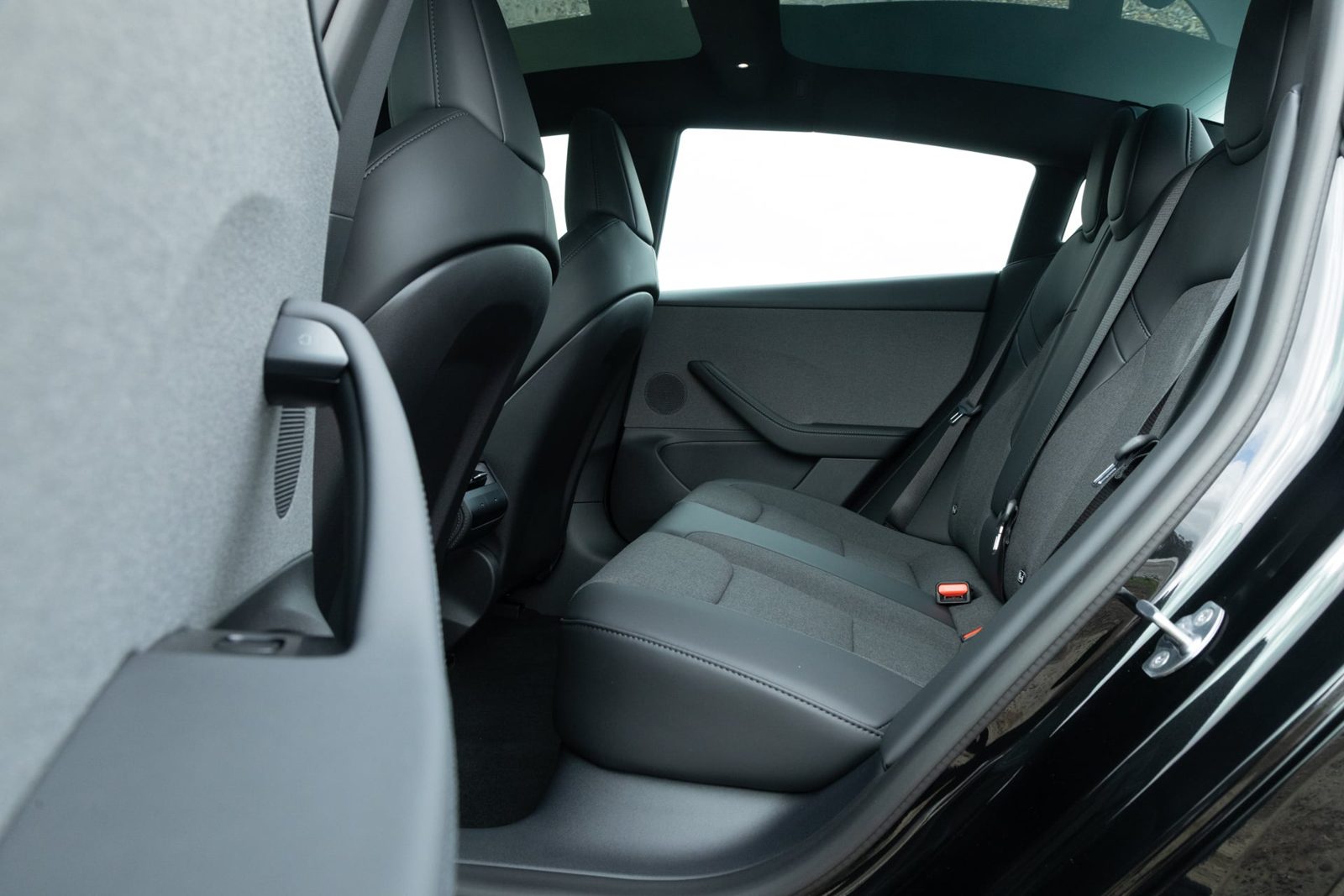
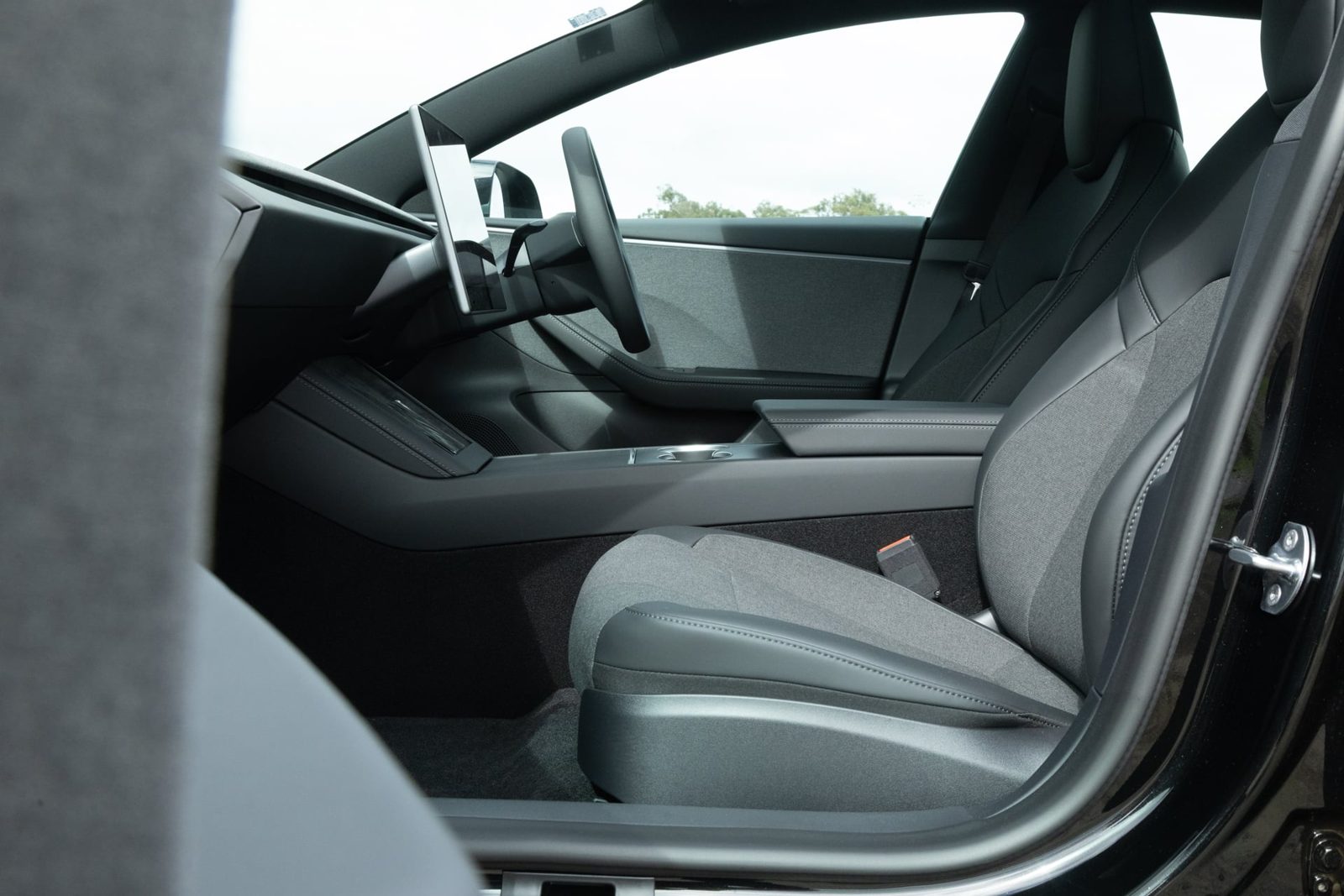
This is where Tesla has found its savings, starting with the seats. They’re now part cloth, with a flat-woven textile that Tesla pairs with vegan leather, and it’s a welcome change because you won’t be peeling your thighs off them in summer. The fronts are still heated and electrically adjustable, but ventilation has gone and so has rear seat heating. There are no longer any buttons on the seat sides either, so you adjust them through the touchscreen.

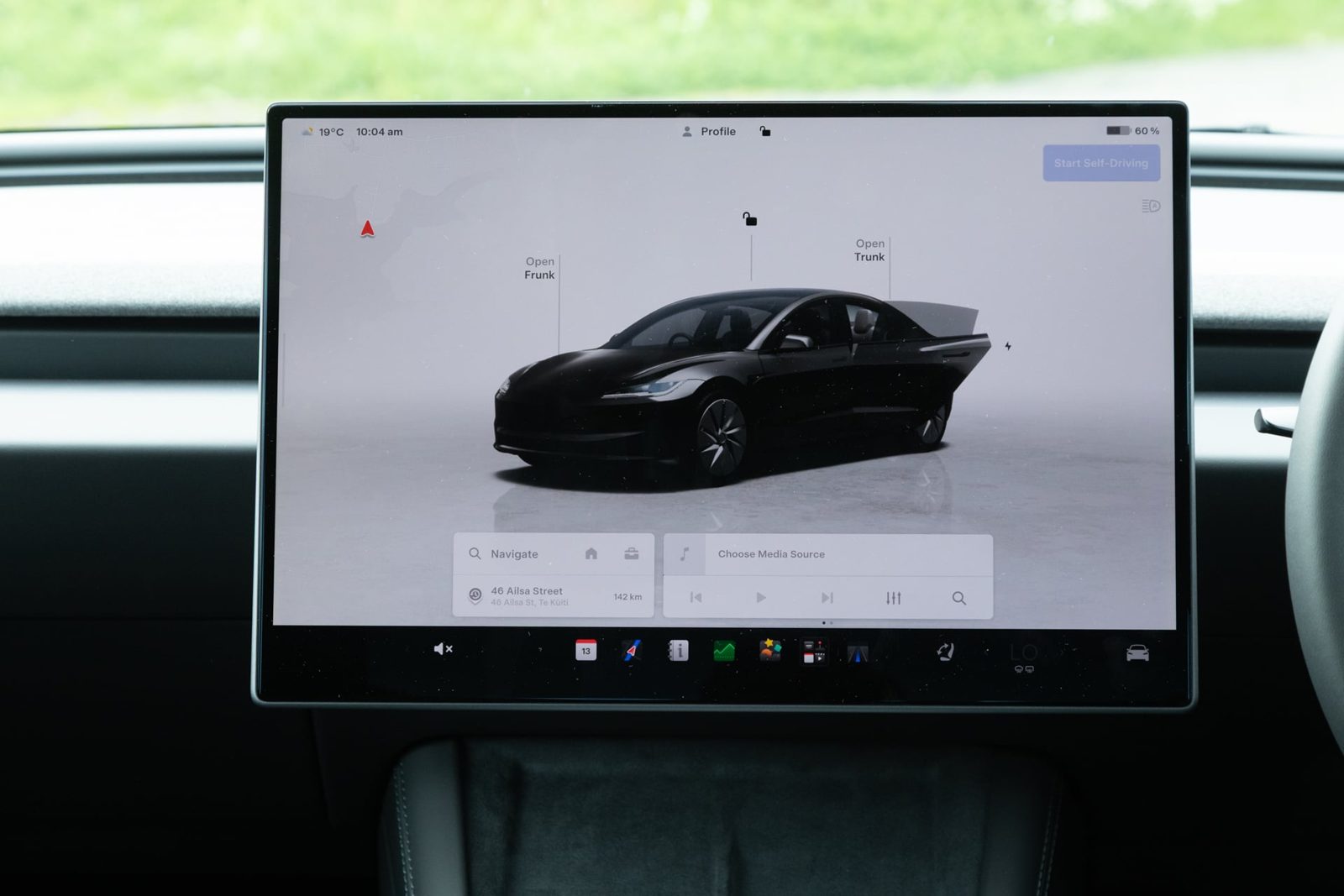
The 16-inch centre screen is wider but shorter than before, and it suits the dash well. I’m still in two minds about having nearly everything on it, though. As on every Model 3, the front air vents are adjusted on the screen, which is fiddly while you’re driving, while rear passengers get proper manual vents. They’ve lost their eight-inch screen in this model, mind you.
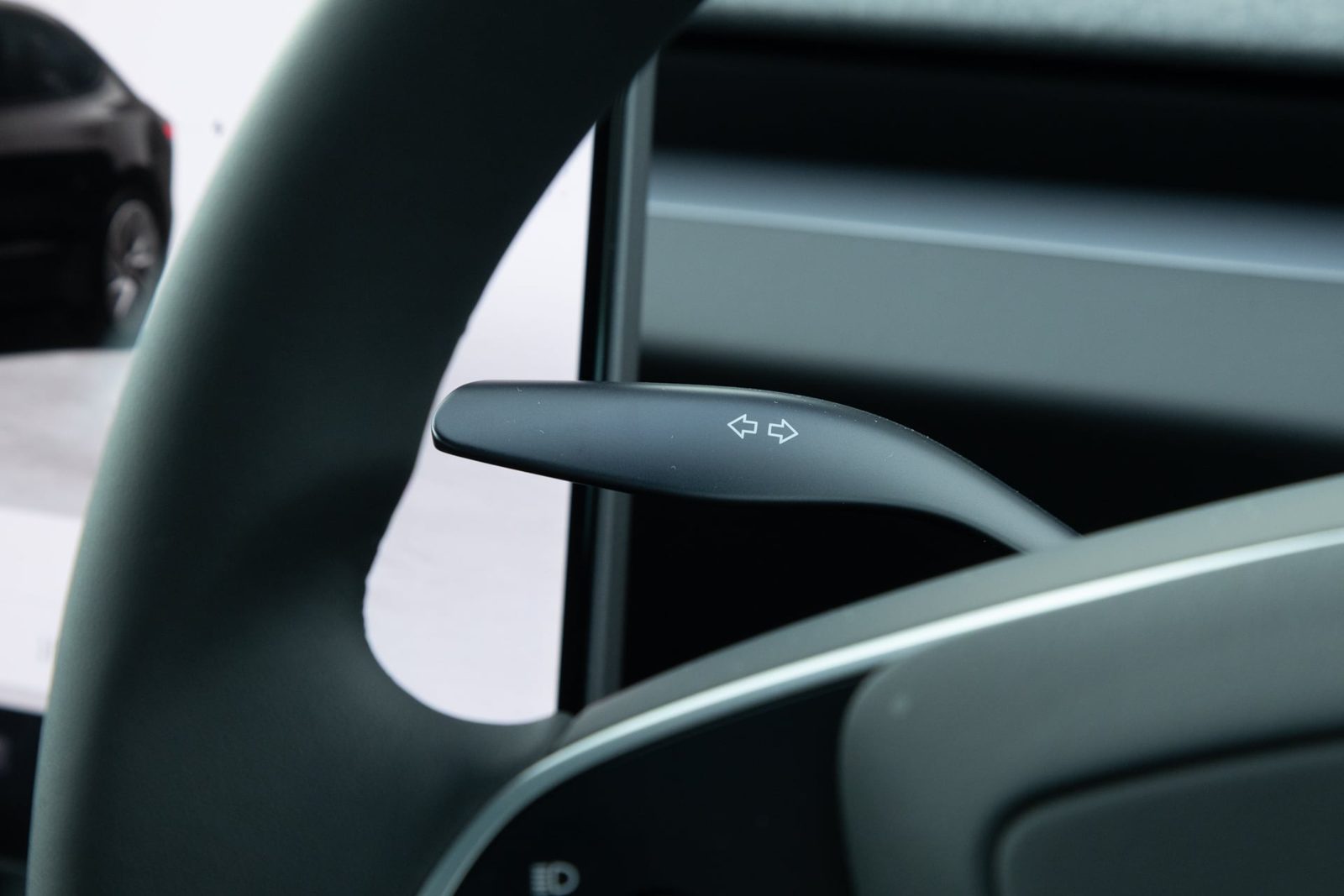
One change is a genuine improvement. The steering column now adjusts by hand, where other Teslas do it through the screen or voice commands, which takes a while. This takes less than two seconds.
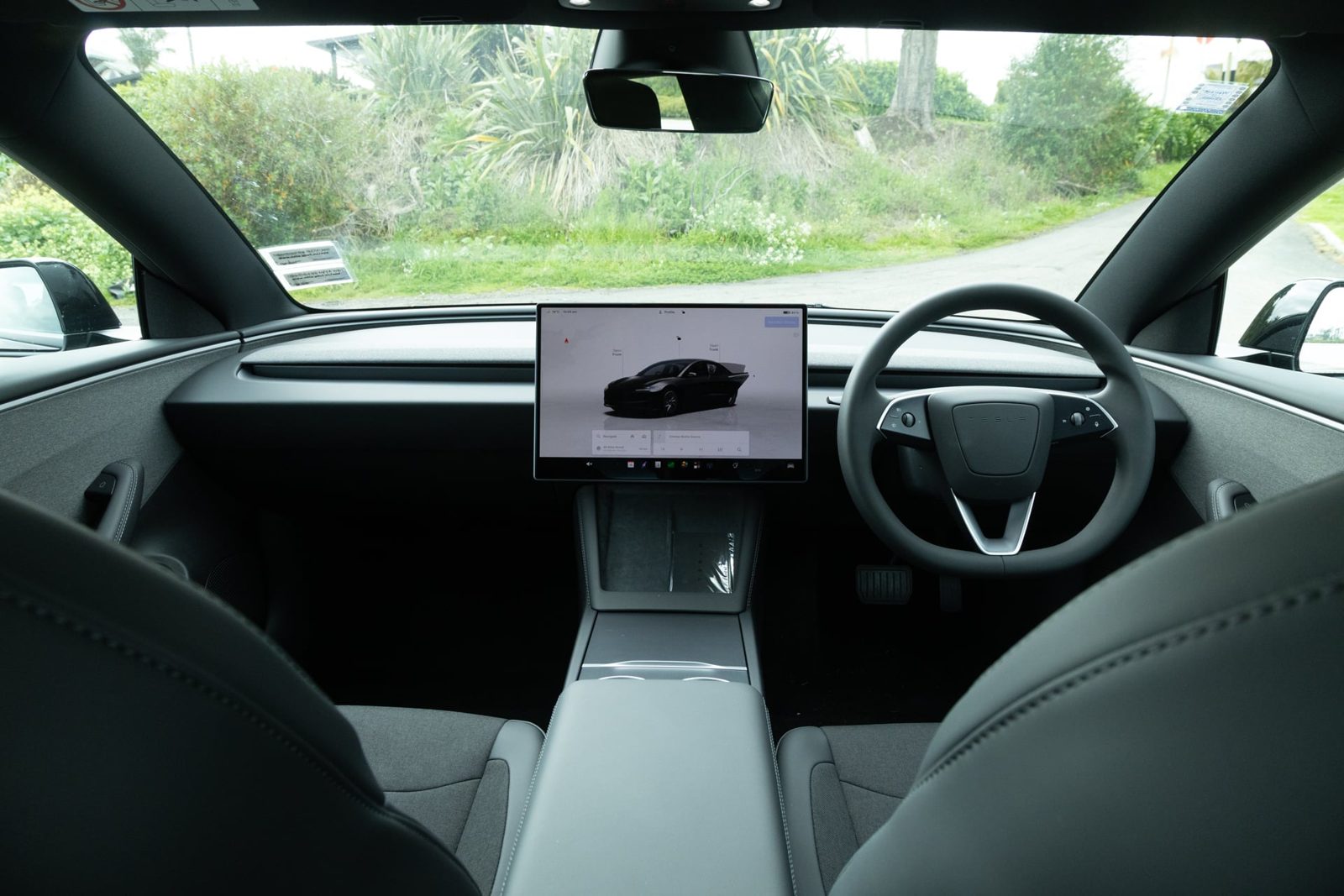
FM and DAB radio have gone, although you can stream radio through the built-in apps. The stereo drops from nine speakers to seven, and while I couldn’t hear much difference, Tesla wouldn’t tell me which ones were removed. Floor mats are no longer included either, so budget for a set.
You still get a decent list of kit, including the heat pump, heated steering wheel, wireless phone charging, three USB-C ports and Sentry Mode. Grok, the in-car AI assistant, is there too. I expected to hate it, but it talks like a normal person and gave me sensible advice when I asked what to do about a piece of potato stuck up my nose.
On the road
Tesla doesn’t publish outputs, but the single rear motor makes 208kW and 420Nm, and 0-100km/h takes 6.2 seconds. It doesn’t leap off the line like a Model 3 Performance, but once it’s rolling it pulls hard, and the rear tyre will scrabble if you’re heavy with your right foot.
I’ve heard plenty of reviewers say the Model 3 isn’t a driver’s car, and I’ve never agreed with them. The battery sits low in the floor, the steering is quick and precise, and the throttle responds to the smallest movement. The suspension has been more pliant since the refresh without losing any cornering ability, though it can still be a little firm at times, and the brakes are strong. It rides on 18-inch Giti Control Pro tyres, a mid-range EV tyre that handled well.
In almost a week with the car, the only fault I could find was a small rattle somewhere in the cabin.
Full Self-Driving (Supervised)
FSD (Supervised) is a $159-a-month subscription, and it’s the most impressive thing about this car. I put in a destination, took my hands off the wheel and my feet off the pedals, and it reversed out of my carport and drove itself through town. It indicated and slowed for turns, gave way to a ute, and paused to judge a gap before pulling out.
At the destination it parked badly, then waited for the car behind to pass before reversing back in to tidy it up. You do have to stay alert and be ready to take over at all times.
Of the cars on sale here, it’s the most capable system I’ve used. The XPeng L03 is coming with its own advanced driver-assist system, but only on the top model, which costs more than this Tesla.
Rivals
The Toyota bZ4X Pure is $56,990 and the Kia EV3 Light starts at $55,520, both plus on-road costs, while the BYD Seal Dynamic, its most direct sedan rival, is $59,990. The XPeng L03 starts at $49,990.
On list price the Tesla undercuts all of them except the XPeng, although its high on-road charges close some of that gap.
Verdict
The range has gone up, the price has come down, and it’s still a very good car to drive. The cabin is sparer than before, and losing the rear screen, ventilated seats and floor mats will bother some buyers. At $57,257 drive-away it isn’t the cheapest EV you can buy, but it’s good value, and with FSD (Supervised) added it can do things no other car at the price can.
Specifications: Tesla Model 3 Rear-Wheel Drive
- Price: $54,900 plus ORC ($57,257 drive-away as tested)
- Motor: Single, rear-wheel drive
- Power/torque: 208kW/420Nm (not published by Tesla)
- Battery: LFP, approx 62kWh (not published by Tesla)
- Range: 572km (WLTP)
- DC charging: 175kW peak
- 0-100km/h: 6.2sec
- Weight: 1776kg (weighbridge)
- Boot: 594L plus 88L frunk; 1659L seats folded
- Towing: 1000kg braked, 750kg unbraked
- Wheels: 18-inch, Giti Control Pro tyres
- Safety: Five-star ANCAP
- Warranty: 5 years/unlimited km; battery and drive unit 8 years/160,000km
- FSD (Supervised): $159 a month
Join the conversation