
ABB powers up V2G
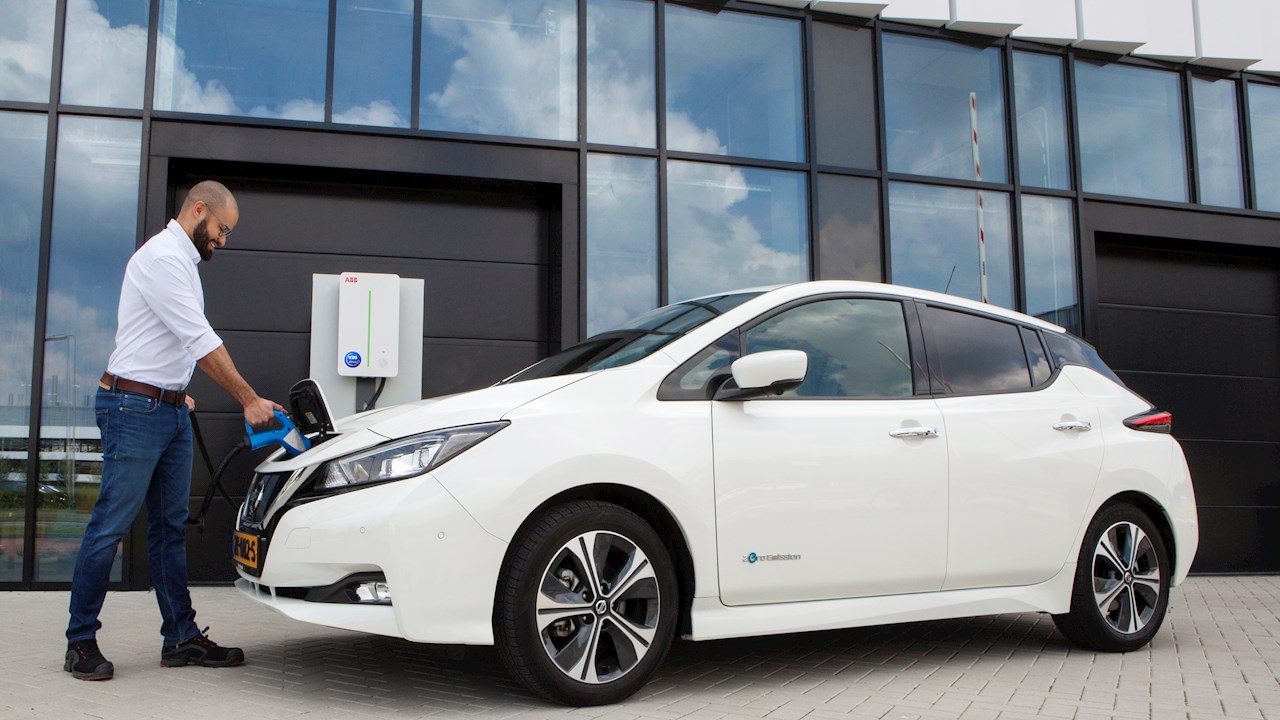
A new 11kW station will help ABB set a global benchmark for vehicle-to-grid (V2G) technology.
Under a partnership project, ABB will supply V2G bi-directional kiosks in France, followed by installations in the United Kingdom, Italy, Belgium and Germany.
The light and compact 11kW charger delivers a quick and flexible charge and is fully compatible with current and future EVs, ABB says.
It meets the most stringent grid compliance requirements and is designed to be the global benchmark for V2G charging, the company adds.
As part of a contract with France’s DREEV, a joint venture between Électricité de France (EDF) and Nuvve, which specialises in intelligent charging for EVs, ABB will supply its new 11 kW bi-directional charging technology, specially designed for V2G.
ABB’s solution integrated with DREEV software technology will enable EV drivers to export surplus power back to the grid.
With potential to generate up to 20 Euros per EV a month, V2G thereby reduces the total cost of ownership and further boosts EV adoption, ABB says.
Bi-directional chargers also help smooth the flow of uneven generation of electricity from renewable sources such as solar and wind.
“We are delighted to have the opportunity to support DREEV in its mission to actively participate in making the grid more resilient with V2G technology,” ABB e-mobility infrastructure solutions head Frank Muehlon says.
“Our cooperation with DREEV is one of the leading efforts worldwide to deploy real V2G technology to the field.
“The development of this intelligent bi-directional charging solution will be key in enabling the next step in the evolution of our e-mobility ecosystem and represents a key milestone in ABB’s sustainability strategy.”
DREEV chief executive Eric Mevellec says the cooperation with ABB is key to bringing its solutions to the next level.
“We are now ready to accelerate commercial development.”
Few electric cars currently support V2G, but it is expected to become a dominant technology within the next five years.
ABB says with the number of EVs on the road predicted to rise to 559 million by 2040 and 33% of the global fleet to be powered by electricity, the world’s energy ecosystem needs to evolve to support this transition.

Join the conversation