
ABB to charge Auckland’s electric ferries

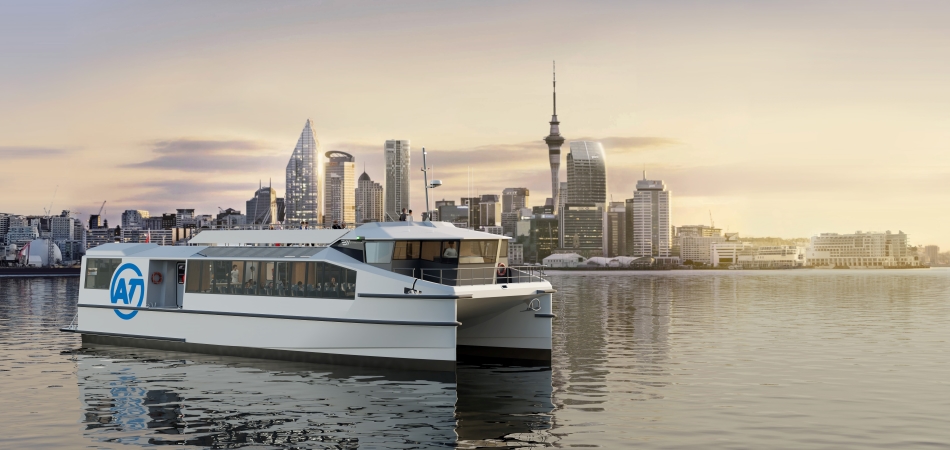
Auckland Transport (AT) has awarded ABB the contract to supply a megawatt-level (MW) charging system for its incoming electric ferries (two 200-seater electrics and two 300-seater hybrids).
Over the next few years, the first two fully electric and two electric-hybrid ferries will be joining AT’s ferry fleet as it works to provide low emission public transport across its network, with Auckland is set to have the largest electric ferry fleet in the Southern Hemisphere.
The new ferries will require modern charging infrastructure which will be engineered and installed by global technology company ABB, says AT’s low emission ferry programme director Nathan Cammock.
“Each charger will be capable of supplying over three megawatts of power, allowing the ferries to quickly top up between journeys. They will charge for five to 10 minutes during passenger boardings, meaning we can minimise the size of the marine batteries and allow high vessel utilisation without long charging periods.”
ABB was a natural choice to deliver the required infrastructure, given its global expertise and local presence, Cammock says.
“ABB has been providing technical solutions in New Zealand for 90 years,” he explains.
“The ferry chargers we need in Auckland are very similar to what ABB has recently delivered in Portugal to support 10 electric ferries.”
Cammock says decarbonisation of AT’s ferry fleet is a part of its Mission Electric initiative to invest in low emission transport options.
“AT’s train network has been electrified already and all new buses will be electric. Now we are doing the same for the ferry network.
“Auckland’s ferries use around 13 million litres of diesel each year and make up 20% of public transport emissions. Our first new ferries will be powered by locally generated electricity, helping reduce fuel consumption by approximately 1.5 million litres each year, and avoiding about 4000 metric tons of CO2 emissions,” he says.
“The new ferries will also have greater passenger capacity, improved accessibility, and a more consistent customer experience compared to our current fleet. They will be owned by Auckland (via AT) for the benefit of Auckland.”
ABB marine and ports ferry segment manager Palemia Field says Auckland is at the forefront of sustainability efforts in the marine sector and AT’s decision is a clear demonstration of that.
“Ferries connect communities and have a significant impact on the environment,” he says.
“Electrification is crucial and we must move away from emissions-generating technologies.
“Noise- and emission-free operations benefit both the broader and local communities, while passengers onboard enjoy improved travel comfort thanks to less vibration.”
While the new electric and electric-hybrid ferries are being built, AT is also having four existing diesel ferries overhauled and refitted with more fuel-efficient engines to provide an immediate reliability and emissions benefit.
ABB says the MW charging system is a world-first for maritime electric and hybrid ferries, with the shore-to-ship charging system using an interface common to trucking and aviation and is expected to lower market barriers to entry for electric ships.
It expects the move will reduce AT’s annual fuel consumption by about 1.5 million litres, helping avoid about 4000 metric tons of CO2e emissions (about 90 diesel buses worth).
The CharIN MW charging system standard will be used, ABB working with local partners to deliver, engineer and install five complete charging solutions during 2024 and 2025 at several ferry terminals.
Each system will feature a pair of 1.65MW chargers, consisting of a transformer, ACS880 converters, MCS plugs and cable management on the ferry pontoons.
The chargers will deliver more than three MW of DC power to sustain the short turnarounds and high-power demands needed, with the connectors to be handled by crew during passenger turnarounds.
The two electric vessels have been developed by Auckland technology and design firm EV Maritime and are being built by Auckland shipyard McMullen & Wing.
These carbon fibre fast ferries, launching in 2024, are designed to bring fully electric operation across Auckland’s inner and mid-harbour network.
Two diesel-electric hybrids being built in aluminium in Whanganui to an Australian design, scheduled to launch in 2025 and 2026 respectively, are intended to run electric-only services on the short-hop Devonport service with hybrid capability giving them the flexibility to serve mid-harbour routes when needed.
EV Maritime founder and chief executive Michael Eaglen welcomes ABB to Auckland’s low emission ferries programme.
“At EV Maritime we have been working informally with ABB on high-capacity DC charging architectures for Auckland since 2019,” he says.
“We’re very pleased to see the product of our early conceptual collaborations coming to life to support the growing electric fleet.
“The electrification of Auckland’s ferry service is attracting global attention as one of the world’s first deployments of electric fast ferries into a complex network setting,” Eaglen adds.
“We’re pleased to have a world leader like ABB taking care of the landside infrastructure and to see the many parts of this project coming together to deliver the better ferry future Auckland deserves.”

Join the conversation