
Auckland electric hybrid ferries within four years
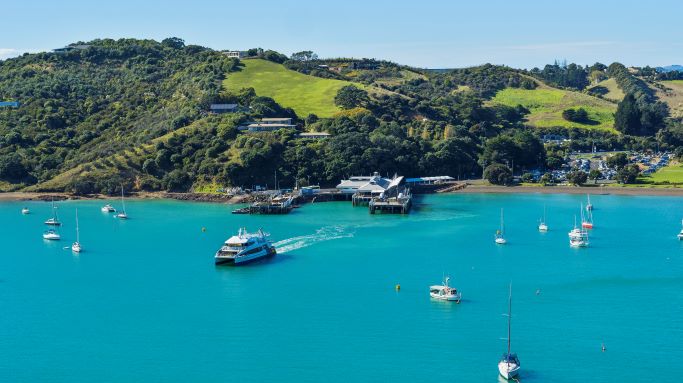
Auckland Transport will take ownership of four existing ferries and get five new plug-in electric hybrid ones during the next four years under a deal with Fullers360 worth more than $95 million.
All ferries have previously been historically owned by the private operator, AT saying the agreement will allow AT to accelerate the implementation of its preferred business model, with an additional two fully electric ferries under order from EV Maritime funded under an Energy Efficiency and Conservation Authority (EECA) grant.
E-ferry batteries will be recharged at charging stations to be installed at Auckland’s wharves, while the hybrid ferries include a backup generator for extended range and to cover situations where shore-side charging is unavailable.
Fullers360 is providing options for retrofitting the four existing ferries with lower emission engines, to help reduce emissions in the short-term while the transition to electric and electric-hybrid ferries is underway.
AT will own most of the strategic assets (ferries, wharves and marina leases) for the long-term benefit of Auckland while contracting the operational delivery of ferry services to the private sector including use of those assets.
The negotiation with Fullers360 brings forward AT ownership of these vessels by 12 years compared to original expectations of ownership transitioning at the end of the contract term, says AT which adds the agreements are similar to a public-private partnership and that the same arrangement applies to Auckland train passenger services.
The Devonport ferry service will come under the Public Transport Operating Model (PTOM) for a 12-year term. Hobsonville Point/Beach Haven and Half Moon Bay/Downtown Auckland ferry services will also be subject to new contractual arrangements for a 12-year term. These services are already contracted by AT to Fullers360. Gulf Harbour will be subject to new contractual arrangements for a six-year term.
AT will open the tender process for the remaining Auckland ferry routes (Birkenhead, Bayswater, West Harbour and Pine Harbour) in the next year.
Contracting provides greater certainty around the service delivery, puts in place service performance regimes and allows Auckland Council and Waka Kotahi NZ Transport Agency to co-invest in the service via AT’s contractual arrangements., says AT.
“This is the same way as AT Metro’s other commuter ferry services (other than Waiheke Island), all AT Metro bus services and AT Metro train services are delivered.”
The Waiheke Island service will retain its exempt status but will come under a Quality Partnership Agreement (QPA) which will address several areas of concern raised by the Waiheke Island community to Fullers360 and AT.
These include an integrated Waiheke AT HOP adult monthly pass for the island which will be introduced, bringing Waiheke Island into the wider integrated transport network enabling pass holders to take advantage of adjoining zone travel on bus and train – expected to be available no later than October 1, 2022.
The adult monthly AT HOP fares will be subsidised by AT for Waiheke Island to align the fares to the Pine Harbour and Gulf Harbour ferry services, reducing the price of a monthly pass from $403 to $345.
Greater certainty of service levels will be provided through a base minimum services timetable applicable through the year, as is in place for other contracted AT ferry services. A performance regime with punctuality and reliability metrics and payment of abatements for non-performance (to be ring-fenced for investment for the benefit of Matiatia ferry users) will be introduced.
Fare increases for the Waiheke Island adult monthly pass will be contained within a maximum of 4% year-on-year regardless of the increase in external operating costs.
Fullers360’s current termination of services will be extended from the current legislative timeframe of 15 business days to nine months allowing for greater assurance of services and operations.
To fund Regional Public Transport Plan (RPTP) services, AT receives fare revenues from passengers with the balance split between ratepayer funding via the Auckland Council and government funding via Waka Kotahi NZ Transport Agency.
Considerable time was spent by both parties discussing the viability of the Waiheke Island route under PTOM.
“We appreciate that many members of the Waiheke community have advocated for Fuller360’s exemption status to be lifted,” says AT.
“However, the reality is that under PTOM the service is not commercially viable without additional funding from Auckland Transport or central Government. In addition, the PTOM review is being managed by central Government, so could not be central to this partnership negotiation.”


Join the conversation