
Auckland set to lower transport emissions
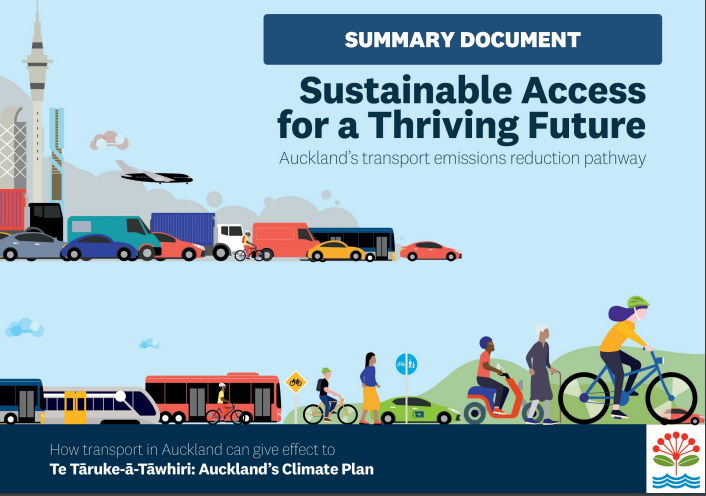
A 64% reduction in Auckland transport emissions by 2030 through electrifying fleets, cutting traffic, improving public transport and encouraging more travel choice such as walking and cycling is proposed in the Auckland Council’s Transport Emissions Reduction Pathway (TERP).
The council’s environment and climate change committee will consider on Thursday August 18 whether to adopt the TERP.
“Aucklanders understand and have told us that we have to move further and faster on climate change if we are to avoid an environmental disaster and create a sustainable future for our kids and grandkids,” says Auckland mayor Phil Goff.
“In Auckland, the biggest single source of carbon pollution is our transport system, which accounts for more than 40% of our region’s overall emissions.
“In a city where people once used to rely more on public transport, urban spawl and motorway development from the 1960s has locked in car dependency and resulted in Aucklanders driving much more than in many comparable cities overseas. The pathway shows how we can give transport choices back to Aucklanders,” Goff explains.
“As well as reducing carbon emissions, this change will make it easier and cheaper to get around the city for everyone. It will enhance regional productivity for those who do need to drive, such as tradespeople, freight operators and essential services, and will reduce congestion, helping to give back the average 80 hours a year that Aucklanders spend stuck in traffic.
“It will reduce our reliance on expensive, imported carbon fuels and our vulnerability to soaring fuel prices caused by constricted supply chains, such as is occurring now due to Russia’s invasion of Ukraine.
“It will also make our roads safer for all users, reduce pollution which currently contributes to the deaths of more than 3300 New Zealanders a year, and make Auckland a greener and healthier place to live, work and visit.”
The TERP developed by the Auckland Council and Auckland Transport (AT) in response to te Tāruke-ā-Tāwhiri Auckland’s Climate Plan, sets out what will need to happen, what it will look like and identifying barriers.
It also recognises that tackling climate change requires all sectors to have a role, including central and local government, business and industry, agriculture, NGOs, local communities, and individuals.
Actions proposed include making the majority of local trips (under 6km) by sustainable modes, converting 30% of the city’s vehicles to electric (especially commercial vehicles), a 10-fold increase in active travel (walking and cycling), a five-fold increase in the number of public transport trips taken – aided by a three-fold increase in the number of services on offer.
“By creating neighbourhoods that people want to be in, instead of drive through, and by ensuring the things we need are closer to the places we live, we can reduce the number of short trips we take by car,” says environment and climate change committee chair Richard Hills.
“That’s what the Emissions Reduction Pathway is all about – it isn’t about taking cars and car parks away from people, it is about unlocking our roads for those who need them, it is about how we can improve our air quality so we can all live healthier lives and it’s about us spending more time with our families than stuck in traffic. Ultimately, it is about how we can, and will, create a more liveable Auckland.”
The TERP sets out 11 areas for transformation to achieve the 64% emissions reduction over the next eight years.
These are; supercharging walking and cycling, using public transport much more, prioritising and resourcing sustainable transport, reducing travel where possible and appropriate, making neighbourhoods safer – with less traffic, putting things closer to where people live, electrifying private vehicles, enabling new transport options, making buses, trains and ferries low-emissions; making freight and services cleaner and more efficient, and helping Aucklanders make sustainable transport choices.
“Fuel prices are higher than they’ve ever been and will likely continue to rise. Our over-dependency on cars means that when this occurs, Aucklanders have very little option but to pay more at the pump, which adds to existing financial pressures and makes Auckland less liveable,” says Auckland Council chief sustainability officer Matthew Blaikie.
“We recognise that some of the required behaviour change simply isn’t possible until our city is equipped to give Aucklanders more options for how they get around. The pathway gives us. direction to put the necessary infrastructure and transport systems in place to help us achieve the level of change needed.”
Some funding to implement the pathway will come from the reallocation of existing budgets, with additional funding from central and local government sources.
Click here for a TERP summary.



Join the conversation