
Australian industry bodies welcome government EV discussion paper
Australian automotive industry bodies have welcomed the Albanese Labor Government’s release of a discussion paper that captures the critical issues to be addressed in a national electric vehicle (EV) strategic plan.
The Motor Trades Association of Australia (MTAA), the Victorian Automotive Chamber of Commerce (VACC) and the Federal Chamber of Automotive Industries (FCAI) have all welcomed the opportunity to make submissions for a considered plan of transition for the Australian fleet.
FCAI chief executive Tony Weber says his organisation would be making a submission and will be providing constructive and practical insights on how to accelerate the rollout of zero and low-emission vehicles in Australia.
“The pathway to achieving the best outcome for Australia is complex and the discussion paper raises many of these issues,” Weber says.
“There are many key issues that need to be examined in this review. These include vehicle price, model availability, battery supply and the provision of further consumer support through the development of charging infrastructure and purchase incentives.”
“This paper is an encouraging starting point. Automotive manufacturers look forward to working with Government to create an ambitious yet achievable policy framework for both car makers and Australian consumers,” he says.
Balanced approach
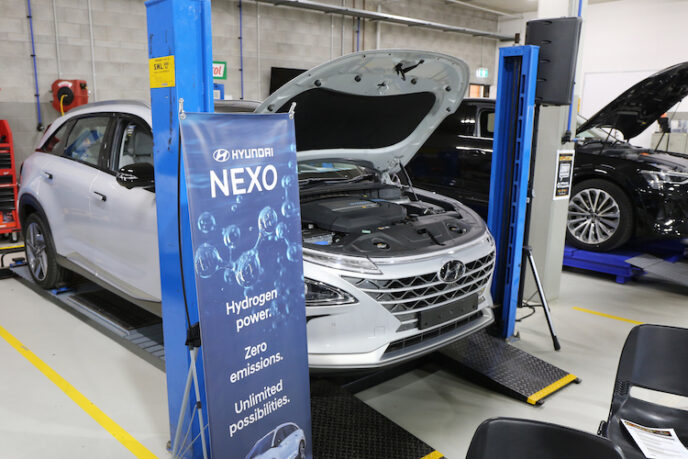
MTAA chief executive Richard Dudley says the organisation and its members welcomed the balanced approach taken in the content, recognising not only battery electric but Plug-In Hybrid and Hydrogen and the importance of effectively managing and servicing the existing fleet to reduce emissions.
Dudley said the timing of the release of the discussion paper could not have come at a better time.
Delegates from the Motor Trades Associations from Queensland, New South Wales, South Australia, Western Australia, and the Victorian Automotive Chamber of Commerce, are returning this week from a comprehensive, in-depth examination of the EV strategies applied across Europe.
“Learnings from this study tour combined with the input and knowledge base of thousands of automotive businesses will inform MTAA and member submissions to the discussion paper,” he says.
‘While Australia may well be behind other jurisdictions in EV policy and uptake, it is clear from European investigations that Australia is arguably in a far better position to avoid the potholes, pitfalls and unintended consequences of other EV transition pathways.”
MTAA says the goals of affordability, expanding EV uptake and choice, reducing emissions, fuel savings, and potential for local manufacturing are broad enough to capture related matters that could impact outcomes.
In addition, the objectives and identification of other areas that will benefit from national coordination to support and achieve the goals echo MTAA, member and industry calls to consider workforce, training, taxation, incentives and subsidies, CO2 emission targets and recycling as part of an integrated whole of Government approach.
“Together, we have much work to ensure everyone understands and owns a vital journey to transition the national fleet and MTAA and members look forward to partnering with the Government and our industry colleagues to achieve the required outcomes,” Dudley says.
Planning for transition
VACC welcomes the opportunity to provide input into the discussion paper. This will include a call to government to consider the transitional requirements of the existing automotive industry that has around 75,000 businesses and employs 400,000 people.
“Examining how other countries have transitioned to cleaner vehicle fleets clearly shows Australia can avoid many of the pitfalls already experienced in other countries,” VACC chief executive Geoff Gwilym says.
“While countries, such as Norway and Sweden, have significant hydro capabilities, Australia has the equivalent in solar and wind capability, which must be harnessed to meet our transitioning vehicle fleet requirements.”
“The existing industry must be integral to any transition plans. We have hundreds of workers and jobs at stake and it can’t be taken for granted all parts of the industry will just transition.”
Affordability and an adequate supply of new zero and low emission vehicles to Australia will also be raised, given Australia no longer manufactures its own passenger cars.
“Manufacturers deliver vehicles to regions where they are likely to sell, so government policy has to build sufficient incentive into Australia’s car market to make it a destination of choice for vehicle manufacturers.
“Lower income earners need to be part of this transition process. We can’t have the creation of a great car divide that excludes people who, through no fault of their own, don’t have the capacity to be part of the fleet transition”.
“Most importantly, in order to achieve the government’s objectives, it must work with the automotive aftermarket, which will be most affected by the transition.
“To date, it has been overlooked by government when discussing EV policy and this simply must not continue. This sector will be relied upon to sell, service, repair and dismantle ZLEVs over the coming years and must be part of the conversation and strategic planning,” he says.
The time has come for Australian households and businesses to reap the benefits of cheaper, lower emissions transport that is fit for the 21st century, Australian climate change and energy minister Chris Bowen and transport and infrastructure minister Catherine King says in the paper’s foreword.
“This consultation paper provides a chance for all Australians to have their say on a National Electric Vehicle Strategy to increase the supply and uptake of electric vehicles,” they explain, adding that transport is Australia’s second largest source of national emissions.
“Reducing these emissions will be critical to achieving Australia’s emissions reduction target of 43% on 2005 levels by 2030 and reaching net zero emissions by 2050.
“On average, new passenger vehicles in Australia have around 20% higher emissions than the United States, and around 40% higher emissions than in Europe. We need to catch up to the rest of the world when it comes to transport emissions.”
The ministers point out that in 2021 EVs were just under 2% of new light vehicle sales in Australia, compared with 9% globally In the United States and Canada, new EVs had a market share over 5%. In the past year in New Zealand, EVs have gone from 2.5% of new registrations to over 11%.”
Current policy settings have failed to secure supply of affordable EVs for Australians, the ministers add.
“State and territory governments around Australia have implemented policies to encourage EV takeup, but coordination and alignment at the national level has been lacking.
”We are also seeking views on implementing vehicle fuel efficiency standards in Australia.”
Consultation on the 18-page EV discussion paper closes on October 31.


Join the conversation