
Australian industry meets first emissions targets as EVs generate millions in credits
Australia’s automotive industry has met the first targets under the Federal Government’s New Vehicle Efficiency Standard (NVES), with new data showing strong credit generation from electric vehicle suppliers — but 19 manufacturers and entities accrued liabilities as tougher reductions loom.
The NVES Regulator published the first performance results on February 18, covering the initial reporting period from July 1 to December 31, 2025.
A total of 59 regulated entities entered 620,947 new vehicles onto the Register of Approved Vehicles during the six-month period. Of those, 68% beat their emissions target, generating 17.2 million NVES units. After liabilities were accounted for across the remaining 19 entities, the industry recorded a potential net surplus of 15.9 million units that can be carried forward.
Zero-emissions vehicles accounted for 12% of all covered vehicles, with 40 entities supplying EVs.
Federal Chamber of Automotive Industries chief executive Tony Weber says manufacturers responded quickly to the first-year requirements.
“An increase in the range of zero and low emission vehicles available in the Australian market have supported the achievement of the first-year targets,” Weber says.
“To support the emissions reduction objectives, car makers have increased the range of EVs with more than 100 EV models available to consumers.
“However, despite this increase in supply, EVs represented just 8.3 per cent of new vehicle sales in 2025, which was only a 1.1 percentage point increase on 2023.
“This is a major concern because an increase in EVs on Australian roads is critical to the achievement of the stringent Government targets which reduce each year to 2029.”
The NVES applies separate emissions limits to passenger vehicles (Type 1) and light commercial vehicles (Type 2). Targets are weight-adjusted for each vehicle.
The fleet outperformed its average targets in both categories. For Type 1 vehicles, the average CO2 figure was 114g/km, below the 144g/km average target and under the 141g/km headline limit. For Type 2 vehicles, the average was 199g/km, below the 214g/km average target and under the 210g/km headline limit.
More than two-thirds (71%) of the fleet were Type 1 vehicles, with 29% classified as Type 2.
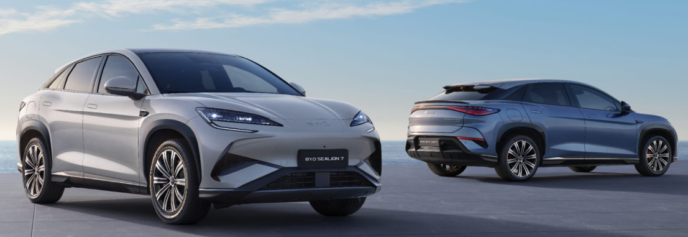
Large EV suppliers were among the biggest credit generators, including BYD, Tesla, Toyota, Kia, Volkswagen and Polestar.
However, 19 entities accrued liabilities after exceeding their emissions targets.
Under the NVES, 2026 targets tighten sharply — 17% lower than 2025 for passenger vehicles and 14% lower for light commercial vehicles. By 2029, passenger vehicle targets will be 59% lower than 2025 levels and light commercial targets 48% lower.
Weber says sustaining compliance will require materially stronger EV demand.
“The increase in the supply of zero and low emissions vehicles currently being undertaken by car makers is the best action they can take to meet the NVES targets.
However, the key to long-term success of the NVES relies on increased demand for EVs. At the moment, demand for EVs remains subdued and this is a major concern and disappointment for car makers.”
The NVES Regulator says publication of interim emissions values and unit holdings — required under Section 86 of the NVES Act — is intended to provide transparency to industry stakeholders and the public and support trading activity within the NVES unit market.
With targets tightening each year through to 2029, the early results show strong initial compliance — but whether consumer demand for EVs accelerates fast enough remains the central question for manufacturers.


Join the conversation