
Australian industry urges retention of EV incentives
Australia’s automotive industry has called on the Federal Government to retain targeted demand-side incentives for battery electric vehicles (BEVs), warning that supply-side regulation alone will not deliver the country’s emissions reduction objectives.
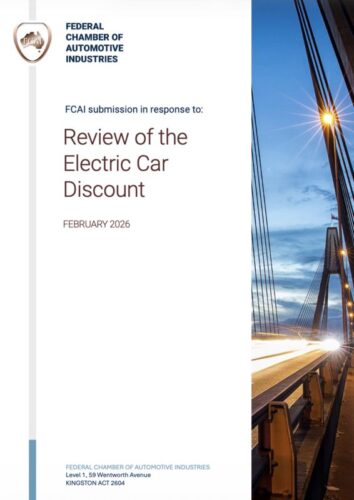
In its submission to Treasury’s review of the Electric Car Discount, the Federal Chamber of Automotive Industries (FCAI) — Australia’s equivalent of New Zealand’s Motor Industry Association — said measures such as the Fringe Benefits Tax (FBT) exemption remained an important complement to the New Vehicle Efficiency Standard (NVES), Australia’s version of New Zealand’s Clean Car Standard.
FCAI chief executive Tony Weber said sales results have shown the FBT exemption has played an important role in encouraging consumers to purchase electric vehicles.
“Manufacturers have responded to the NVES by expanding the range of BEVs available, with more than 100 models now on sale,” Weber said.
“Supply-side regulation alone will not deliver the transition. Consumer demand must also be supported if Australia is to meet its emissions reduction objectives in an affordable and practical way.”
BEVs accounted for 8.3% of new vehicle sales in Australia in 2025, according to the FCAI submission. Despite the increased availability of models, the organisation noted that BEV market share increased by only 1.1 percentage points in the two years to December 2025.
The FCAI said demand remains sensitive to upfront cost, total cost of ownership and access to charging infrastructure.
International evidence supports continued incentives
The submission cited international experience showing that abrupt removal of incentives can lead to significant declines in electric vehicle uptake.
Australian policymakers are looking closely at New Zealand’s experience as a cautionary tale. After introducing the Clean Car Discount in April 2022, BEV sales increased sharply, with BEVs accounting for more than 25% of all new passenger vehicle registrations by 2023.
However, following the repeal of the Clean Car Discount in December 2023 and removal of the road user charge exemption in April 2024, BEV sales declined sharply. BEVs accounted for just 5.6% of new vehicle sales in New Zealand in 2025, according to the FCAI submission.
Similar patterns were observed in Germany, where BEV market share fell from 18.4% in 2023 to 13.5% in 2024 after the abrupt termination of purchase subsidies in December 2023.
Weber said that as NVES targets tighten over coming years, any changes to demand-side incentives must be carefully designed to improve accessibility and avoid undermining consumer confidence.
“If the FBT exemption is removed, then the Federal Government must consider other forms of demand side incentives that can support the ambitious targets of the NVES by having more Australians in battery electric and other forms of low emissions vehicles,” he said.
FCAI recommendations
The FCAI made three key recommendations to the Australian Government:
The organisation called for continued demand-side incentives to complement the NVES, ensuring any reform of the FBT exemption improves accessibility for consumers, and extending tariff exemptions to include electrified light commercial vehicles.
The FCAI noted that while the FBT exemption is generous, it is narrowly focused as not all consumers can access it, and it provides greater benefit to those in higher tax brackets.
The submission also highlighted that a growing range of electrified light commercial vehicles are being sourced from countries without free trade agreements, leaving them subject to a 5% import duty that places them at a competitive disadvantage.
Weber said the Australian industry supports government efforts to introduce ambitious and achievable policies that support decarbonisation of the light duty transport sector.
“FCAI members have increased the supply of BEVs in response to NVES targets. If the NVES is to succeed, consumer demand must also be stimulated,” he said.


Join the conversation