
Battery fears overtake range as biggest barrier to EV uptake
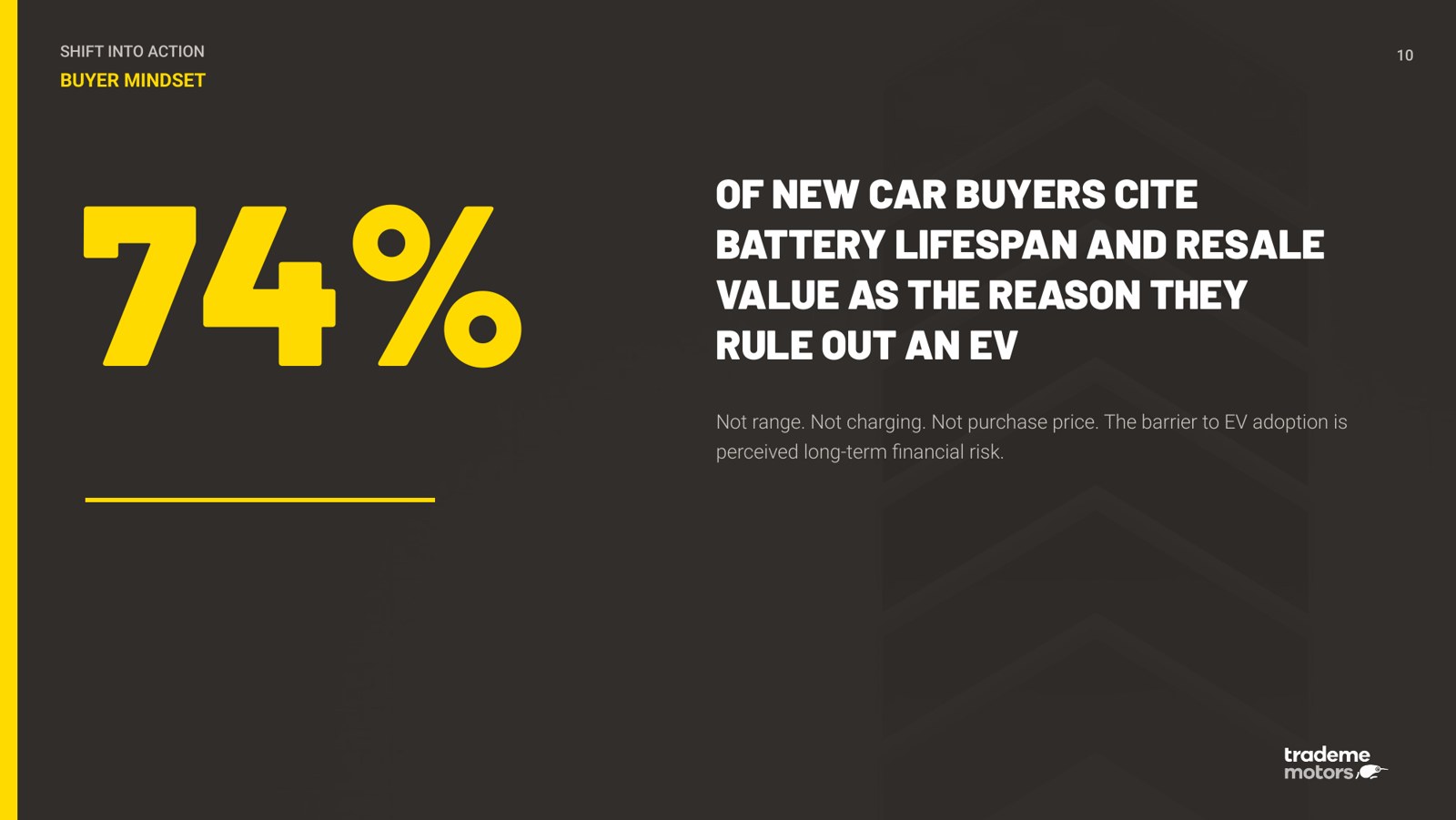
Trade Me Motors' new buyer survey finds 74% of new car buyers rule out an EV over battery lifespan and resale value, not range or charging, and used EV consideration collapses to 8.2%.

Worries about battery lifespan and resale value have overtaken range and charging as the main reason New Zealand car buyers rule out an EV, according to new research from Trade Me Motors.
The Shift Into Action consumer insights report, drawn from a nationwide survey of 1,949 recent and active car buyers, finds 74% of new car buyers who ruled out an EV did so over battery lifespan and resale value concerns, well ahead of the traditional worries about range, charging access and purchase price. The report describes the barrier as perceived long-term financial risk rather than any practical shortcoming of the vehicles.
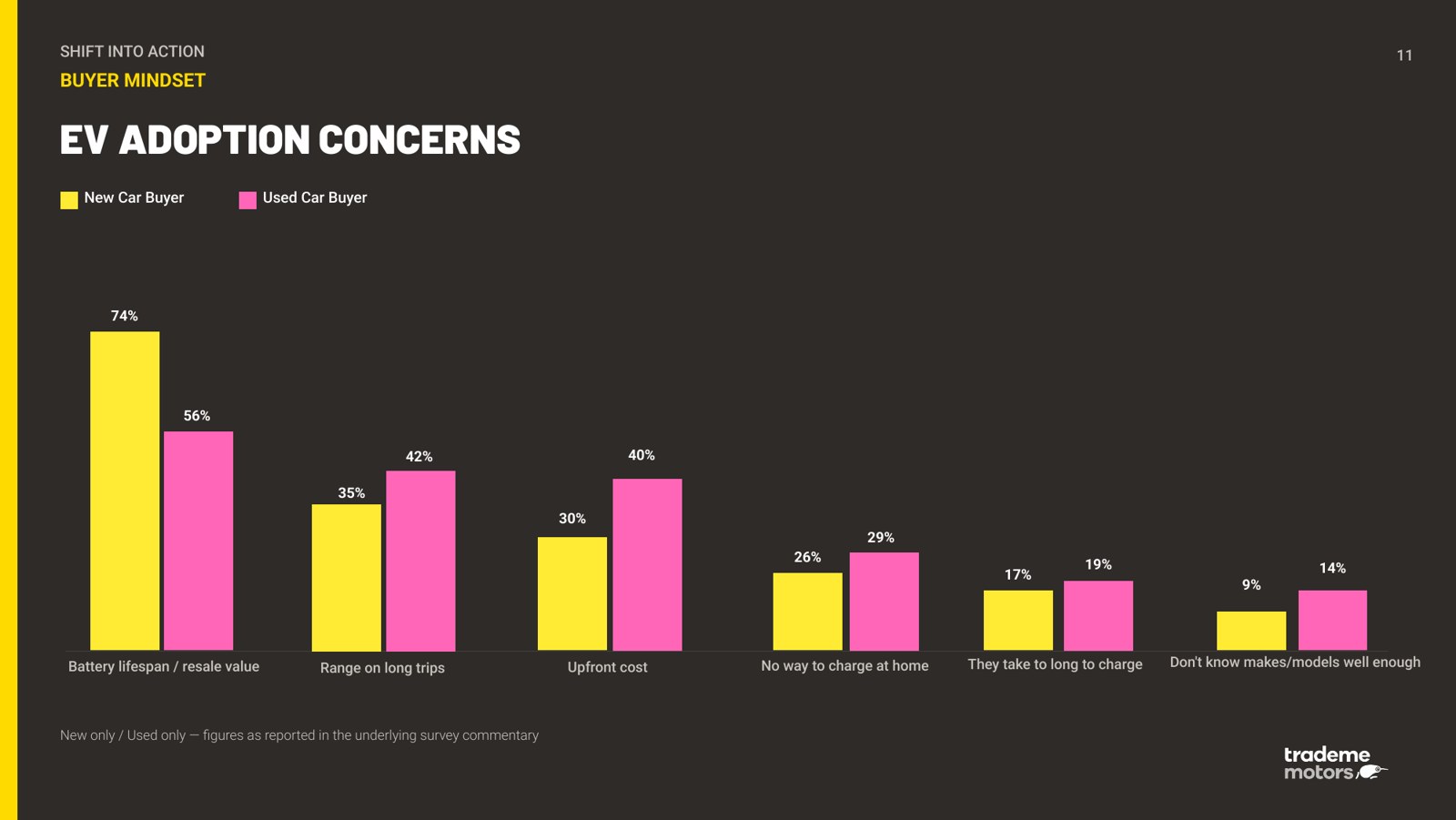
The traditional concerns still register, but well behind. Range on long trips worries 35% of new car buyers and 42% of used buyers, upfront cost 30% and 40% respectively, and the inability to charge at home 26% and 29%. A smaller group, 9% of new buyers and 14% of used, say they simply don’t know EV makes and models well enough to consider one.
The financial-risk framing shows up most starkly in the used market. EV consideration sits at 30.7% among new car buyers but collapses to just 8.2% for used buyers, the widest new-to-used gap of any powertrain in the survey. The report is clear about what that means: it is not a lack of EV interest, it is a lack of confidence in used EVs specifically.
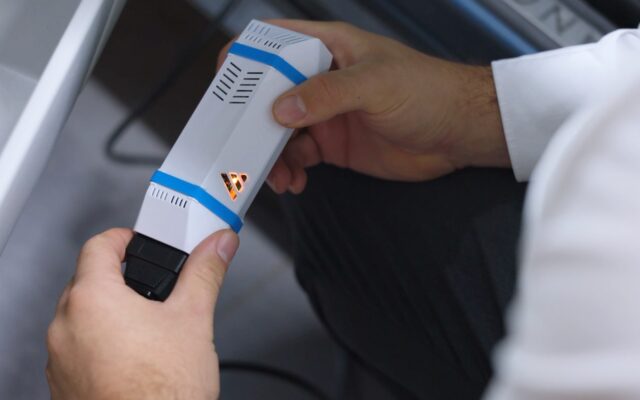
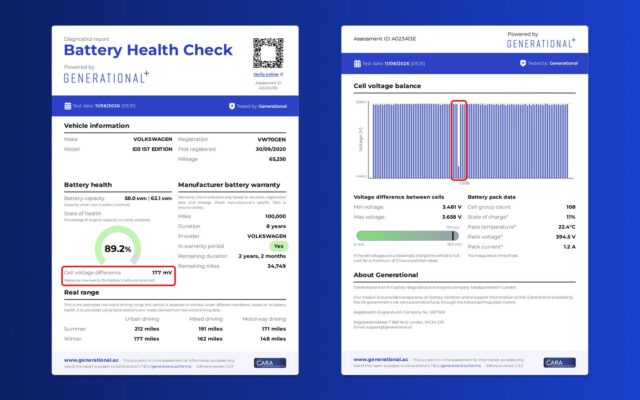
The report’s prescription is a battery health report with every used EV sale, which it suggests “goes a long way” towards closing the trust gap. It also urges sellers to lead with battery warranty terms as a performance guarantee and to counter resale anxiety with real market data rather than reassurance.
Plug-in hybrids show a nearly identical pattern, considered by 28.6% of new buyers but only 8.7% of used, suggesting the battery confidence problem extends to anything with a large pack and a plug.
Hybrids, meanwhile, are the clear winner from the anxiety. At 61%, they are the single most considered fuel type among new car buyers, which the report attributes to their position as the practical middle ground between fuel savings and battery risk, helped along by the 78.5% of all buyers who rank fuel economy as critical.
There are encouraging signals for the electric transition buried in the data too. Buyers are shopping nationwide (77% look beyond their local area), researching heavily online before ever contacting a dealer, and switching brands at unprecedented rates, with 71% buying a different make from their last car. For the wave of newer EV brands entering New Zealand, a market this open to switching is an opportunity: the report finds a third of new car buyers are already considering a Chinese brand.
Taken together, the findings suggest the tools for addressing EV hesitancy have shifted: where charging infrastructure and range improvements answered earlier objections, the report points to battery confidence, through transparent health data, meaningful warranties and resale evidence, as where today’s buyer needs convincing.
The full report is available from Trade Me Motors here.

Join the conversation