
BEV light aircraft could be US$30b industry in 2041
Battery electric vertical take-off and landing (eVTOL) start-up Archer Aviation has gained a US$1 billion order from United Airlines eager to get customers to airports faster via zero-emission transport.
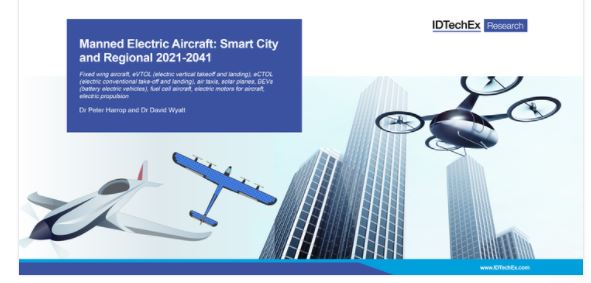
United has an option on half a billion more and the prospect of a fleet of 200 while Archer is floating at a scorching US$3.8 billion, says the IDTechEx report Manned Electric Aircraft: Smart City and Regional 2021-2041.
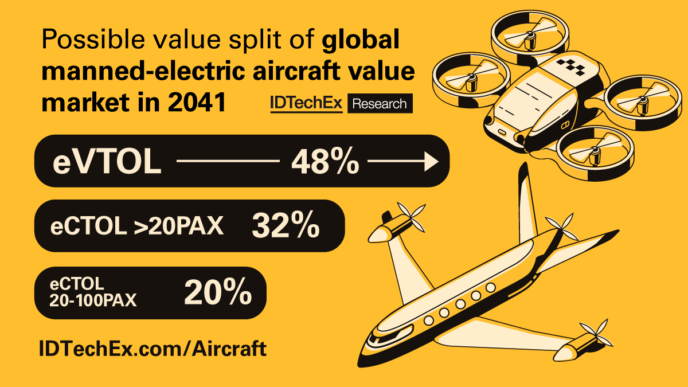
It’s forecasting electric aircraft for 20 years ahead, while reflecting the realities of how the huge new US$30 billion market identified will be structured.
The world’s largest courier company UPS has ordered 10 Beta Technologies eVTOL for delivery 2024. UPS has an option on 150 if satisfied. They will hop freight directly between UPS premises in industrial parks, something previously impossible.
Innovating like Tesla, Beta in Vermont slings the battery low for extreme stability as it is half the total aircraft weight.
Newcomer eHang delivers battery eVTOL as air taxis and firefighters with eHang expecting a permit for autonomous passenger eVTOL flights in China this year.
Bailie Gifford of Scotland, continuing to make a fortune out of being a major Tesla shareholder, has invested in the new eVTOL makers Joby of the US and Lilium of Germany, enjoying a combined valuation of more than US$3.6 billion.
Volocopter of Germany has a US$0.6 billion valuation, while Toyota, Intel, and Tencent are investing in such electric aircraft companies.
Even for conventional take-off and landing, air taxi and pilot training companies now have to buy battery electric fixed-wing aircraft or lose competitiveness, IDTechEx says.
“The best born-electric battery fixed-wing aircraft have half to one-fifth of the operating cost,” it adds.
“They are so silent that they may be allowed to operate 24/7 giving a multiple of the usual payback from that alone. Only they have fast rate of climb. They are the Teslas of the skies.”
Bye Aerospace, with the performance of the Tesla S Plaid in range, silence, acceleration, and 99% reduction in engine parts, has more than 720 orders, IDTechEx reports.
“Leading the surge, its two and four-seater battery aircraft prices have even risen to US$489,000 and US$627,000 this year because they remain the economic must-buy.
“You cannot easily copy such sleek composite-material battery aircraft and their software. Entirely designed to purpose, they use state-of-the-art electrics with much more to come.
“Brand enhancement is enjoyed by an operator when it buys the zero-emission future in this way. The longer glide path, simplification, and better control will reduce the light-aircraft death rate.”

IDTechEx chief executive Raghu Das says fossil-fuelled cars will trend to valueless as they are banned in more and more places while the general aviation market is expected to grow tenfold by 2041.
“Neglect has meant that the general aviation market has collapsed to one-fifth of its peak 50 years ago but the industry now has the Goldilocks scenario of needing to replace those old aircraft and having electric aircraft that bring back affordability while adding new mission capabilities.”
Long before that, fossil and bio-fuel will be gone, Das says.
“As soon as authorities see the noise, land, and air pollution is avoidable they will ban or severely restrict the fossil fuel options. Sweden and Norway have already set dates.”

Join the conversation