
Bridgestone develops new tyre technology for Volkswagen ID.3
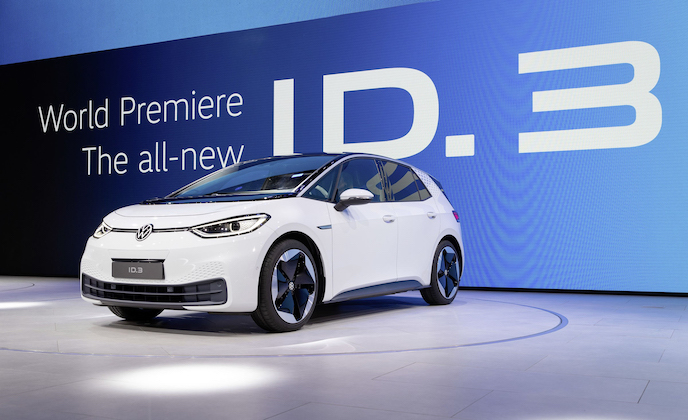
The environmentally friendly Enliten technology enables a super low rolling resistance to help conserve the ID.3’s battery power.
Bridgestone has developed a new lightweight super low rolling resistance tyre for the all-electric Volkswagen ID.3.
The tyre manufacturer says its Enliten technology uses less material to create the super low rolling resistance Bridgestone Turanza Eco tyre which have been engineered for the ID.3.
Volkswagen sought a tyre that offered a high level of performance in both the wet and dry, good braking, long tyre life, and, super low rolling resistance.
The rolling resistance of a tyre can have a huge impact on fuel use and, in this case, the ID.3’s battery power operating range.
Bridgestone says tyres with Enliten Technology provide a rolling resistance that is up to 30 lower than a standard premium tyre.
This significantly extends battery life in an electric vehicle – ensuring that ID.3 drivers can enjoy the vehicle’s maximum range.
It says tyres with Enliten Technology further enable battery conservation as they are up to 20% lighter in weight from equivalent standard premium tyres.
This equates to up to 2kg fewer raw material resources required to produce every tyre, another environmental benefit from both a resources and final end-of-life stage management standpoint.
The synergy between the unique materials used to create Enliten Technology and a new mixing process has enhanced the technology’s compound wear performance, without compromising on grip says Bridgestone.
This, combined with a cavity and full 3D pattern design that maximises wet and wear performance, means that Enliten Technology improves the vehicle’s handling to help increase driving pleasure and, in the case of the ID.3, meet all of Volkswagen’s performance targets.
The Turanza Eco tyres with Enliten Technology are available on Volkswagen’s ID.3 in 18, 19, and 20-inch variants. The 19 and 20-inch tyres are equipped with Bridgestone’s B-Seal technology, which ensures temporary air retention in case
of a puncture in the tread area, allowing the vehicle to keep going.

Join the conversation