
BYD Shark 6 lands in New Zealand

The BYD Shark 6 has landed in New Zealand with a sharp $69,990 price tag.
Fundamentally, the vehicle remains the same as when we first drove it back in November.
The pre-production Shark 6 received criticism for a slightly bouncy, unsettled ride, which BYD’s engineers have now addressed in the production model. The rear dampers have been tweaked, along with other suspension settings, to achieve a more SUV-like demeanour. At around 2.8 tonnes, it’s not lightweight, but that heft doesn’t translate into the same body-churning jiggles you might expect; instead, the Shark 6 glides over uneven surfaces not commonly seen in utes.
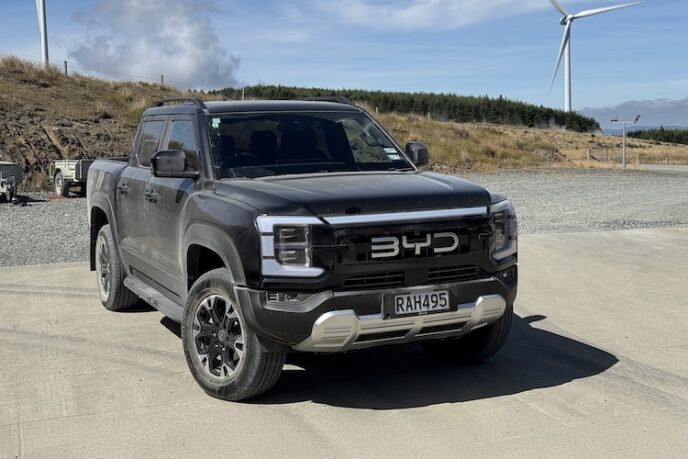
The steering has also been refined, shedding the occasionally inconsistent assistance reported in early drives. Gone, too, are many of the ‘bongs’ from the driver assistance system. BYD NZ brand manager Warren Willmot acknowledges that advanced driver aids like lane-keeping and driver awareness alerts still lean on the cautious side but emphasises that BYD designed the Shark 6 for maximum safety.

The fundamentals we liked on our first drive remain. The cabin is spacious, with a finish rarely seen in the commercial market. The infotainment system is a big step forward compared to BYD’s earlier models, and you get handy features like app control, keyless entry through your phone and 6.6kWh of vehicle-to-load.
Performance remains strong
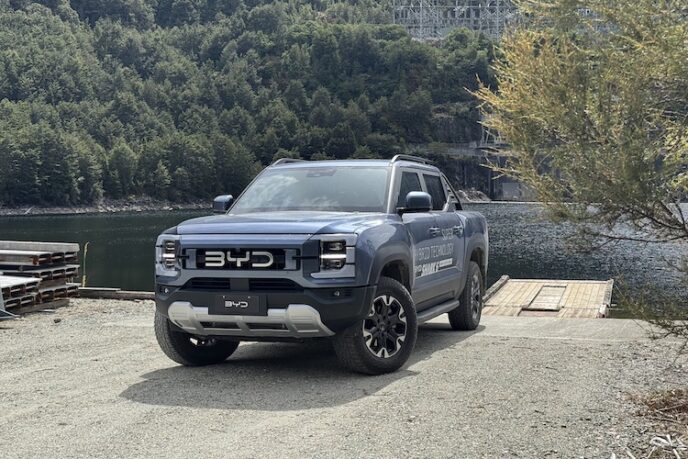
Unlike its rivals, the Shark 6 is a plug-in hybrid that combines a “big battery” approach with an internal combustion engine. The DMO system uses a 29kWh battery, powering front and rear electric motors, alongside a 1.5-litre turbocharged petrol engine that can connect with the front wheels at higher speeds. This combination delivers an impressive 321kW and 650Nm of torque—effectively matching the power output of a 6.2-litre LS3 V8.
The result? A 0–100km/h claim of around 5.7 seconds, although our tests have hovered closer to 6.3 seconds. That’s still quicker than all diesels in this class, which typically need nine to eleven seconds for the same dash.

Practicality
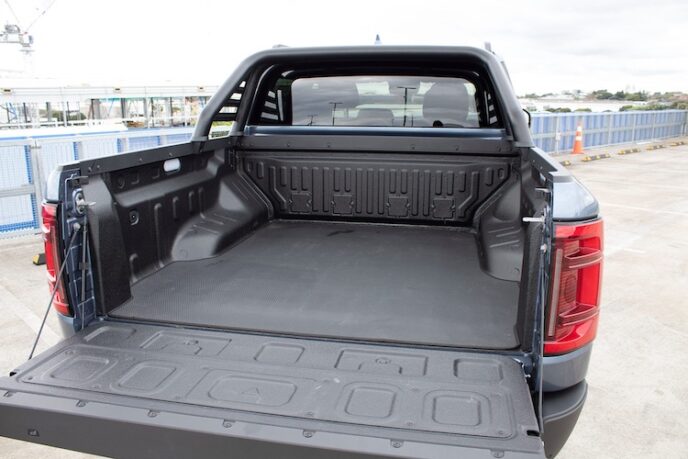
Those worried about customising the Shark 6’s body and accessories should note that the healthy side isn’t designed for third-party removal. High-voltage cables and sensors run under the tray, so only BYD-certified technicians can modify it without voiding the warranty. Willmot confirms that BYD New Zealand is developing a flat-deck conversion option and that three types of canopies—including a fetching aluminium option—are already available through local suppliers.
Many typical ute perks come standard: the liner is sprayed on rather than dropped in, and the tow bar and wiring arrive pre-installed from the factory (for a $750 charge to enable the receiver). The payload remains a modest 790kg.
But can it tow?
Willmot points out that the Shark 6’s 2.5-tonne towing capacity is more constrained by New Zealand’s licensing rules than the ute’s capability. Going above 2.5 tonnes, plus the vehicle’s 3.5-tonne gross vehicle mass, can push a driver into the truck-licence territory—something BYD was keen to avoid for everyday ute owners, as it would require a Certificate of Fitness, among other complications. He is lobbying the government for a rule change necessary to make a planned 2.0-litre turbocharged version of the Shark 6 viable.

The Shark 6’s drivetrain feels like an EV most of the time, delivering smooth, instant torque. Fuel consumption can drop as low as 2.0L/100km in ideal conditions when you regularly keep the battery charged. The official CO2 figure sits at 46g/km, a world away from diesel utes that typically top 230g/km. Even in hybrid-only mode, it averages around 7.9L/100km.
On our highway-based launch drive route, which included light off-roading and no mid-run charge, we saw 6.5L/100km.
Not-quite off-roading
We didn’t get much of a chance to off-road the Shark 6 on our test, with only some gravel roads available. However, it felt good to soak up corrugations quickly. There are three drive modes—sand, mud, and mountain—and our previous experience indicates that you must use one on loose surfaces to get the most out of the vehicle.
Catch of the day?
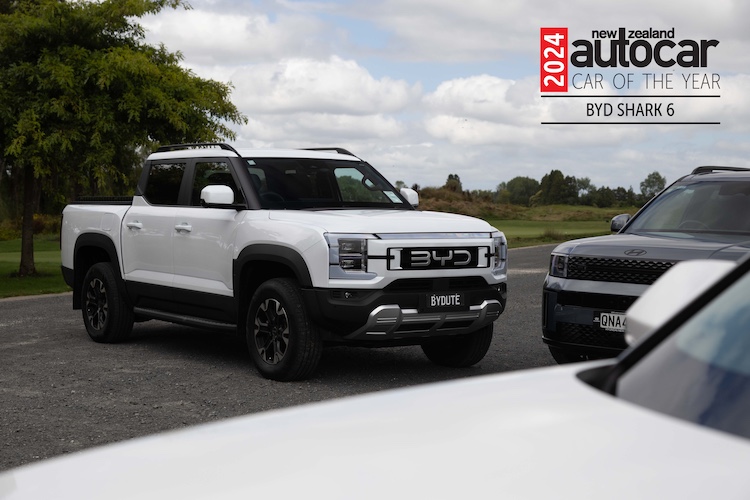
The BYD Shark 6 enters the ute market with genuine confidence. The final production model boasts a smoother ride than the pre-production version, a brawny yet refined plug-in hybrid powertrain, and a host of premium touches that could sway even the most loyal diesel devotees.
Yes, it has compromises—towing capacity is lower than some heavy-hauling rivals, and a nearly three-tonne kerb weight is not the lightest option. Yet the combination of accurate EV range, quiet in-cab ambience, and a price that undercuts many competitors makes the Shark 6 a compelling alternative.

Join the conversation