
BYD targets 2027 for solid-state battery production

Chinese electric vehicle manufacturer BYD expects to begin producing solid-state batteries in 2027, marking a significant milestone in the development of next-generation EV battery technology.
According to Chinese media outlet Cailian Press, BYD has achieved several breakthroughs in key areas including battery life and fast charging, with the company now planning limited batch production of solid-state batteries from 2027. The report cited information obtained from BYD’s Investor Relations Department on February 9, 2026.
BYD is advancing sulfide-based solid electrolytes that promise superior conductivity, safety, and significantly higher energy density compared to current lithium-ion battery technology.
The timeline aligns with comments made by Sun Huajun, chief technology officer of BYD’s battery business Shenzen BYD Lithium Battery Co, at the 2nd annual China All-Solid-State Battery and Development Summit last year.
Sun said BYD expects to begin producing solid-state electric vehicle (EV) batteries in 2027, noting that sulfide electrolytes are longer-lasting and more stable than traditional liquid lithium-ion batteries while enabling faster charging.
Limited production before mass rollout
The first two years will serve as a demonstration phase with limited production, before BYD expects to begin mass production toward the end of the decade as the new batteries are adopted at scale.
Initially, BYD will deploy sulfide-based solid-state batteries in its higher-end electric vehicles before rolling them out to mass-market models.
BYD has been researching solid-state batteries since 2013. In 2023, the company reached a milestone demonstrating that mass production was feasible with various cell systems and materials. A year later, it began testing solid-state battery cells with capacities of 20 ampere-hours (Ah) and 60 Ah.
A report last year claimed BYD was already testing solid-state batteries in the Seal EV sedan on public roads, but the company denied the rumours, saying “Currently, it is unknown, and the first model and parameters are not officially reported.”
Competitive landscape
BYD joins a growing list of automakers and battery manufacturers working to commercialise solid-state battery technology, which offers significantly higher energy density, faster charging, longer lifespan, and improved safety compared to liquid lithium-ion batteries.
China’s FAW Group and Dongfeng Motors began testing solid-state batteries in prototype vehicles in January. Dongfeng Motors’ prototype was equipped with a 350 watt-hours per kilogram (Wh/kg) solid-state battery, which the company claims can deliver more than 1000 kilometres of CLTC driving range.
Last September, Mercedes-Benz drove a modified EQS equipped with Factorial’s solid-state battery cells for more than 1200 kilometres on a single charge. Mercedes has described Factorial’s battery cells as “a true game-changer,” with Factorial launching the first commercial solid-state battery programme in the United States through a partnership with Karma Automotive.
Toyota, Volkswagen, Stellantis, Honda, and Nissan are all advancing solid-state EV batteries, with BYD’s timeline of limited production starting in 2027 and scaling to mass production around 2030 aligning with most companies’ targets.
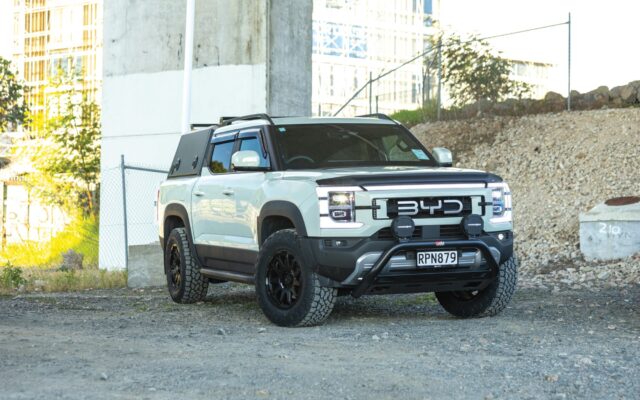
BYD is distributed in New Zealand by Ateco Automotive, with the brand offering models including the Atto 3, Dolphin, Seal, and Shark plug-in hybrid ute in the local market. The solid-state battery technology, when commercially available, could eventually reach New Zealand buyers through BYD’s existing model range.

Join the conversation