
Clean Car Discount will not return, Labour confirms
Labour has ruled out reinstating the Clean Car Discount, meaning neither major party will campaign on EV purchase rebates, leaving the Clean Vehicle Standard as the only decarbonisation lever.
The Clean Car Discount is not coming back. Labour leader Chris Hipkins has ruled out reinstating the scheme if his party wins November’s election, closing the door on a return of the purchase rebates that drove New Zealand’s record EV uptake.
Labour transport spokesperson Tangi Utikere confirmed the position to us on Sunday, saying reinstating the discount “is not something we have considered, nor is it on the agenda”. Hipkins made it definitive on Monday.
For the EV sector, the significance is that the party that created the scheme has now ruled it out as firmly as the party that scrapped it. Whatever Labour’s still-unannounced transport and decarbonisation policy contains, purchase rebates will not be part of it.
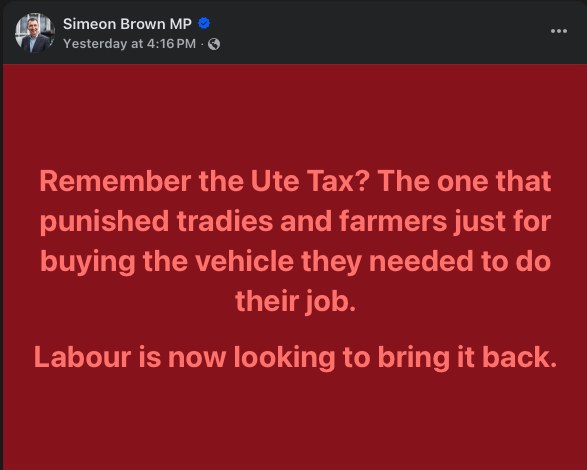
The rule-out did not come from a policy review. It came as Labour shut down a National Party campaign attack claiming the party planned to revive the fee side of the scheme, based on a line in a newspaper profile noting that Mt Roskill candidate Michael Wood, the former transport minister who introduced the discount, talks about it while door-knocking. Utikere called the claim “misinformation spread by a very desperate Simeon Brown”, and Hipkins accused National of desperation. The political cost of defending the discount, it seems, remains high enough that neither side wants to own it.
The scheme that moved the market
The Clean Car Discount ran from July 2021 to December 2023, offering rebates of up to $8,625 on new EVs, funded by fees on high-emission imports. The July 2023 settings change trimmed the maximum rebate to $7,015.
Its effect on uptake was dramatic: registrations of vehicles with electrified drivetrains grew 77 percent in 2022, and pure electric vehicles reached roughly 14 percent of new registrations that year, from under two percent before the scheme.
The market has not sustained those shares since the scheme’s repeal and the subsequent application of road user charges to EVs.
Utikere signalled on TVNZ’s Q+A in June that Labour’s focus had moved elsewhere, saying reinstatement was “not on my immediate radar” while telling viewers to “watch this space” on decarbonisation policy. That space, it is now clear, will be filled by something other than a feebate.
The standard is now the only lever, and it is stuck
With purchase incentives ruled out by both major parties, the Clean Vehicle Standard carries the full weight of fleet decarbonisation policy. And it is in limbo.
The Government substantially weakened the standard’s charges and targets, and a review of its future settings has yet to produce an announced decision from Cabinet. Distributors are committing to orders for vehicles landing well into 2027 without knowing what settings they will arrive into.
Utikere criticised the process without committing Labour to a position. “This Government has messed around with the CCS process without providing certainty for everyone. Transparency is important and the Government should know better,” he says.
Where the Greens sit
The Greens, who designed the original feebate concept under Julie Anne Genter in 2019 and pledged its introduction in their 2023 transport policy, have yet to release a 2026 transport policy confirming whether a feebate remains on their platform. Genter’s recent criticism of the Government has focused on the weakening of the Clean Vehicle Standard rather than the discount’s repeal.
That leaves EV buyers and the industry heading into the 7 November election with no party currently campaigning on purchase incentives, and the one remaining supply-side regulation awaiting a decision on its future.


Join the conversation