
Clean vehicles aim of emissions index
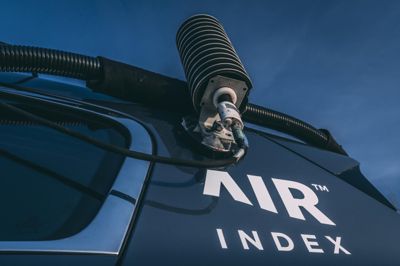 New real-world data on vehicle emissions will allow revitalisation of an automotive industry and global economy devastated by the COVID-19 outbreak – but with cleaner air.
The AIR Index at airindex.com identifies the cleanest vehicles to give buyers confidence to switch and restore the automotive industry.
The freely available ratings database is the result of on-road testing according to the European legal standard method, CWA17379.
The index shows clean and efficient vehicles, which have low nitrogen oxide (NOx) and carbon dioxide (CO2) emissions, already exist, without having to wait for new technology at scale.
The AIR Index data can also lock in the improved air quality resulting from the global pandemic lockdown.
Published by the AIR Alliance (AIR), the index demonstrates the risk of selecting vehicles based only on official emissions figures that are not detailed enough to identify the cleanest cars.
A Euro 6 vehicle may be clean, or it may be dirty, but the official data does not give enough clarity to differentiate, it says
“Let’s never allow the dirty vehicles back in our cities,” AIR says.

Existing hybrid technology can deliver significant reductions in CO2, while some carefully selected internal combustion engines (ICE) now achieve extremely low levels of harmful emissions.
Both products are already widely available, do not force buyers to change behaviour and do not require government subsidy at a time of extreme fiscal challenge, AIR reckons.
“As the world emerges from the impact of COVID-19, legislators, manufacturers and buyers have an opportunity to focus on the cars that will limit the rise in pollution generated by economic recovery,” AIR co-founder Nick Molden says.
“Freely available to everyone, including car makers and policy makers, we want to put valuable information in the hands of those who can effect real change.
“It’s fitting that on Earth Day, where millions of people would have physically joined together to celebrate 50 years of campaigning for a cleaner climate, we have a trusted online database that can lead to lower emissions right across the globe.”
Covering hundreds of vehicles, the AIR Index details vehicle emissions information and rates each from A (the best) to E (the worst) following multiple on-road tests.
As a not-for-profit organisation, the AIR Alliance is independent from the car industry and, with the largest database of test results, it shows how vehicles perform consistently in real-world use.
European cities are experiencing a drop in harmful emissions, as lockdowns have massively reduced vehicle numbers on the road.
The challenge, and opportunity, is to enable the return to mass mobility without returning to the high levels of pollution prior to the pandemic, AIR says.
With evidence that poor air quality is linked to a faster spread of coronavirus, the AIR Alliance asks national governments, regions and cities, as well as the automotive industry to take a pragmatic approach and use this to speed up their route to reduce emissions.
Already there are calls for ways of stimulating the recovery of the automotive industry, including the revival of scrappage schemes that offered incentives to new car buyers who wanted to trade in old, high emission vehicles, AIR says.
“Of course, there are plenty of ways to try to address the issue of reducing emissions, but incentivised schemes would be immensely expensive at a time when governments and consumers are facing unprecedented challenges,” Molden says.
“The AIR Index provides data to allow a much more targeted approach, and it is a free and quick solution. We know official emissions ratings are not good enough, but our real-world testing and results allow the right choices to be made.
“Index data provides a robust framework on which to base any air quality or climate change strategy.”
While the adoption of battery-electric vehicles (BEVs) continues, the AIR Index shows that hybrid vehicles do offer a short-term solution to reducing emissions while other technologies gather pace.
It also reveals that some older Euro 6 compliant ‘clean diesels’ remain part of the problem.
AIR is an open alliance of like-minded members with any organisation encouraged to join.

Join the conversation