
Cycling the source
This story first appeared in the February issue of EVtalk – CLICK HERE to download the magazine FREE
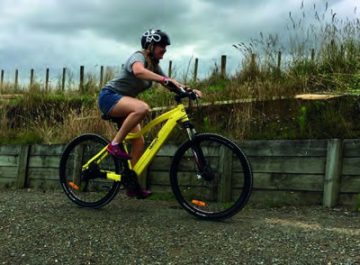 New Zealand’s network of cycle trails is quickly becoming popular with tourists and locals alike – and in the Waikato you can try them out on an electric bike while checking out the source of your electric vehicle’s fuel.
The Waikato River Trails are easily accessible in a Nissan Leaf from Auckland, with nearby fast-charging stations in Hamilton, Cambridge and Te Awamutu.
We headed down with our homebuilt e-bike and a rental supplied by power company Mercury to check them out.
The trails stretch for 103km in five sections along the riverbanks from the Karapiro area to Whakamaru. You could manage most of the trails on a city bike but a mountain bike is far more suitable.
Elevation changes are manageable for those with reasonable fitness – but an e-bike, makes it a heck of a lot easier.
Construction of the trails was started in the early 2000s by the Waikato River Trails Charitable Trust and the network officially opened in 2011.
Trust general manager Glyn Wooller says Mercury has supported the trust since its formation and not just in making way around its generation facilities on the river.
“Being a charitable organisation, having a partner such as Mercury is an anchor for our project.
“The Mercury support is wide ranging, from housing our trail maintenance resources and supporting the Generator multisport event to helping with planting and transporting native trees, trust governance and critical funding for operations and marketing.”
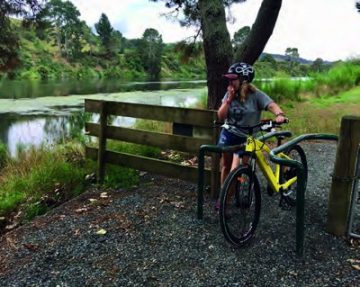 Its latest support relates directly to EVs. The trust has been given a Mitsubishi Outlander PHEV, and two electric mountain bikes with Mercury branding can now be rented for use on the trail. They cost $100 a day, with a 50% discount for Mercury customers.
“For those thinking about buying an e-bike, this is a great try-before-you-buy,” Wooller says.
“Rather than a quick ride around the bike shop carpark, prospective e-bikers can have a real off-road experience before they invest.”
Wooller is keen to encourage e-bikers – and EV drivers – to visit the trails. E-bikes make a lot of sense on the trails – you can go further, it is easier to go uphill and you sweat less, he says.
“We are fans of pedal-assist bikes, not so much the bikes that run by themselves… this is really about safety given the corners and general terrain of the trail.
“We want to see as many people across all ages and stages of life enjoying recreation and keeping fit. E-bikes help this cause.”
There has been little adverse reaction from traditional riders to the arrival of e-bikes, other than a little banter, he says.
And that’s how we found it in our time on the Arapuni section. The only comments we had from a non-e-bike user was that he wished he had one too.
Our ride began with a trip over the Arapuni wire bridge, soaring over the historic Arapuni Power Station – no doubt the source of power for at least a few EVs in the upper North Island.
Then we rode north along the river on an undulating yet relatively easy cycle – especially on our Mercury supplied ebike.
Smart bike gates keep non-cycle-based vehicles off the track, and we found they accommodated larger e-bike frames and battery packs passing through.
There are no charging facilities, for either bikes or cars, along with the trail, but Wooller says that’s something the trust is considering. But cafes are available for refuelling the rider.
Don’t fall victim to riding too fast, because even this close to civilisation the scenery is impressive and the quiet relaxing.
Visit https://www.waikatorivertrails.co.nz/ for more information on the trail.
Thanks to Renault New Zealand, which offers the Zoe and Kangoo EV models, for supplying a van to get us to the trails.


Join the conversation