
Dongfeng Vigo first drive: A lot of EV for $38k

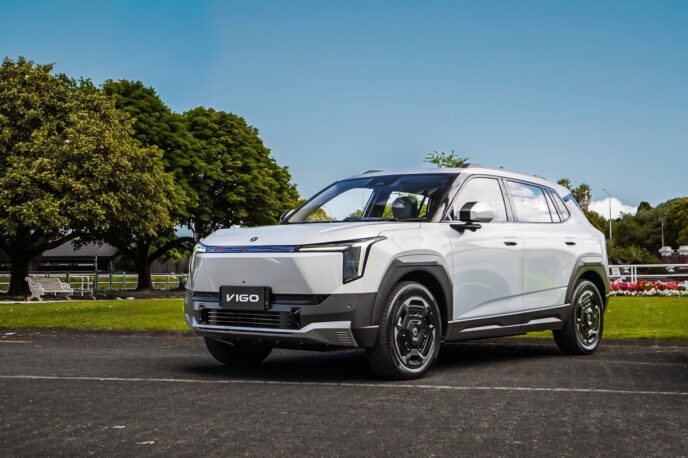
A $38,000 electric SUV ought to have a few weak spots. That’s the unspoken contract with affordable EVs: the price is right, the compromises are part of the deal. But the Dongfeng Vigo makes those compromises surprisingly hard to spot.
The Vigo follows the controversial Box city car into New Zealand as Dongfeng’s second local offering. The Box made headlines for its sub-$30,000 price tag but also for its safety shortcomings, arriving with just two airbags and no ANCAP or NZTA rating. The Vigo takes a different approach: six airbags lead a contemporary safety specification list (and a five-star VSRR rating) and a specification sheet that reads like it belongs on something considerably more expensive.
At its launch price of $37,990 plus on-road costs (reverting to $39,990 after April), the Vigo is a compact SUV built on Dongfeng’s Quantum Architecture 3 platform. It stretches 4,306mm in length with a 2,715mm wheelbase, around 67 percent of its overall footprint. That generous wheelbase pays dividends in cabin space.
A single front-mounted electric motor delivers 120kW and 230Nm, fed by a 51.87kWh battery offering 340km of WLTP range. DC fast charging peaks at an impressive 167kW, with Dongfeng claiming 30 to 80 percent in just 18 minutes. Those are strong numbers for the price bracket, assuming they hold up in practice.
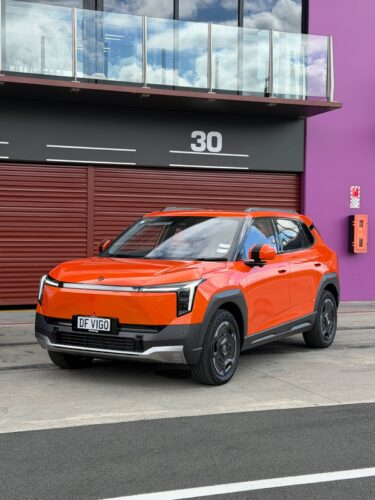
First impressions from the driver’s seat
Our test car came laden with a roof box and accessories, which meant refinement and wind noise observations come with a caveat. That aside, the Vigo feels solid on the move.
The suspension is tuned towards comfort, which makes sense for a lifestyle-oriented SUV. It handles corners better than you’d expect, with reasonably quick steering and enough composure to feel confident in town. Venture onto twistier rural roads, though, and the front end pushes wide under load. It’s no hot hatch, nor does it pretend to be.
Straight-line performance is sufficient. A 7.8 second 0-100km/h time won’t set pulses racing, but it’s competitive for the class. Hard launches do provoke wheelspin from the front wheels, which may partly be down to the Wanli tyres. We’re unfamiliar with the brand and would want to assess them properly over a longer period, especially in wet conditions.
The brakes inspire confidence without drama, and while we didn’t have enough time to fully evaluate the ADAS suite (adaptive cruise, traffic jam assist, lane keeping, AEB), if it matches the Box’s surprisingly capable system, it should perform well.
There’s no driver monitoring camera fitted, a growing rarity in 2026. Your feelings on that will depend on how you feel about being watched.
Cabin and practicality
Interior quality is respectable for the money. Soft-touch materials cover the upper surfaces and the design is clean. Lower plastics and boot trim betray the price point, but not to a degree that would put buyers off. The 12.8-inch infotainment display and 8.8-inch driver screen are responsive and run software that’s familiar from other Chinese EVs. Functional rather than flashy.
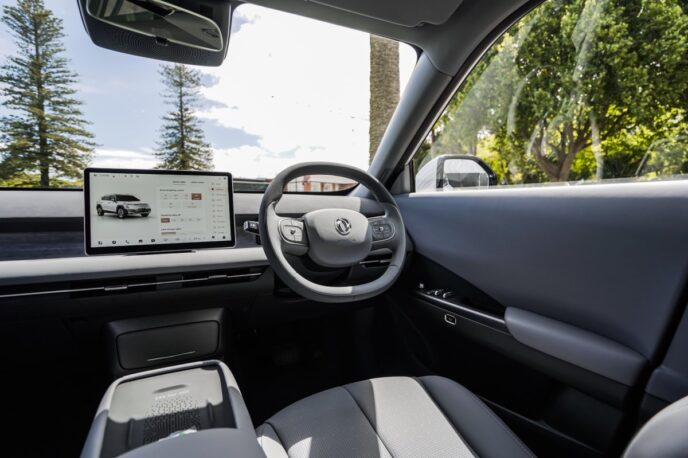
The standard kit list is long: electric front seats with driver memory and welcome function, heated and ventilated driver’s seat, wireless Apple CarPlay, wireless phone charging, leatherette upholstery, climate control with rear vents and 128-colour ambient lighting that syncs to music. That’s a generous haul for under $40,000.
The absence of Android Auto as standard is a miss, however. It’s available for $390 via a dongle and software coding, but in a market with substantial Android phone share, it should simply be included.
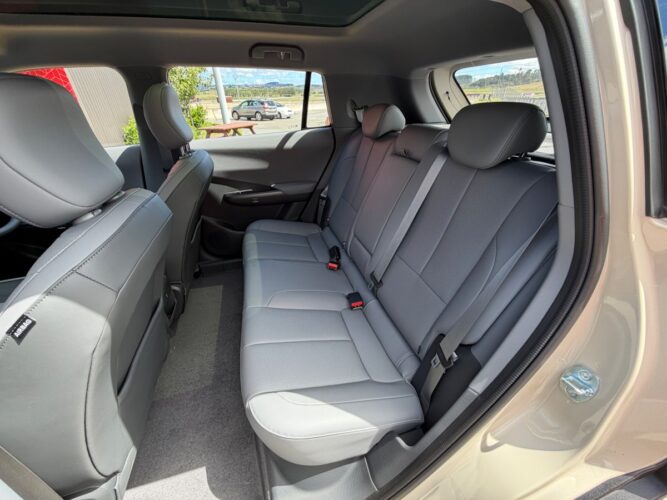
Rear passenger space is a real strength, rivalling the BYD Atto 3 for legroom in the compact EV SUV class. A flat floor and good headroom (even with the optional panoramic glass roof, free during the launch period) make the back seat genuinely accommodating. All four doors feature electronic releases with manual backups in the door pockets.
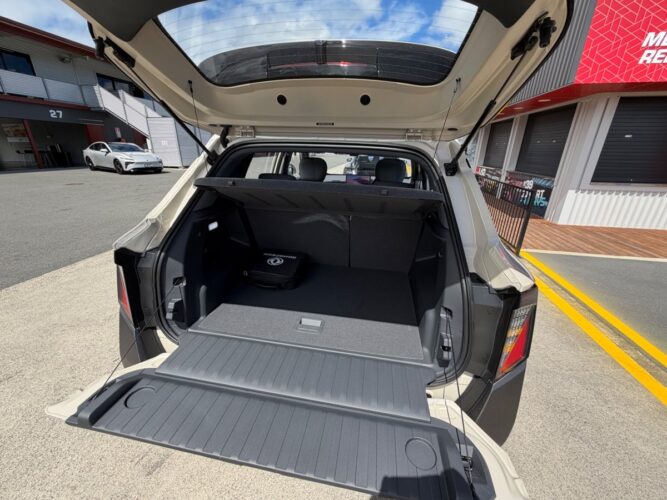
The 500-litre boot is split across three tiers: 313 litres on top, 115 in a middle layer and 72 beneath. Fold the rear seats and you get 1,040 litres with a flat two-metre load floor. The split tailgate, with its 150kg-rated lower section, is a neat touch for picnics and tailgating, though we’d argue a conventional electric tailgate would be more useful for everyday loading. The upper section is manual, with a powered upgrade available for $1,690. Towing capacity is 750kg.
Camping-minded buyers will appreciate Camp Mode, which maintains V2L power and holds the cabin at 25 degrees with the car locked, while an external speaker plays music outside. Accessories lean further into the lifestyle pitch: a custom mattress ($440), boot tent ($250), awning ($250) and roof rack ($570) are all on offer.
Where it sits in the market
At its launch price, the Vigo slots just $2,000 above the top-spec BYD Atto 1 Premium ($35,990), a notably smaller car in a different segment. For that step up you gain a proper compact SUV with more range, more space, V2L and a considerably larger boot.
Against direct EV SUV competitors, it undercuts the BYD Atto 2 ($39,990), sits near the Omoda E5 ($36,990) and comes in well below the MG S5 EV ($44,990) and Jaecoo J5 ($42,990). Armstrong’s pitches ICE parity pricing, though with many petrol SUVs now available under $30,000 in New Zealand, the Vigo’s value case rests more on its specification than on a straight price comparison with combustion models.
Six airbags, a five-star VSRR, 340km of range, electric seats, split tailgate and a feature list that shames cars at $50,000. The tyres are an unknown, Android Auto should be bundled in, and the lower trim could be improved. But the overall package is hard to fault for the asking price.
Whether it can overcome the reputational shadow of the Box’s safety misstep is the question that hangs over Dongfeng’s entire New Zealand operation. On this first acquaintance, the Vigo makes a strong case for a second look.
Dongfeng Vigo
Price: $37,990 +ORC (launch until end of April); $39,990 +ORC thereafter
Powertrain: Single electric motor, FWD, 120kW/230Nm
Battery: 51.87kWh
Range: 340km (WLTP)
DC charging: 167kW peak; 30–80% in 18 minutes
0-100km/h: 7.8 seconds
Boot: 500L (1,040L seats folded)
Towing: 750kg
Warranty: 6-year/200,000km vehicle; 8-year/200,000km battery
Service interval: 1 year/15,000km


Join the conversation