
Education ministry pilots shared EV charging
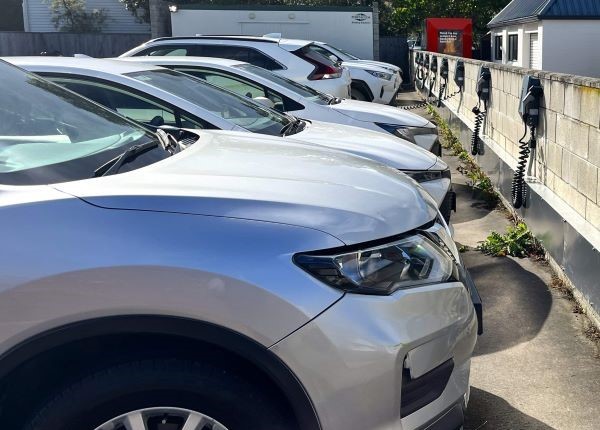
The Ministry of Education (MOE) has piloted the use of shared workplace EV charging infrastructure at the Gisborne site it shares with multiple other tenants.
Learnings from the project can be applied to other organisations that are in the process of electrifying vehicle fleets, says the Energy Efficiency and Conservation Authority (EECA) in its latest news report.
It says many Government organisations and businesses in New Zealand are electrifying their fleets – on the road to reducing carbon emissions.
“For organisations that share parking facilities with others, installing charging infrastructure that is fit for purpose comes with additional considerations.
“Almost half of New Zealand’s energy-related emissions come from transport. A key part of EECA’s strategy to reduce this is to support the transition of New Zealand’s 16,000 Government vehicles to low emissions alternatives and ensure that cars are used when needed to perform core services in an efficient way.”
Talking about the MoE project, EECA says the charger-sharing project aims to optimise the use of EV chargers across the three Government organisations involved and ensure that energy costs and usage are fair and equitable.
“The project also seeks to identify and overcome any challenges that exist throughout the planning, installation of chargers, reimbursement of energy costs, and ongoing vehicle use.
“These learnings may be applied to other organisations in the public sector, as well as private organisations that are in the process of electrifying vehicle fleets at sites with shared parking facilities.”
The MOE fleet has 565 cars in operation across 42 different locations and is on track to reach 90% electrification by 2025, says EECA, adding it has supported both the fleet optimisation and EV leasing.
“The initiative aligns to the Carbon Neutral Government Programme – set up to accelerate the reduction of emissions within the public sector.
“At MOE, many education staff require daily travel through urban and rural areas of New Zealand, to visit schools and education facilities. The cars are shared between staff members utilising an electronic booking system.”
About 13 chargers were installed at the leased Gisborne site, shared between three organisations, with Inland Revenue using two of the chargers, the Department of Internal Affairs using one, and MOE using the remaining 10 – although it owns all 13 which are Evnex X series commercial chargers, says EECA.
“The cost for energy used by the chargers is reimbursed through the existing co-location agreement between the three tenants,” says EECA, adding that MOE cars travel an average of less than 150km daily.
“The chargers have been in operation for less than six months. So far, they are working as planned, and there have been no necessary upgrades to any of the services.
“EECA supported the leasing of 280 battery electric vehicles (BEVs) and associated infrastructure. The remaining costs have been covered by MOE.
“This is estimated to reduce carbon emissions by 581 tonnes of CO2 annually.”
EECA also recently published an update to its Energy End Use Database (EEUD), which shows promising trends for New Zealand’s low emissions journey for industrial stationary energy.
“The EEUD tool provides annual estimates of how energy is used across the economy,” says EECA, explaining the new dataset covers January 1, 2017, to December 31, 2022.
It says highlights include a clear decrease in coal and fossil gas use within the dairy products sector, significant dips in coal and fossil gas use in 2022 for the meat products sector, with an increase in electricity; and an increase in renewables and a decrease in fossil fuel use from 2021 to 2022 for the industrial sector overall – expecting these trends to continue.
EECA has a guide for measuring emissions.


Join the conversation