
Electric cars doubled on the world’s roads last year
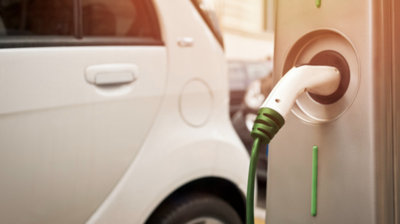
Electric vehicle (EV) numbers on roads worldwide rose to a record two million last year.
But the numbers have a long way to go to reach levels needed to help limit an increase in global temperatures, the International Energy Agency’s (IEA) Global EV Outlook reports.
In 2015, the number of electric cars, including battery-electric, plug-in hybrid electric and fuel cell electric passenger light-duty vehicles, was one million. Even though that doubled last year, the global EV stock is only 0.2% of the total number of passenger light-duty vehicles in circulation.
“They have a long way to go before reaching numbers capable of making a significant contribution to greenhouse gas emission reduction targets,” the IEA says. “To limit temperature increases to below two degrees Celsius by the end of the century, the number of electric cars will need to reach 600 million by 2040.”
Research and development and mass production improvements are resulting in lower battery costs, and this trend should continue. That should narrow the cost competitiveness gap between EVs and internal combustion engines, the report says.
There is a “good chance” the global EV stock could reach carmaker estimates of between nine million and 20 million by 2020 and between 40 million and 70 million by 2025, it says.
Globally, 95% of EV sales are taking place in just ten countries—China, the United States, Japan, Canada, Norway, Britain, France, Germany, the Netherlands and Sweden.
Last year, China overtook the United States as the country with the largest EV stock, with around a third of the global total, the report says.
Even though battery costs have fallen since 2009, they are still a major component of cost and drive up retail prices. Therefore, financial incentives such as rebates, tax breaks or exemptions are important to support EV deployment, the report says.
“But they might need to be phased out when electric car costs rival those of internal combustion engines.”


Join the conversation