
Electrification trial a winner for Waste Management
This story first appeared in the August issue of EVTalk – CLICK HERE to download the magazine FREE
Waste Management’s ultimate aim is to power its entire vehicle fleet by electricity.
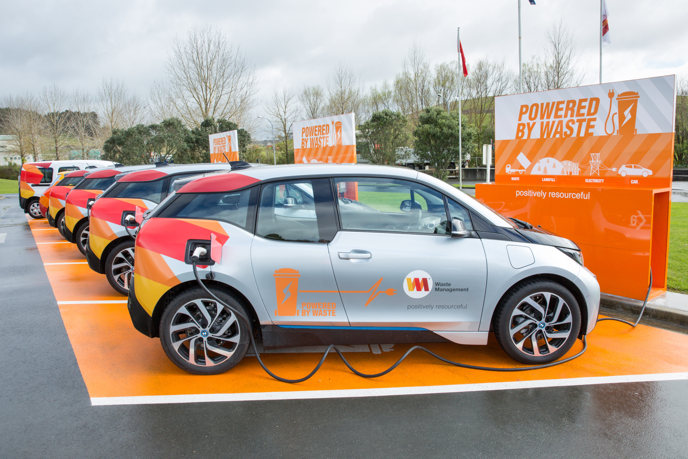
The company has started with its nationwide fleet of almost 300 light vehicles. They include 21 EVs, from imported Nissan Leafs to the brand-new Hyundai Ioniq.
But it’s the electrification of its truck fleet that has the company really going places.
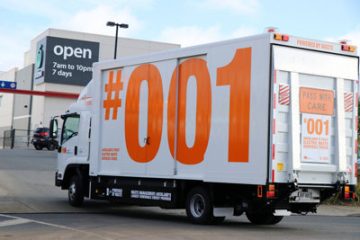
As part of a trial to electrify its trucks, the company has partnered with Dutch company Emoss to convert five from diesel to electricity.
“We’ve got over 800 trucks. It’s a very big part of our carbon footprint,” sustainability manager Adam Weller says.
“There’s more than 10 million litres of diesel we use per year. The particulates are not good for your health. EVs give us the opportunity to remedy that.”
The company also has funding from the Energy Efficiency and Conservation Authority to build a workshop to convert and service the electric trucks at its Mt Wellington headquarters, Weller says.
“After seven to ten years our diesel trucks are no longer fit for purpose. The engine wears out first but the body is okay.
“When we start converting our old trucks to electric, they’ll still be out on the road getting more life out of them. It’s far more efficient.”
It’s hoped that the workshop will be up and running by the end of the year.
Waste Management has one electric truck on the road at the moment.
It has been collecting rubbish from Countdown supermarkets around Auckland since late 2016.
Fleet technical manager Jitesh Singh says the truck is popular among staff and the public alike because it is silent and quick off the mark, which surprises other motorists “in a good way”.
“The driver that drives it absolutely loves it. It’s extremely hard to get him off that truck. He understands the art of driving the truck and he understands the vehicle.”
At the current conversion rate, two more electric trucks will be on the road by the end of this year and another two in 2018. Among the trucks being converted are the Isuzu FRR600 and the Hino FM8J.
Range anxiety is not a problem, Singh says.
“We are not going from Auckland to Wellington in these things.
“Our rubbish trucks are stopping and starting, creating lots of regenerative energy. There’s an opportunity there.”
Once more become available, Singh says the company will develop a set of charging points for the trucks, which take between three and four hours to power up.
As for the thinking behind going electric, Singh says it fits with the company’s ethos.
“Sustainability is what we do. It’s also a lot more economical to run an electric vehicle than a diesel vehicle. Diesels are at their most inefficient at low speeds, while EVs use less energy at low speeds.
“There’s a win-win for the environment and for us.”



Join the conversation