
EV battery checking service planned
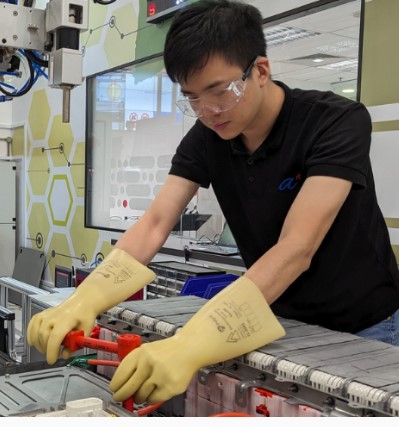
EV battery checking centres are planned in Singapore, Indonesia and Malaysia following an agreement between two energy companies.
Tinergy Renewable Energy has signed a memorandum of understanding (MoU) with Santa New Energy which is part of Contemporary Amperex Technology Ltd (CATL), a leading battery provider.
EV batteries rarely get checked or tested when they are being charged at charging stations and drivers are informed of the battery’s deteriorating health when they receive a warning light, the companies say.
“The planned battery charging and checking centres will be equipped with battery online detection technology pioneered by Santa New Energy to provide complete and comprehensive battery checking in a single charge process without the need to dismantle the vehicle or change the vehicle strategy.”
Tinergy Renewable Energy has recently partnered with renewable energy firm B2G Energies in a separate MoU to bring about solutions for low-carbon cities by doing feasibility studies, identifying suitable technologies, and setting clear objectives for reducing carbon emissions.
“As Singapore targets phasing out combustion car sales by 2030, and with various incentives put in place to encourage the adoption of EVs, there needs to be effective and reliable EV battery checking facilities to ensure the longevity and sustainability of EV batteries,” says B2G Energies founder and chief executive Garry Tay.
“Our collaboration with Tinergy Energies and Santa New Energy to bring this facility to Singapore and is in support of the Singapore Green Plan 2030 by the Singapore government, aimed at reducing carbon emissions.”
Santa New Energy executive director Xue Kai Lei says it has already successfully implemented its technology at the world’s first low carbon park in Xiamen, China, integrating EV power battery technology research and development, power battery big data centre, battery checking, and new energy vehicle (NEV) after-sales service, and plans to replicate the model in this region.
China has the largest EV market, accounting for 60% of EVs globally.
By bringing Chinese expertise on EV batteries and adopting Santa New Enegy’s low carbon park model in Xiamen to this part of the world, the consortium aims to provide a comprehensive EV after-sales service in Singapore, Indonesia and Malaysia.
These services include battery maintenance and repair, secondhand EV sales evaluation, battery recycling, and other EV-related needs.
“Our MoU with B2G Energies and Santa New Energy is an important step in building these battery checking facilities and infrastructure in the region, as part of the region’s push to get more drivers to adopt EVs,” says Tinergy Renewable Energy founder Mike Zhang.
Southeast Asia’s EV adoption n comparison is very low, comprising 2.1% of total vehicle sales there in 2022 due to the slow development of charging infrastructure and EVs’ high up-front cost.
More information on battery checking facility sites will be announced later.
Meanwhile, the Agency for Science, Technology and Research (A*STAR) announced in October a new EV Battery Testing and Disassembly Line in Singapore as part of wider efforts by A*STAR’s research institutes such as the Advanced Remanufacturing and Technology Centre (ARTC), Singapore Institute of Manufacturing Technology (SIMTech), Institute of Materials Research and Engineering (IMRE), National Metrology Centre (NMC), and Institute of High Performance Computing (IHPC), to work with partners in building a circular economy for batteries through the development of key remanufacturing processes and systems solutions.
The line within A*STAR’s ARTC leverages Industry 4.0 technologies including automation, robotics, intelligent vision inspections, and diagnostics, to improve disassembling EV battery packs which can be dangerous, tedious, and labour-intensive. The line will also be used to assess the performance and physical conditions of batteries, such as wear and tear.
Repurposing and recycling require disassembly of EV battery packs which can take more than seven hours.
Automating parts of the disassembly process, such as visual inspection and the unbolting of fasteners, can reduce human exposure to high-voltage situations and speed up the process by an estimated 50%, says A*STAR.
The line will also feature technologies for faster and more accurate measurements of batteries’ state-of-health (SOH), which is an indicator of the batteries’ remaining useful life and how this compares to original capacity or performance capabilities.
To further develop technologies for commercial deployment, A*STAR will partner battery recyclers looking to disassemble significant volumes of EV battery packs, and original equipment manufacturers (OEMs) that plan to develop new technology offerings for the growing end-of-life battery market.

Join the conversation