
EV battery fires expose New Zealand regulatory gap – VIA
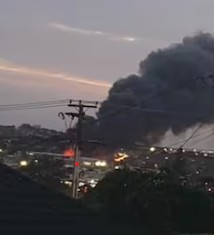
The fire that destroyed a North Shore recycling facility (on Thursday April 24) is a stark reminder of what’s at stake when battery systems outpace regulation.
So says the Imported Motor Vehicle Industry Association (VIA), adding lithium batteries may have contributed to the scale of destruction in the Wairau Valley blaze, prompting VIA to renew its call for national standards governing the reuse and recycling of EV batteries.
Radio New Zealand (RNZ) reported on the fire shortly after.
A new industry report investigates concerns around battery end-of-life management in New Zealand, finding that while a growing number of businesses are repurposing and recycling EV batteries they are doing so without formal safety standards, oversight, or ownership rules.
“We’re putting lithium batteries into the community at scale, but we don’t have a clear plan for what happens when they reach the end of their life,” says VIA chief executive Greig Epps.
The sector report, authored by VIA technical lead Malcolm Yorston, shows that battery handling practices vary widely across the country.
Some operators use Korean and aviation-grade standards for testing and fire containment, but these are imported workarounds – not a substitute for locally approved systems, says VIA.
Recyclers and refurbishers face additional complexity due to inconsistent battery chemistries, opaque supply chains, and restrictions on access to diagnostic software, it says.
Many operate in good faith but in the absence of formal guidance even responsible actors are exposed to legal and insurance risks, says VIA.
Some insurers have already begun withdrawing coverage for second-life battery installations, especially in residential settings, it says.
The stakes are rising as EV uptake accelerates.
Batteries from vehicles imported 10 years ago are now reaching their end-of-life and more are arriving each year, says VIA, noting that while local operators collaborate where possible, including partnerships between refurbishers and certified recyclers, there is still no domestic facility capable of extracting lithium or other critical materials at scale.
VIA suggests three steps the government should take.
These include stablishing national standards and a battery registry – a centralised battery tracking system ensuring end-to-end accountability, defining battery ownership at end-of-life, funding safe infrastructure and training.
VIA also sees a role for the Energy Efficiency and Conservation Authority (EECA) in funding sector development and supporting long-term recovery capabilities.
The report highlights viable international models New Zealand could adapt, including the European Union’s (EU) battery lifecycle regulations and Chinese specifications for second-life battery use. “These could form the basis for co-designed local guidance in partnership with industry, recyclers, OEMs, and insurers”, says VIA.
The fire at Abilities Group may not yet be officially attributed to lithium batteries but the industry says the pattern is clear. In the absence of national direction, battery-related risks are falling through the cracks, says VIA.
“There’s already a network of businesses doing this work, and doing it with integrity,” says Epps.
“But if we don’t act now we’ll keep putting lives and property at risk – and we’ll miss the opportunity to build a safe and sustainable battery recovery system.”



Join the conversation