
EV enthusiasm high in SE Asia
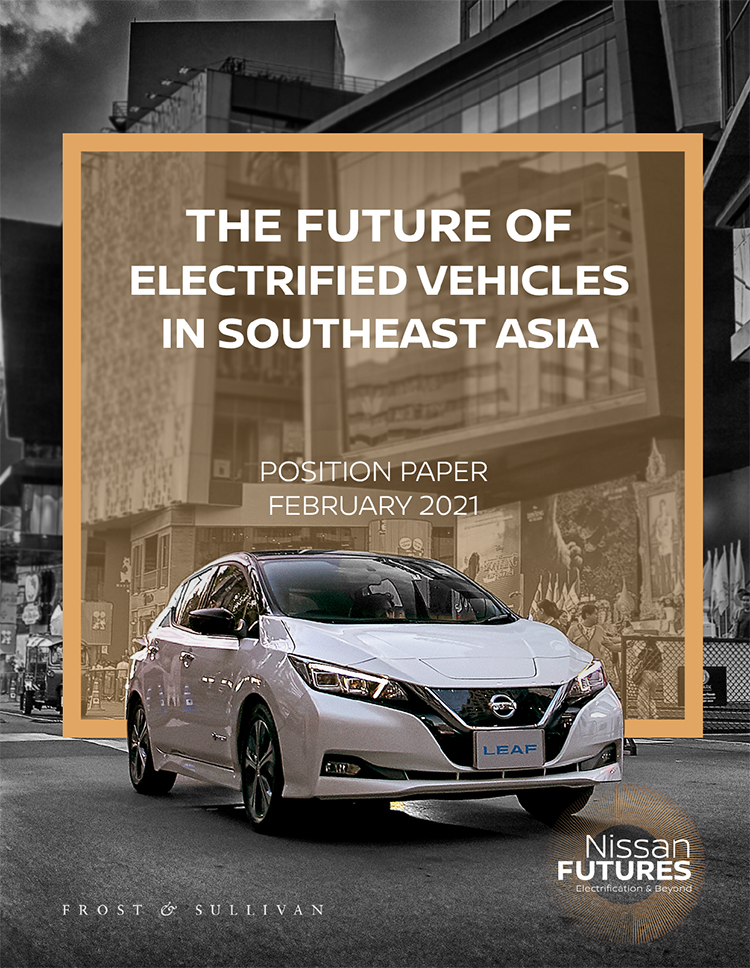
Southeast Asian consumers continue to show high enthusiasm to own an electrified vehicle, driven by a growing need to create a more sustainable future.
Research in Thailand, the Philippines, Indonesia, Malaysia, Vietnam and Singapore reveals nearly two-thirds (64%) of respondents say they are more willing to consider an electrified vehicle than they were five years ago.
About 66% of consumers across the region believe they will inevitably adopt electrified mobility in their lives in the near future.
And some 37% of the surveyed car drivers state they will consider an electrified vehicle as their next car purchase within the next three years with those from Indonesia, the Philippines and Thailand the most keen.
All this is revealed in the second edition of the Nissan-commissioned study by Frost & Sullivan, titled The Future of Electrified Vehicles in Southeast Asia, released during Nissan Futures – Electrification and Beyond – a virtual gathering of industry leaders, government officials and media.
“We are encouraged by the fact that consumers in ASEAN see electrified mobility as a viable means to support them in being more environmentally friendly, and to help reduce the stress on our megacities,” Nissan ASEAN regional vice president Isao Sekiguchi says.
“We have already introduced electrified vehicles to Singapore, Malaysia, Thailand and Indonesia, as well as to Hong Kong.”
Sekiguchi says the Note e-Power will be introduced to Singapore and Hong Kong within coming months.

Some 81% of study respondents mentioned their choice would be significantly influenced by different power sources.
While range anxiety (48%) continues to be the most significant barrier to EV adoption, respondents’ perception towards barriers to purchase electrified vehicles has significantly improved compared to three years ago.
“Our findings show that consumers generally value the overall driving experience of an electrified vehicle, given their innovative and high-technology features matched with high performance engines,” Frost & Sullivan Asia-Pacific mobility senior vice-president Vivek Vaidya says.
“Over time, increased environmental awareness, lower maintenance costs for an electrified vehicle coupled with tax incentives and improved public and private charging facilities will be key motivators for consumers to possibly switch to electrified vehicles, and purchasing one in the near future.”
More than three-quarters of respondents (77%) indicate that tax benefits and installation of charging stations at residential buildings (75%) are the top two incentives for them to switch to an electrified vehicle.
Read the white paper here.
Join the conversation