
EVolocity ramps up momentum
This story first appeared in the October issue of EVtalk – CLICK HERE to download the magazine FREE
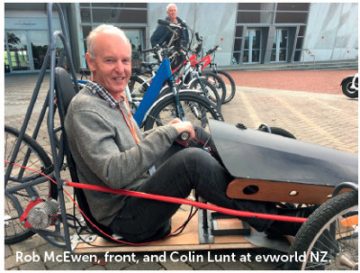 EVolocity has grown so much in four years it’s now spread around most of the country from its Christchurch base.
The charitable organisation runs a programme in schools in which teams of students design, build and compete in electric vehicles.
It fosters engineering training around EVs, giving students a hands-on role in building the single-seater EV racers of usually three wheels or four.
After starting in Canterbury in 2014 with 16 teams from 11 schools competing, EVolocity now has more than 100 teams from Auckland, Waikato, Wellington, Nelson and Canterbury competing.
Regional finals events are held and the top regional teams move forward to the national finals race day on December 2 at the Christchurch A&P Showgrounds.
The event is part of a EVolocity’s Electric Wheels Festival, also featuring e-bike test rides, EV test drives and a range of exhibits and activities.
Such challenges use many of the practical and academic skills taught in science, technology, English and mathematics (STEM) subjects and are helping address a long-running shortage of skilled engineers.
The electric wheels festival is shaping up to be a bigger event each year and EVolocity is spreading its vision, incorporating electric bike test rides and electric car test drives at many of its events.
Its aim is to develop knowledge, skills and passion in design, engineering and technology, preparing young people for 21st century careers and empowering them to help create a more sustainable future.
The organisation also focuses on educating the drivers of today and tomorrow about the environmental and economic benefits of electric vehicles.
Students taking part in EVolocity develop interests in mechanical engineering, electrical engineering, power electronics and programming. But all that comes at a cost, which is growing.
Historically, all of the funding to support the engineering and EV education programmes in schools has come from grants and sponsorships.
“Unfortunately, this is not a sustainable revenue mode so we have launched the MeloYelo brand of electric bikes to create a growing and sustainable revenue stream,” EVolocity executive director Rob McEwen says.
MeloYelo e-bikes are built to EVolocity’s specifications in China and are distributed through a growing network of what it calls “associates”.
Most “associates” are retired or semi-retired people looking for part-time income while supporting a good cause. They are equipped with demonstrator bikes and a range of marketing materials, and get out and about in their communities offering test rides, selling the bikes and delivering after-sales service support, McEwen says.
Visit meloyelo.nz to view the range of MeloYelo e-bikes.
Join the conversation