
Video First drive: IM6 brings MG’s tech joint venture to NZ roads
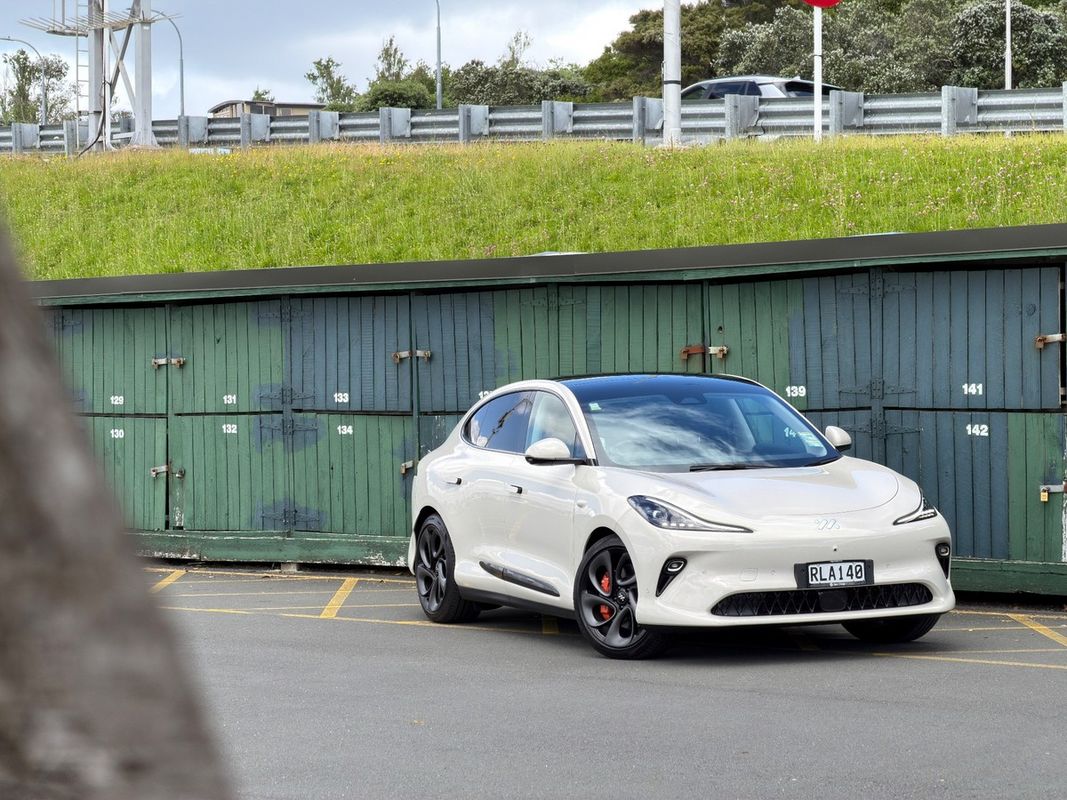
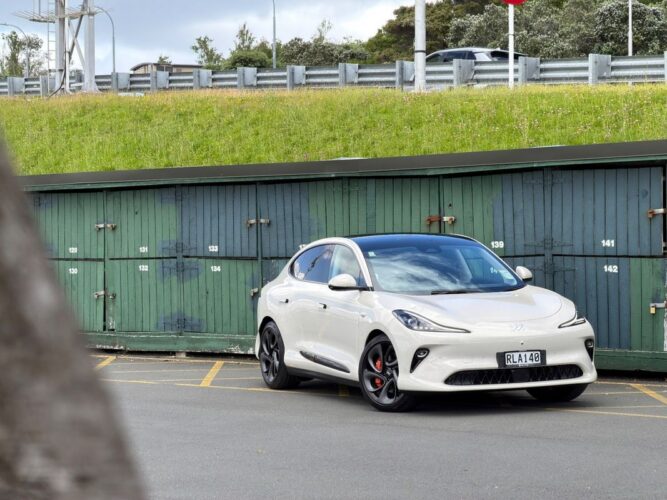
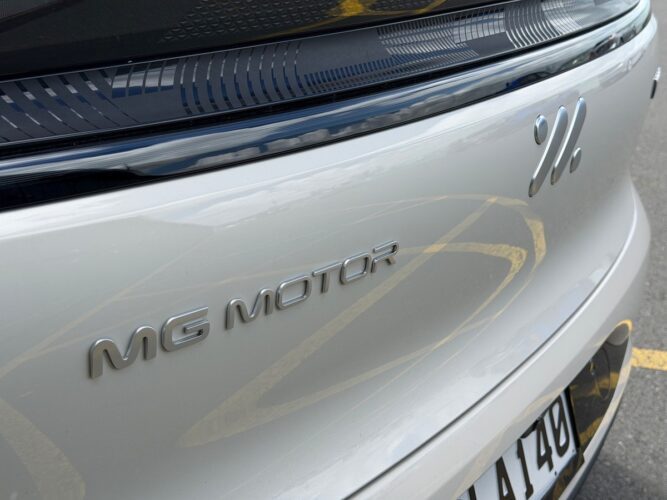
The IM6 isn’t the first electric SUV to reach New Zealand this year, but it arrives in a crowded segment with no shortage of choice. And while it’s sold through MG, it isn’t exactly an MG. It’s an IM — a premium sub-brand formed through a joint venture between SAIC and Chinese tech heavyweight Alibaba. SAIC handles the hardware and manufacturing, while Alibaba delivers the software, cloud architecture and digital systems that define much of the IM6’s character.
Autonomous-technology specialists Pony and Momenta are also involved, contributing perception and mapping work behind the IM6’s driver-assistance suite.
MG describes IM as its premium arm — essentially the Lexus to MG’s Toyota. The intention is a more refined, more advanced and more performance-focused experience than mainstream MG models, but still priced to compete directly with upper-mainstream EVs such as the Tesla Model Y and BYD Sealion 7. That blend of ambition and accessibility is central to IM’s pitch.
IM’s technical flagship is its digital chassis. Instead of separate control units managing steering, stability, braking and torque distribution, the IM6 uses a unified motion controller that coordinates everything together. The idea is quicker reactions and cleaner responses during complex manoeuvres. It’s a concept we’ve seen in more expensive vehicles — BMW applies a similar approach in the latest iX3 — but it’s notable to find it here at mainstream-adjacent pricing.
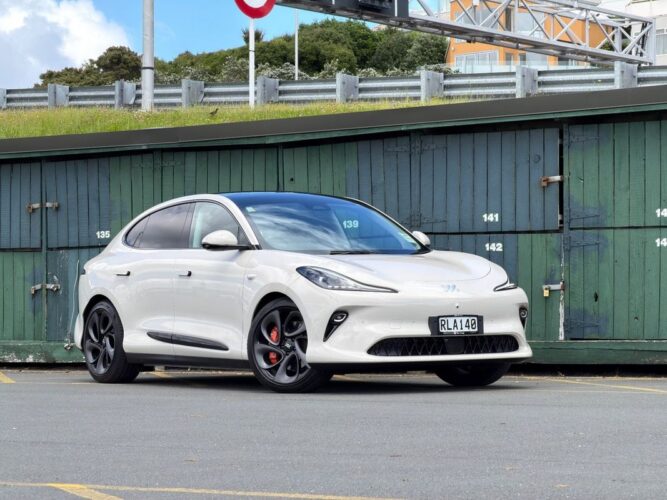
The New Zealand model range
The IM6 launches with three models.
Premium – $66,990
This entry model uses a 75 kWh LFP battery and a rear-drive motor producing 217 kW and 450 Nm. WLTP range is 450 km. It runs on a 400-volt platform, so its charging speeds sit below the 800-volt models, but the overall package remains strong.
Platinum – $77,990
The Platinum steps up to a 100 kWh NCM pack, bumps output to 300 kW and 500 Nm and stays rear-drive. It moves to an 800-volt architecture, lifting WLTP range to 555 km.
Performance – $89,990
The Performance keeps the 100 kWh battery but adds a front motor for a combined 572 kW and 802 Nm. Air suspension and CCD adaptive damping are standard, and IM quotes 0–100 km/h in 3.4 seconds. WLTP range is 505 km. It still undercuts an equivalent Model Y by roughly $10k.
Driving impressions: steering, handling and ride
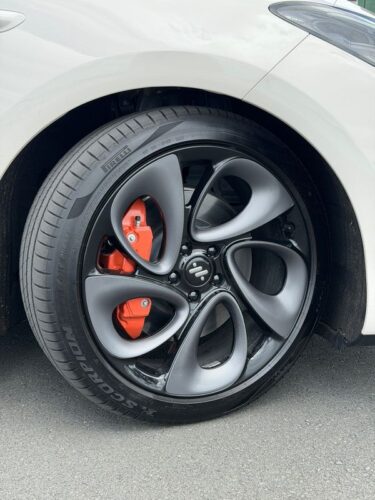
Our time in the Performance model was short but instructive. Acceleration is fierce off the line, and the Continental brakes deliver strong stopping power. The ride is softer than expected for a performance-focused variant, and even in Comfort mode the air suspension picked up a mild jiggle over uneven motorway surfaces. Steering weight is moderate, and under hard acceleration into a corner we detected a small amount of push understeer.
Four-wheel steering is one of the IM6’s standout features. At low speeds the rear wheels steer opposite the fronts, shrinking the turning circle to just 5.09 metres — remarkably tight for a large SUV and genuinely useful in tight parking spaces or U-turns.
At higher speeds the rear wheels steer with the fronts for stability. Lane changes at motorway pace were neat and settled, and the combination of air suspension and adaptive damping gave the Performance model confident body control. The ride remains slightly firm but avoids harshness or float.
Charging performance and the 800-volt platform
The move to an 800-volt system in the mid and top models opens the door for faster charging, improved thermal performance and better efficiency. IM quotes peak DC charging close to 400 kW for the Performance and around 153 kW for the Premium.
On New Zealand’s 350 kW hyper-chargers, the Performance should comfortably land in the high-200 kW range and may exceed 300 kW in optimum conditions. IM claims 15 to 20 minutes to recover a significant chunk of range, which aligns with the charging curve. On 400-volt chargers, the IM6 is expected to pull between 105 and 120 kW — still ahead of several rivals.
Cabin, tech and practicality
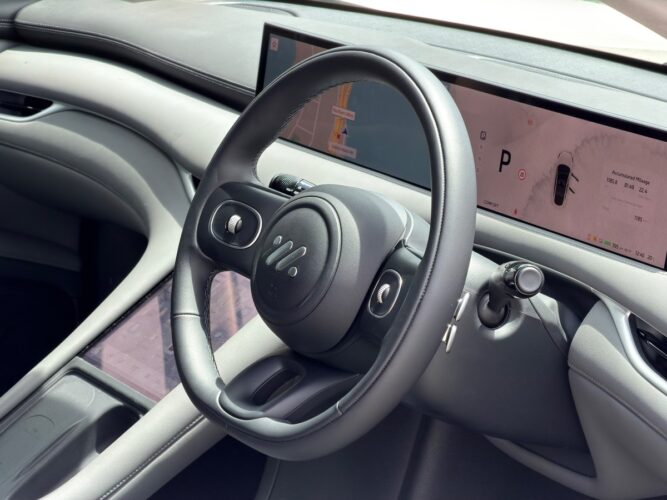
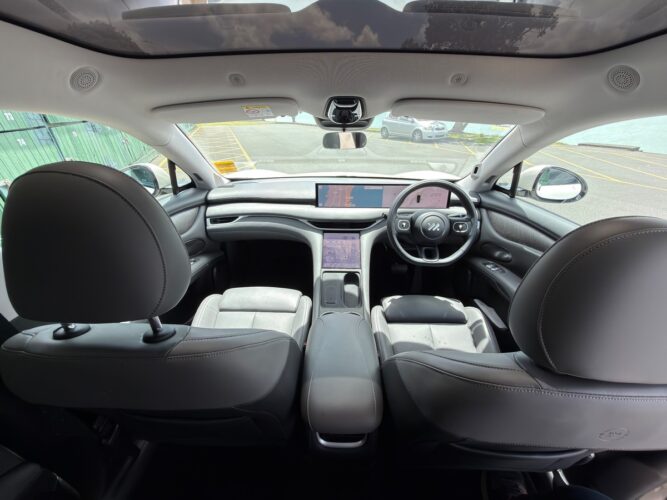
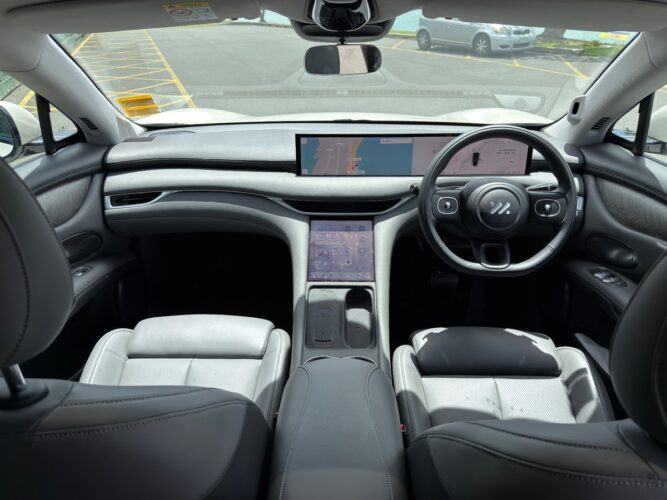
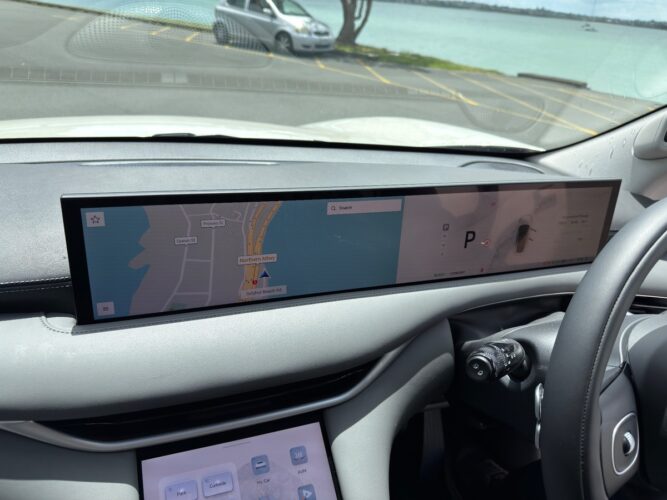
Inside, the IM6 presents clearly as a premium-leaning product. The massive 26.3-inch strip display, paired with a 10.5-inch centre screen and a Snapdragon 8295 chipset, gives the cabin a modern and polished feel. Wireless Apple CarPlay and Android Auto are standard, and the 20-speaker audio system, with overhead sky speakers, produces impressive clarity and spatial separation.
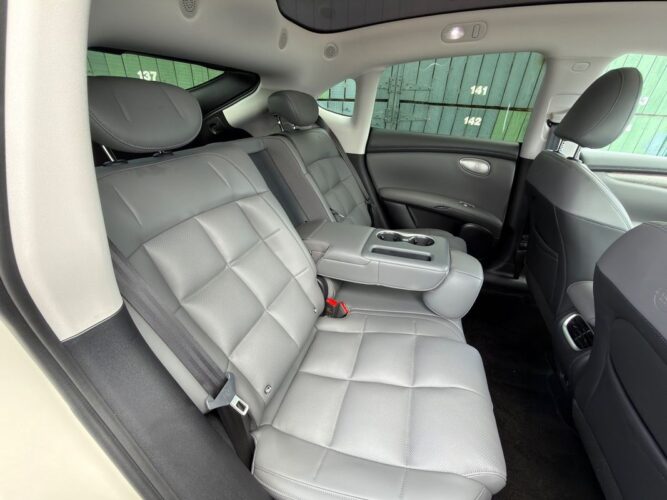
Materials are well chosen, and the seats offer good shape and support. Build quality leans toward the European end of the spectrum rather than budget Chinese. There are a couple of oversights — the rear cabin gets only a single USB-C port and no dedicated climate controls. Rear ventilation is handled via floor vents, but temperature changes must be made from the front.
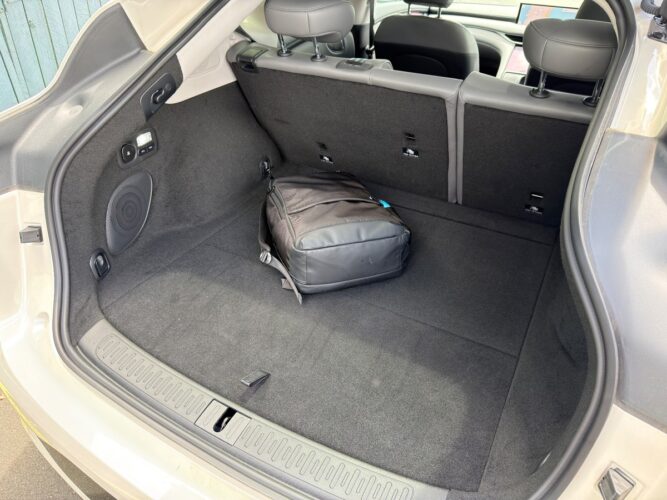
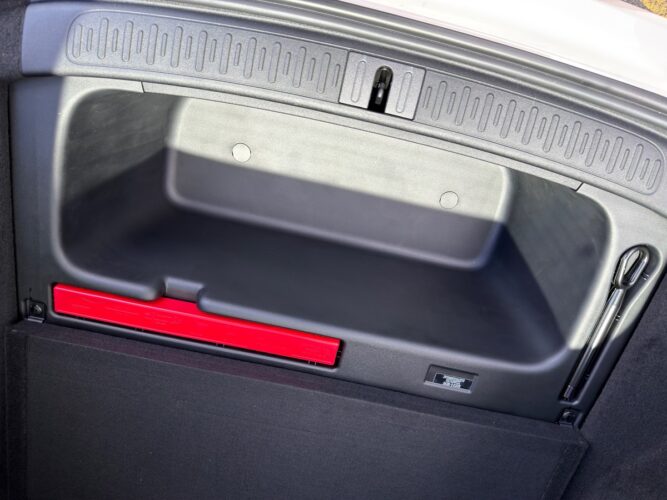
The boot offers 665 litres with the seats up and expands to 1640 litres with the rear seats folded. It’s backed by a large, deep underfloor tub and a 35-litre frunk, giving the IM6 more overall cargo versatility than several competitors.
The ADAS package combines nine cameras, three radars and twelve ultrasonic sensors, feeding an NVIDIA Orin N processor. Automated parking, including a one-touch reverse feature that retraces the last 100 metres, works cleanly.
Positioning and first impressions
The IM6 aims to deliver luxury-leaning performance and technology at upper-mainstream prices. It goes directly after the Model Y and Sealion 7 rather than European premium SUVs. One of IM’s quiet advantages is MG’s nationwide dealer and service network — buyers aren’t relying on a boutique distributor or thin support structure.
The IM6 feels cohesive and well executed. The digital chassis, four-wheel steering and high-voltage charging system give it real technical credibility. The cabin is modern, well finished and spacious, and the dynamic package shows depth even on a short introduction.
If IM is positioned to become the premium extension of MG, the IM6 is a convincing foundation. It has the engineering, the technology and the pricing to stand out in a crowded market.
Join the conversation