
Govt revamps EV charger co-investment model
The Government is changing the way it co-invests in public electric vehicle (EV) chargers with the private sector, aiming to accelerate charger deployment across New Zealand.
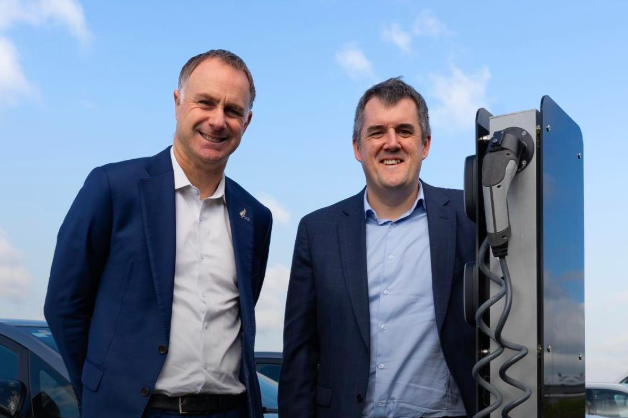
The Government is changing the way it co-invests in public electric vehicle (EV) chargers with the private sector, aiming to accelerate charger deployment across New Zealand.
Transport Minister Chris Bishop and Energy Minister Simon Watts say the new model would move away from direct grants towards concessionary loans, based on a commercial procurement approach similar to the Ultra-Fast Broadband rollout.
“New Zealand needs more EV chargers. We have fewer public chargers per EV than many other countries in the OECD, and we know that this is a barrier to Kiwis purchasing EVs,” Bishop says.
“People buying an EV need confidence that they can charge where and when they need to on a comprehensive public network.”
As at December 31, 2024, New Zealand had 1,378 public EV charge points — around one for every 84 EVs — according to government figures. The Government has set a target of 10,000 chargers by 2030, aiming for a ratio of one charger for every 40 EVs.
“The Government will therefore utilise the highly successful Ultra-Fast Broadband model to accelerate the roll-out of EV chargers,” Bishop says.
He says private sector reluctance to invest ahead of demand had created a “chicken-and-egg situation” that was slowing the rollout, and government intervention was needed to break the deadlock.
Since 2016, the Government’s approach to funding public EV chargers has largely been through direct grants.
“This model is now outdated, with EVs now making up over 2% of the light vehicle fleet, and expected to make up around 11% by 2030. A range of charge point operators have now also entered the market,” Bishop says.
Under the new model, the Government has set aside up to $68.5 million from existing grant funding to offer concessionary loans to private operators. Loans will be interest-free, cover up to 50% of project costs, and have a maximum tenure of 13 years.
“The Government is moving to a more sophisticated, commercial procurement model,” Bishop says.
“Loans will be quicker to implement and will help achieve the Government’s objectives with less complexity, cost and risk.”
Bishop says the loans would be allocated through contestable co-investment rounds, with applications assessed based on cost-benefit analysis and value-for-money criteria.
“Giving effect to commitments made on the National-Act Coalition agreement, this competitive tension will help ensure public investment flows to proposals delivering the best value-for-money,” he says.
Watts says New Zealand’s abundance of renewable energy made EVs a natural fit.
“With our bountiful renewable energy resources EVs are a winner for New Zealand.
“Kiwis charging their EVs are essentially filling their cars with predominantly water, wind, and geothermal energy – rather than fossil fuels – due to our high level of renewable energy.”
Watts says greater access to EVs would help reduce household costs and contribute to wider economic and climate goals.
“There are real benefits to owning an EV. Not only does it support our economic and climate goals, but it also delivers long-term benefits to users by helping keep running costs low.
“By giving people more options to reduce everyday expenses like transport, we’re helping households stay ahead and build a more sustainable future.”
The new initiative will be managed by National Infrastructure Funding and Financing (NIFFCo), the successor to Crown Infrastructure Partners, with support from the Energy Efficiency and Conservation Authority (EECA).
The first Request for Proposals (RFP) for projects is expected to be released shortly.
Join the conversation