
Home power demand could rise 35% for EV charging
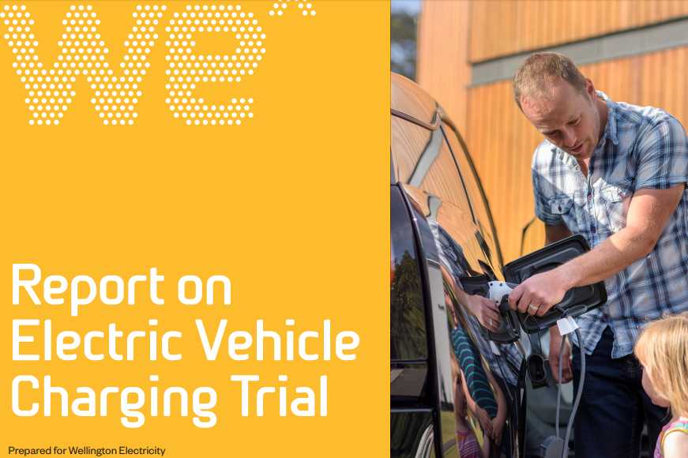
As electric vehicle numbers rise, EV charging will increase average residential electricity demand by about 2500kWh per annum – about 35% of the average residential demand.
It might also lead to a new peak coinciding with the start of the off-peak period if nearly all EVs start charging around the same time.
That’s according to a report on an EV charging trial commissioned and funded by Wellington Electricity Lines Limited (we*).

With more than 64,000 EVs predicted by 2021 (2% of New Zealand’s fleet), that will present a challenge for electricity network operators in managing and planning the demand which, if not done right, could lead to expensive network upgrades, the report says.
The trial project team of we*, Jake Roos Consulting Ltd (JRCL) and Concept Consulting, obtained data from 77 EV-owning households and a control group of 860 households which don’t own EVs. A survey was also undertaken.
Most people would likely charge their EVs at home, often after work, the report says. Pricing-based and technology-based approaches that influence the rate and timing of EV charging will help to minimise any network impact, it adds.
Half-hourly metering data was used to measure the size and timing of electricity demand and differences in electricity charging approaches between EV owners receiving EV-Nite (and other time-of use pricing plans), and those that were not, were also examined.
Customer response to tariffs is “potentially a double-edged sword”, the report notes. “In the short-term it has a beneficial effect in terms of moving EV demand outside of the electricity system peak.
“In the long-term, as the number of EVs purchased by customers increases, it may create a new peak coinciding with the start of the off-peak period. In particular, if all vehicles start charging at the start of the off-peak period, all the significant diversity benefits that have been observed with EV charging would be lost, leading to the new peak being significantly greater than the current network peak.”
This additional peak demand could be about 4kW per EV – on top of the around 1.5kW per customer after-diversity demand at 9pm on a cold winter’s evening, the report says.
“This is considerably greater than the current peak demand of approximately 2.25kW per customer.”
However, in the sample of EV customers a greater proportion appears to charge much later – midnight and beyond, for instance. “This is even when customers have no electricity tariff incentive to do so.“
The report says it is not possible to infer whether this would be typical of charging behaviour when EVs are adopted more widely.
Some warming up of EVs prior to use in the winter to increase the vehicle range was observed.
Generally trial participants were comfortable with suggested approaches to managing the impact of EVs on the grid (which included demand-based electricity pricing, a centralised service to control the timing of their EV’s charging, and vehicle to grid technology), although the level of financial benefit to them from agreeing to use these was important for most people.

Join the conversation