
Hydrogen ferry planned
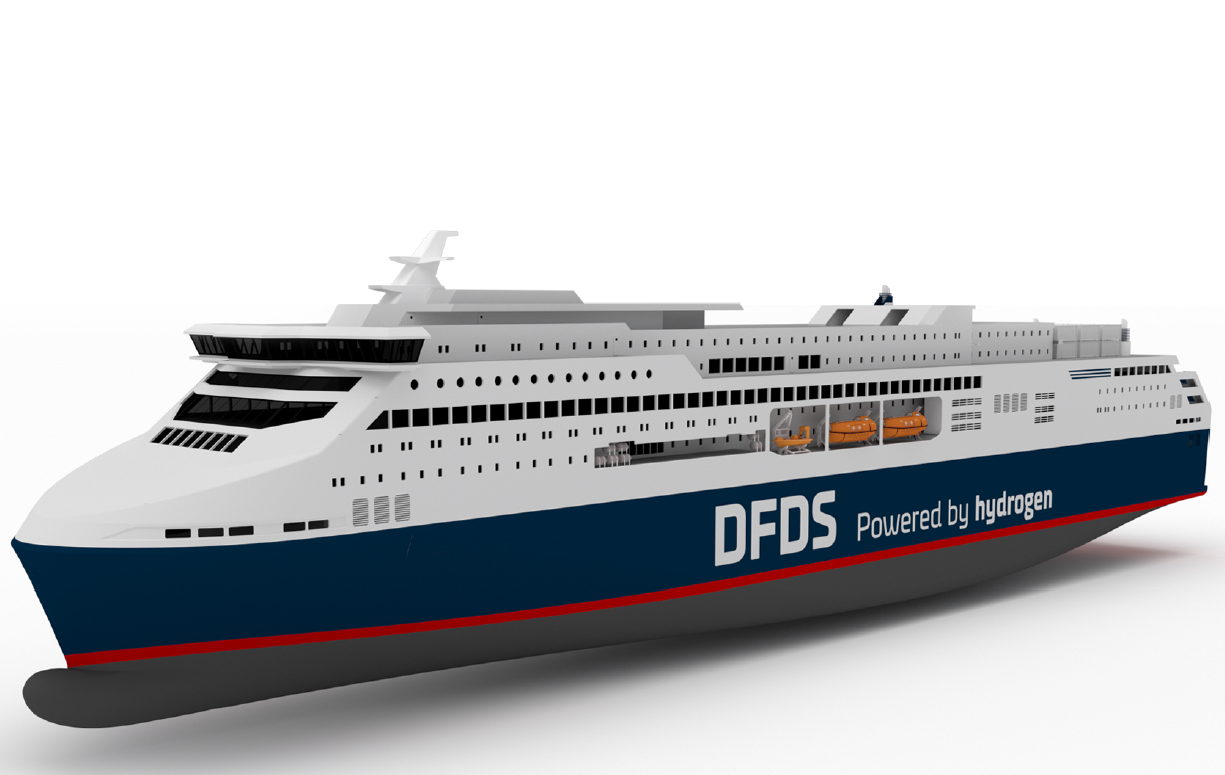
Moves are underway to clean up maritime transport globally which contributes about 2.5% of greenhouse gas emissions, with hydrogen an alternative fuel prospect.
Hydrogen is being considered in New Zealand and Australia for longer range trips than those planned for battery electric ferries.
A consortium is already working on a European ROPAX project to build a green hydrogen powered ferry dubbed Europa Seaways to carry up to 1800 passengers and 120 trucks or 380 cars on DFDS’ Oslo-Frederikshavn-Copenhagen route.
Said to be the world’s largest hydrogen ship, it’s expected to start operating in 2027 with the consortium seeking funding from the European Union’s Innovation Fund.
Europa Seaways will have a 23MW fuel cell system which DFDS chief executive Torben Carlsen says is the world’s biggest as the largest fuel cell systems today produce 1-5MW.
“We can only succeed in partnerships with companies that together can muster some of the globe’s finest expertise in design, approval, building, financing and operation of innovative vessels,” he says.
The partnership includes DFDS, ABB, Ballard Power Systems Europe, Hexagon Purus, Lloyd’s Register, Knud E. Hansen, Ørsted and Danish Ship Finance.
“Together, we expect to learn how to make these fuel types and technologies commercially viable, which is key to a transition of the industry to climate neutrality, which is also the ultimate goal of DFDS’ climate plan,” Carlsen adds.
Green hydrogen is to be produced by a projected offshore wind energy-powered electrolyser plant in Greater Copenhagen.
The Europa Seaways is forecast to stop about 60,000 tonnes of CO2 being emitted annually.
“With the increasing demand for solutions that enable sustainable, responsible shipping, we are confident that fuel cells will play an important role in helping the marine industry meet CO2 reduction targets,” ABB Marine & Ports global product manager Jostein Bogen says.
Join the conversation