
Hyundai aims to popularise hydrogen by 2040
Hyundai Motor Group has announced its Hydrogen Vision 2040 to popularise hydrogen by 2040 for ‘everyone, everything and everywhere’ through the introduction of new technologies and mobility solutions in transportation and other industrial sectors.
Hydrogen Wave represents the group’s plans for a new ‘wave’ of hydrogen-based products and technologies toward a hydrogen society.
It will introduce a next-generation fuel cell system – in 100kW and 200kW variations – in 2023 with costs being lowered by more than 50%, total package volume reduced by 30% and power output doubled.
The Group aims to become the first automaker to apply fuel cell systems to all commercial vehicle models by 2028 and to achieve a fuel cell electric vehicle (FCEV) price point comparable to a battery electric vehicle (BEV) by 2030.
It will apply fuel cell systems to all types of mobility, furthering the technology to all other aspects of society including homes, buildings and powerplants as energy solutions.
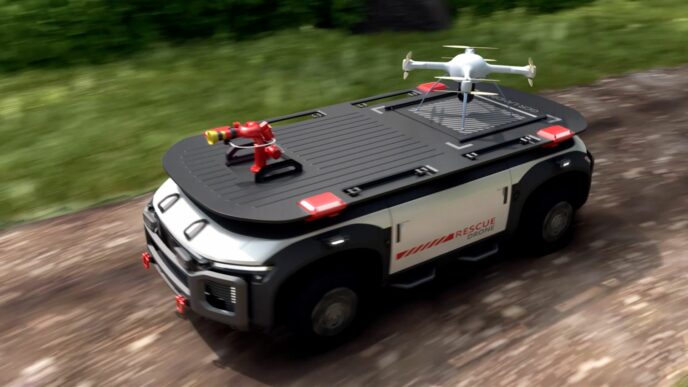
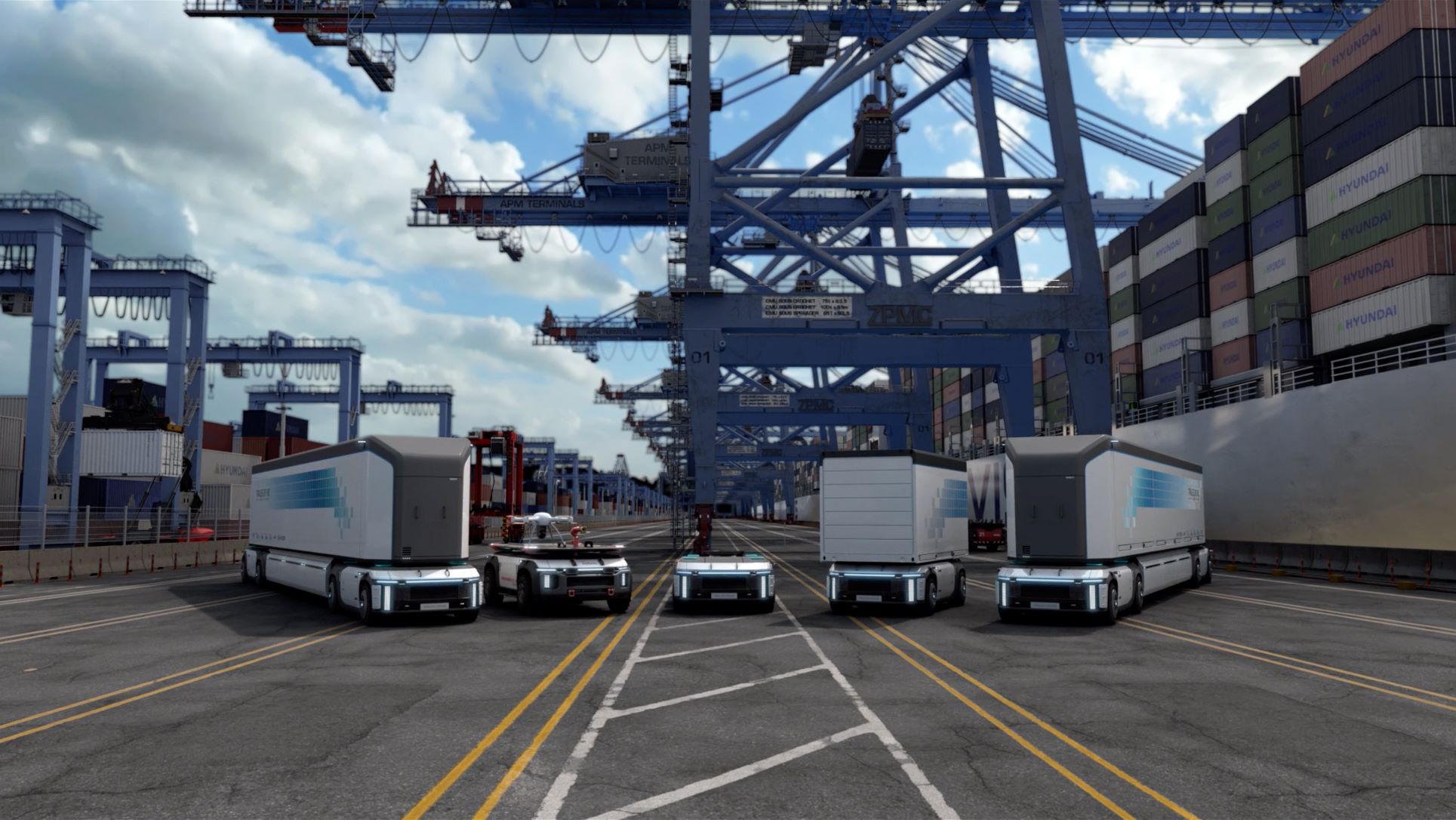
Future product concepts featuring fuel cell technologies are also revealed, including Trailer Drone – a hydrogen powered container transportation system capable of operating fully autonomously with a double e-Bogie configuration, a high-performance sports car (Vision FK), and fuel cell equipped vehicles for emergency relief and rescue missions including a rescue drone capable of 450-500km range.
“By developing advanced technologies and innovative systems – as well as encouraging close collaboration between public and private sectors across the globe – it is possible to make this sustainable vision a reality for all,” group chairman Euisun Chung says.
“Hyundai Motor Group’s vision is to apply hydrogen energy in all areas of life and industry such as our homes, work-places and factories. The goal is to make hydrogen readily used for everyone, everything, and everywhere.
”We want to offer practical solutions for the sustainable development of humanity and with these breakthroughs, we aim to help foster a worldwide Hydrogen Society by 2040.”
An online global forum will be followed by a physical ‘HydroVILLE’ exhibition, at which the newly introduced applications and concepts will be presented.
Hyundai already has the fuel cell Nexo SUV and the Xcient Fuel Cell heavy-duty truck.
Now, the group is backing hydrogen to play a significant role in building a sustainable future and reducing society’s dependence on fossil fuels.
According to the Hydrogen Council, a global chief executive-led initiative of leading energy, transport, industry and investment companies; hydrogen energy will account for 18% of global energy demand by 2050, with a market size of US$2.5 trillion.
The popularisation of hydrogen energy will also help cut CO2 emissions by more than six billion tons a year, while creating over 30 million new jobs.
The group will promote the complete transition of Korea’s public transportation and logistics systems to hydrogen-based solutions – with a view to setting the benchmark for the world.
It will develop a five to seven metre fuel cell PBV (Purpose Built Vehicle) to target the global light commercial vehicle market projected for seven million unit sales per year by 2030. This will be in part undertaken by an expansion in its business capabilities and applying autonomous driving and robotics to the commercial vehicle sector.
Also revealed at the event is an innovative fuel cell ‘Full-Flat System’ that lowers stack height to 25cm, allowing it to be used for various applications such as PBVs, MPVs, buses and trams by mounting the system to either the upper or lower body of the vehicle.
An “H Moving Station” is a heavy-duty vehicle equipped with charging facilities for FCEVs for convenience as well as charging options in areas with limited hydrogen refuelling stations.
A “Rescue Hydrogen Generator Vehicle” supplies power to vehicles in need of urgent assistance in remote, off-road areas. The portable electric vehicle charger offers single-phase 220V and 3-phase 380V simultaneous power supply.
Join the conversation