
Hyundai Nexo for Tuaropaki Trust
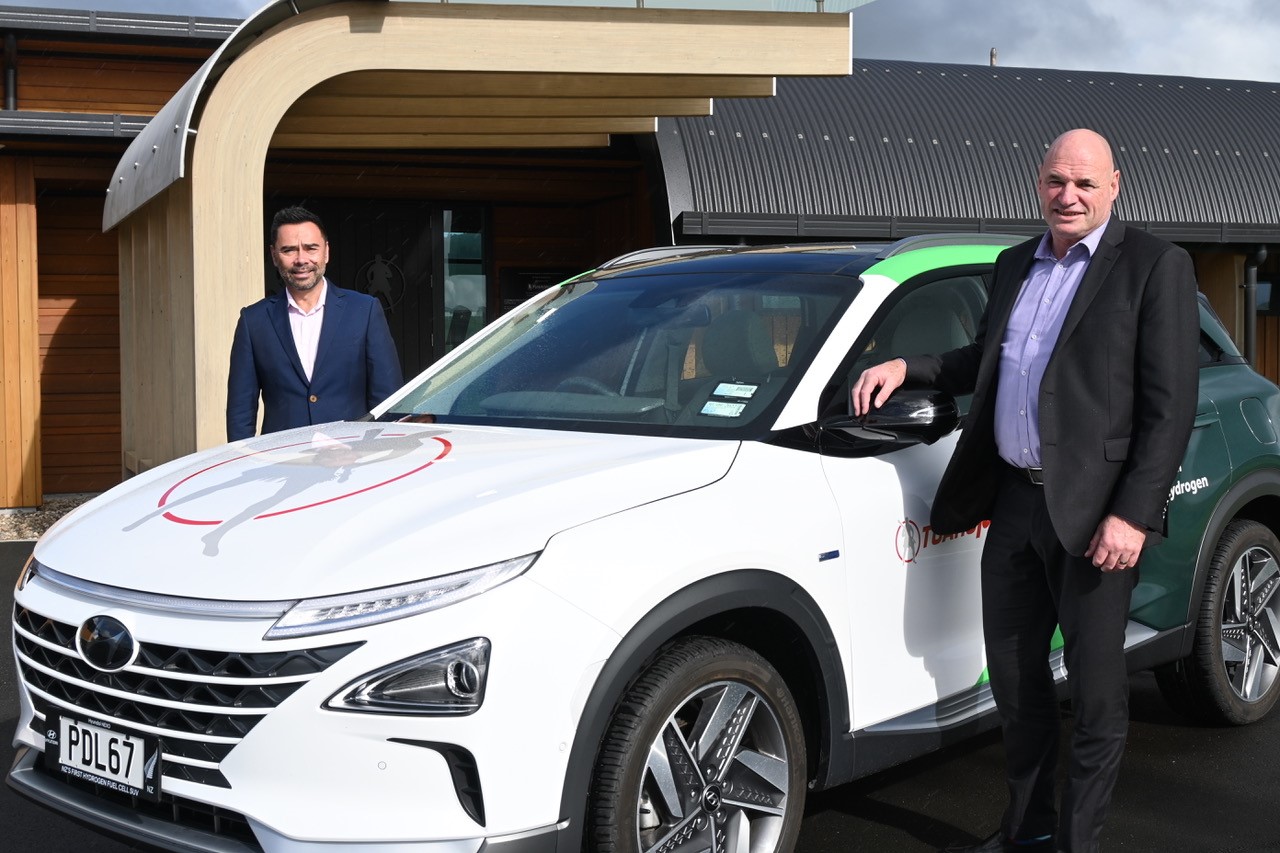
Hydrogen-powered technology is now visible on central North Island roads.
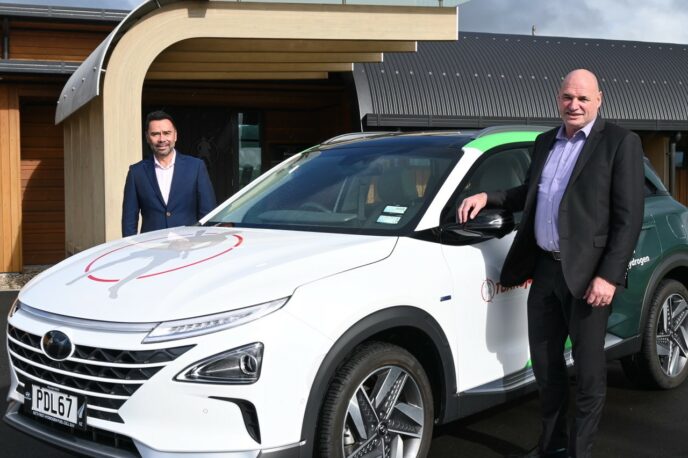
The Tuaropaki Trust near Taupo with interests in geothermal energy, milk powder production, energy services, horticulture, food innovation technology, viticulture and dairy farming, has taken ownership of a new Hyundai Nexo fuel cell electric vehicle (FCEV).
The Nexo will be used to demonstrate the potential of green hydrogen as a transport fuel, says trust energy general manager David Binnie.
It will run on hydrogen produced at Halcyon Power’s green hydrogen plant at Mokai.
Halcyon, a 50/50 venture between the trust and a Japanese construction company known for technological innovation, Obayashi Corporation, was officially opened in December last year.
Because it uses electricity generated by Tuaropaki Power Company’s geothermal power station, Halcyon’s source of production energy is carbon-neutral and renewable.
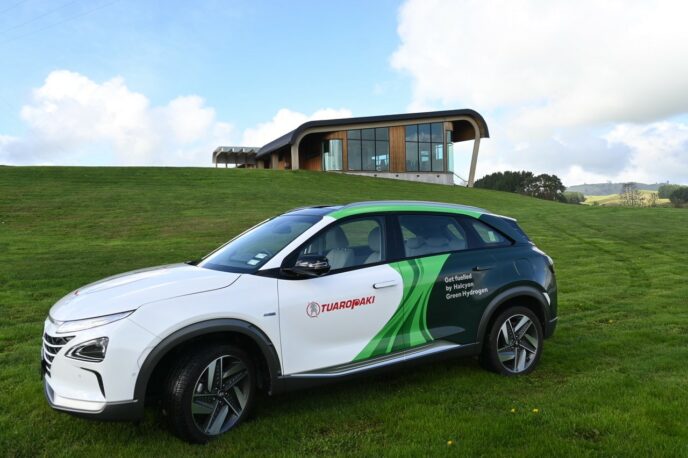
As a transport fuel, hydrogen results in zero operating emissions with the only discharge being water vapour.
These two aspects were integral to the trust’s involvement in hydrogen as an energy project and its purchase of the Hyundai FCEV, says trust chief executive Steve Murray.
“Tuaropaki has sustainability as one of its guiding principles and the green hydrogen project with the involvement of Obayashi and their sustainable development goals is a perfect fit.
“Ultimately, we are looking at a national hydrogen supply chain that includes transportation, site storage and refuelling infrastructure.”
Hyundai New Zealand chief executive Andy Sinclair says: “For a long time, hydrogen has been touted as the fuel of the future. But this is proof that it’s now the fuel of today.
“We brought Nexo, New Zealand’s first hydrogen-powered vehicle, into the country in 2019, so are delighted to see it in its first commercial use with Tuaropaki Trust.”
Since completing post commissioning due diligence, Halcyon has been contributing hydrogen to a number of vehicle trials.
Binnie says the company saw testing and validation as part of its role as a hydrogen innovator.
Among test vehicles, Halcyon has been supplying green hydrogen for commercial trials of the first FCEV truck in New Zealand – the Hyundai Xcient Fuel Cell.
The first of these is expected to be in commercial operation at the end of June with Hyundai announcing another will be on the road by the end of the year and more coming in 2023.
An Xcient Fuel Cell travelling 80,000km a year is expected to save 50 tonnes of CO2 while figures from the US Environmental Protection Agency suggest a zero-emission passenger vehicle saves about 4.6 tonnes of CO2 annually.
“Transport emissions in New Zealand contribute around 25% of our total emissions so targeting reduction in transport, and in particular heavy transport, will make a major contribution to carbon reduction. Hydrogen is a solution that is ready to implement now,” Murray says.
“It is important that we build customer confidence in the reliable, effective supply of hydrogen to grow the industry. The leadership that we have shown to date and the partnerships we have formed with companies like Hyundai give us an ideal opportunity to do that.”
The Nexo joins six new Hyundai electric and hybrid vehicles introduced to New Zealand over the past year.
Hyundai New Zealand’s eco-friendly models include New Zealand and World Car of the Year the Ioniq 5, the Kona Electric, Ioniq fastback (available in electric, plug-in hybrid and hybrid), and Santa Fe, Tucson plug-in hybrids (PHEVs) and non-pluggable hybrids (HEV) and the Kona HEV.
Says Sinclair: “As part of a line-up that includes hybrid, plug-in hybrid and pure electric models, Nexo underscores our leadership in eco-mobility and our commitment to a sustainable, low-emissions motoring future in this country.”

Join the conversation