
ITS discusses micro mobility disruption
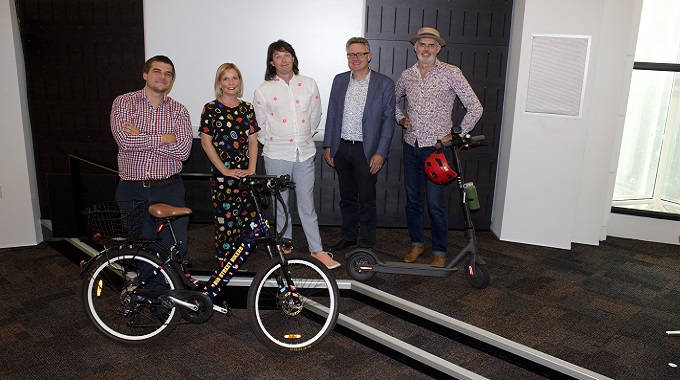
Oliver Bruce, Jessica Rose, Cleve Cameron, Matt Ensor, and Patrick Reynolds.
Intelligent Transport Systems New Zealand (ITS NZ) held a presentation and panel discussion on February 19 in Auckland about the disruption of micro mobility within urban and rural transport.
New electric personal transport options under the micro mobility label include e-scooters, e-bikes, electric skateboards, Segways, electric mopeds and more.
The rapid adoption, surpassing 500 million users globally, brought on by the fleets, and increasing private ownership, means decision-makers are under pressure to react quickly to understand the implications for public safety, regulation and infrastructure to achieve the full potential of benefits and mitigate problems.
The event discussed how and why new mobility options will be a major disruptor and driver of behavioural change. Beca transportation advisory director Matt Ensor was the master of ceremonies for the session.
The micro mobility panel of guest speakers included Greater Auckland contributor, urbanist Patrick Reynolds, Albert-Eden board and Women in Urbanism member Jessica Rose, Micro Mobility podcaster Oliver Bruce, and Big Street Bikes founder Cleve Cameron.
Micro mobility conference founder and host of the Micro Mobility Podcast Horace Dediu began proceedings with a video keynote presentation.
Dediu says the migration of people to cities since the 1950s lead to blossoming urbanisation and he predicts that by 2050 6.7 billion people will be living in cities. Many will prefer a mode of personal transport but there won’t be the resources to cope with cars, he says.
Interestingly, Dediu believes that car share services such as Uber and Lyft have already reached the point of peak use, but shared micro mobility options have barely scratched the surface yet.
During the panel discussion Rose says micro mobility will have a significant impact on short trips and a huge impact on climate change provided that the modes are not regulated off the roads. She believes that only with political support from the top down will micro mobility thrive and succeed.
Reynolds says proactive creation of cycle lanes has seen people encouraged to use them, and the addition of micro mobility provides another reason to create such a third space, such as a footpath, road, and lane for cyclists and micro mobility users.
Bruce says building cities around cars is no longer feasible and micro mobility allows the democratisation of mobility, because society will benefit from lower cost mobility services.
“We see micro mobility as vehicle for social change, and our intention is what could happen when it gathers scale,” says Cameron.
“We need to make e-mobility part of life, and to do that successfully it needs to be affordable, accessible, loveable, and desirable, we need to shift the desire curve and make it likeable and fun,” he says.

Join the conversation